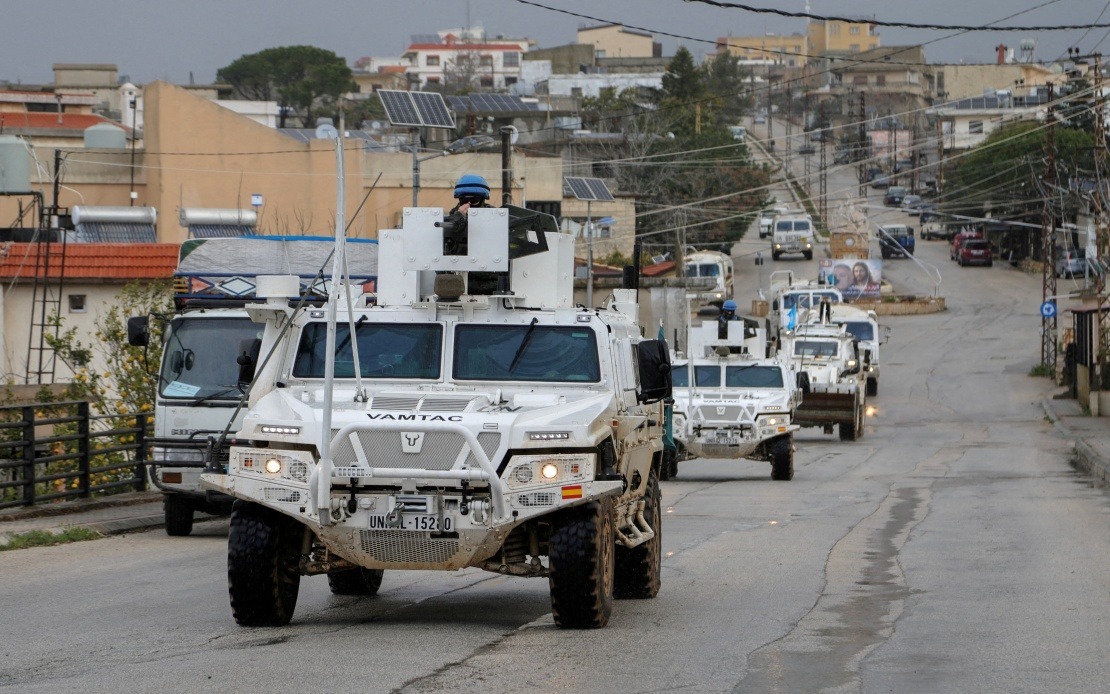
France and Italy have announced plans to establish a multinational coalition tasked with supporting Lebanon once the United Nations Interim Force in Lebanon concludes its nearly four-decade presence at the end of December. French President Emmanuel Macron revealed the initiative during a joint press conference with Italian Prime Minister Giorgia Meloni in Antibes, signalling a European commitment to maintaining regional stability as international peacekeeping arrangements shift.
The proposed coalition represents a coordinated European response to a critical security juncture. Operating in tandem with both the European Union and the United Nations, the initiative aims to reinforce Lebanese state capacity and the institutional strength of its armed forces at a moment when external military supervision will effectively disappear. Macron framed the effort as essential to preserving Lebanon's territorial integrity and preventing its use as a flashpoint for wider regional conflicts that could threaten international peace.
Meloni's endorsement underscores the seriousness with which both Mediterranean powers view the transition. Italy, which has historically maintained a significant military presence in Lebanese affairs through its participation in UNIFIL, recognizes that an unmanaged vacuum could invite instability. The Italian Premier warned explicitly of the "extremely dangerous" security environment that might emerge if no coordinated international mechanism replaces the departing peacekeepers, highlighting legitimate concerns about armed groups potentially exploiting reduced external oversight.
The timing of this announcement reflects awareness of binding legal reality. United Nations Security Council Resolution 2790 mandates that UNIFIL formally cease operations on December 31, following which remaining personnel must complete their withdrawal within twelve months. This compressed timeline leaves little room for improvisation, necessitating advance planning to ensure continuity in stabilization efforts and to prevent power vacuums that history demonstrates can be filled by destabilizing forces.
Lebanon's domestic context makes external support architectures particularly consequential. The country remains deeply fractured along sectarian lines, with powerful militia organizations operating semi-independently of state institutions. UNIFIL's presence, despite documented limitations, has provided at least a nominal constraint on certain cross-border activities and inter-factional escalation. Any successor arrangement must navigate these complex realities while respecting Lebanese sovereignty—a tension that France and Italy acknowledge through their emphasis on coordination with both UN structures and the Lebanese government itself.
From a Southeast Asian perspective, the Lebanon situation offers instructive parallels regarding regional stability mechanisms. The proposed coalition model resembles frameworks that might eventually be necessary in other geopolitically sensitive areas where UN mandates expire or international engagement shifts. Malaysia, as a country with substantial stakes in global maritime security and regional cooperation, can observe how developed nations approach the transition from institutional peacekeeping to looser multinational arrangements, potentially informing approaches to comparable challenges in this region.
The European initiative also reflects broader geopolitical recalibration. France has long maintained substantial interests in the Levant, while Italy's Mediterranean position makes Lebanese instability directly relevant to European security. By leading rather than deferring to distant powers, Paris and Rome signal that European nations intend to actively shape Middle Eastern outcomes rather than passively accept them. This assertiveness could influence how other regional actors, including those with interests in Southeast Asia, calculate their own strategic positioning.
The coalition's stated emphasis on preventing Lebanon from becoming "a source of further regional tensions and escalation" acknowledges the country's unfortunate position as a proxy battleground for broader Middle Eastern competitions. Various state and non-state actors have used Lebanese territory to advance their interests at Lebanese expense. A functioning multinational coalition, should it materialize with sufficient coordination and resources, could theoretically raise the costs of such exploitation, though success remains uncertain given Lebanon's internal divisions and the interests arrayed around it.
Implementing this vision will require resolving significant practical questions. How many troops will the coalition deploy? Which nations will contribute forces, and under what mandate? What funding will sustain operations? How will decision-making be structured to avoid the consensus-building paralysis that sometimes affects multilateral missions? The Antibes announcement establishes political commitment but leaves substantial architectural details unresolved, suggesting that technical negotiations will occupy European and international diplomacy in coming months.
The coalition concept also implicitly acknowledges limits to what external actors can accomplish. No amount of international presence can solve Lebanon's internal political dysfunction or resolve the competing claims of various factions. International support can create space for Lebanese institutions to strengthen themselves, but cannot substitute for Lebanese political will and reform. France and Italy appear to understand that their role is enabling, not directing, Lebanese reconstruction—a distinction critical to both legitimacy and practical effectiveness.
For Malaysia and other Southeast Asian nations, the emerging European approach to post-UNIFIL Lebanon offers insights into how traditional powers manage the withdrawal from long-standing commitments while maintaining strategic influence. As global power dynamics continue shifting, understanding how different regions organize their security affairs becomes increasingly important for countries seeking to navigate multipolar environments without becoming entangled in others' conflicts.

