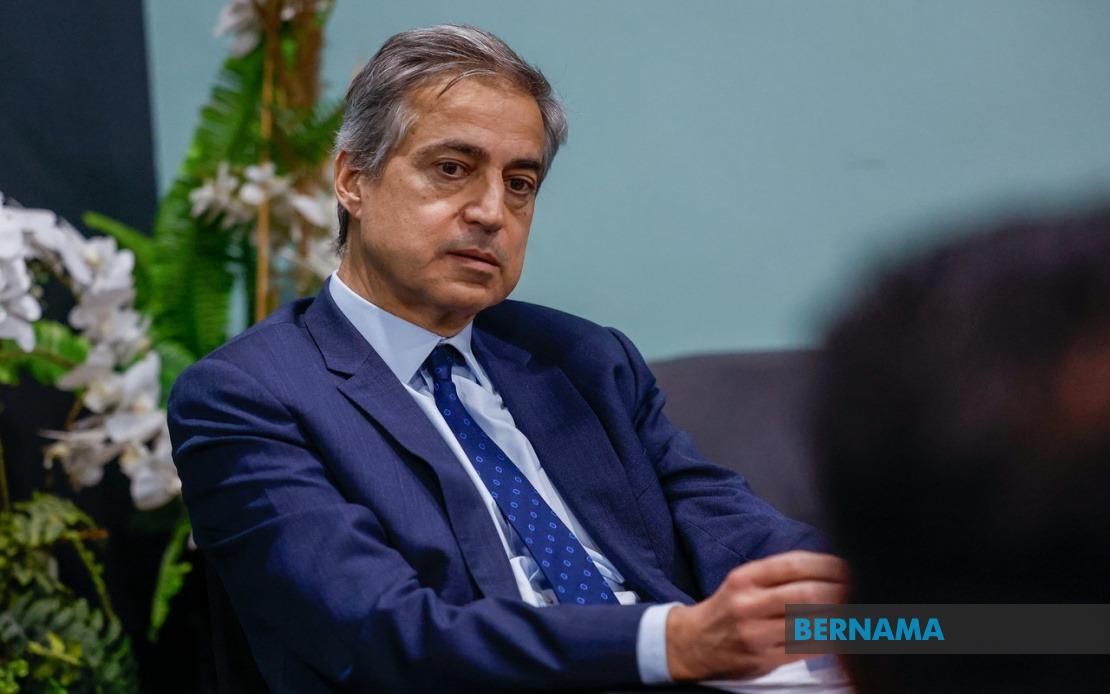
At the French National Day reception held at the ambassador's residence in Kuala Lumpur on Tuesday evening, French Ambassador Marc Abensour articulated a vision of France and Malaysia working together to counteract global division through deepened partnership. Speaking to around 800 guests including Federal Territories Minister Hannah Yeoh, senior government officials and members of the diplomatic corps, Abensour framed bilateral cooperation as a deliberate response to the fragmentation that increasingly characterises international relations.
The ambassador's remarks reflect a broader strategic realignment among democracies seeking to maintain stable relationships despite geopolitical tensions. France, as a major European power with significant interests in Asia-Pacific, views its partnership with Malaysia as part of a wider effort to sustain multilateral engagement and prevent isolation. For Malaysia, strengthening ties with France offers economic opportunities and reinforces its position as a bridge between Europe and Asia at a time when regional bloc-building threatens to fracture the international order.
Economic indicators underscore the substance behind diplomatic rhetoric. Bilateral trade expanded by 11 per cent in the previous year, demonstrating tangible growth in commercial exchange. More significantly, around 600 French companies have established operations in Malaysia, collectively generating over 30,000 local employment opportunities. This represents a substantial French corporate footprint that extends beyond headline figures into tangible contributions to Malaysia's labour market and industrial development.
Malaysia's appeal to French investors becomes clearer when considering broader investment patterns. The country ranks as the world's 10th-largest recipient of French foreign direct investment, a position that reflects both Malaysia's attractiveness as a regional economic hub and the confidence French capital places in the country's political and regulatory environment. This ranking places Malaysia ahead of most other Southeast Asian nations in French investment preference, highlighting the bilateral relationship's economic foundations.
Beyond commerce, educational and cultural dimensions provide resilient underpinnings for people-to-people connections. More than 3,700 Malaysian candidates have undertaken French-language certification, positioning Malaysia as the third-largest Asian market for French language learning, trailing only India and China. This linguistic engagement matters beyond cultural curiosity; it facilitates professional mobility, enables knowledge transfer, and creates networks of French-speaking professionals who often serve as bridges between the two societies.
These educational ties reflect a deliberate effort by France to maintain cultural influence in Southeast Asia through language and learning. For Malaysia, French-language proficiency opens doors to international opportunities, particularly in multilateral institutions, diplomacy, and international business where French remains a working language. The concentration of learners in Malaysia demonstrates demand for these competencies within the Malaysian professional ecosystem.
The reception itself embodied this cultural fusion. Guests enjoyed French cuisine selections while Malaysian durian sampling highlighted the capacity for bilateral celebrations to incorporate both nations' distinctive identities. This culinary blend symbolised the practical reality of engagement—neither side requires the other to abandon its identity, but rather both can coexist and enrich each other within expanded partnerships.
The timing of these announcements carries political weight. In a period when great power competition intensifies and regional blocs consolidate, France's emphasis on bridge-building with Malaysia suggests a deliberate counter-strategy. By highlighting economic interdependence, educational cooperation, and cultural exchange, French diplomacy underscores that engagement between democracies need not align solely with military alliances or Cold War-style geopolitical blocs.
For Malaysian policymakers, the French partnership offers strategic flexibility. While Malaysia maintains relationships with major powers across different spheres—security partnerships with the United States and ASEAN allies, economic ties with China, and diplomatic relations across Europe—cooperation with France provides another avenue for diversification. This multiplicity of partnerships reinforces Malaysia's non-aligned positioning and negotiating leverage within Southeast Asia and globally.
The presence of multiple ambassadors and senior government officials at the reception underscores the diplomatic significance attached to the bilateral relationship. Hannah Yeoh's attendance as guest of honour signals Malaysian government support for deepening ties with France, while the international representation emphasised that this partnership occurs within a broader context of global diplomatic engagement.
Ambassador Abensour's framing of partnership as bridge-building in a fragmented world reflects genuine strategic thinking rather than diplomatic platitude. In Southeast Asia specifically, where regional organisations like ASEAN attempt to maintain unity amid competing great power interests, bilateral relationships between medium and major powers can either reinforce fragmentation or provide stabilising connections. The France-Malaysia partnership, through its emphasis on economic interdependence and cultural exchange, positions itself within the latter framework.
Looking forward, these bilateral initiatives may establish templates for how Southeast Asian nations engage with European partners—through economically substantive relationships rather than purely security-focused alignments. For France, Malaysia represents a crucial anchor within ASEAN and Southeast Asia more broadly, offering access to one of the world's most dynamic and strategically important regions. This mutuality of interest provides foundation for the partnership to deepen further across trade, investment, education and cultural domains.

