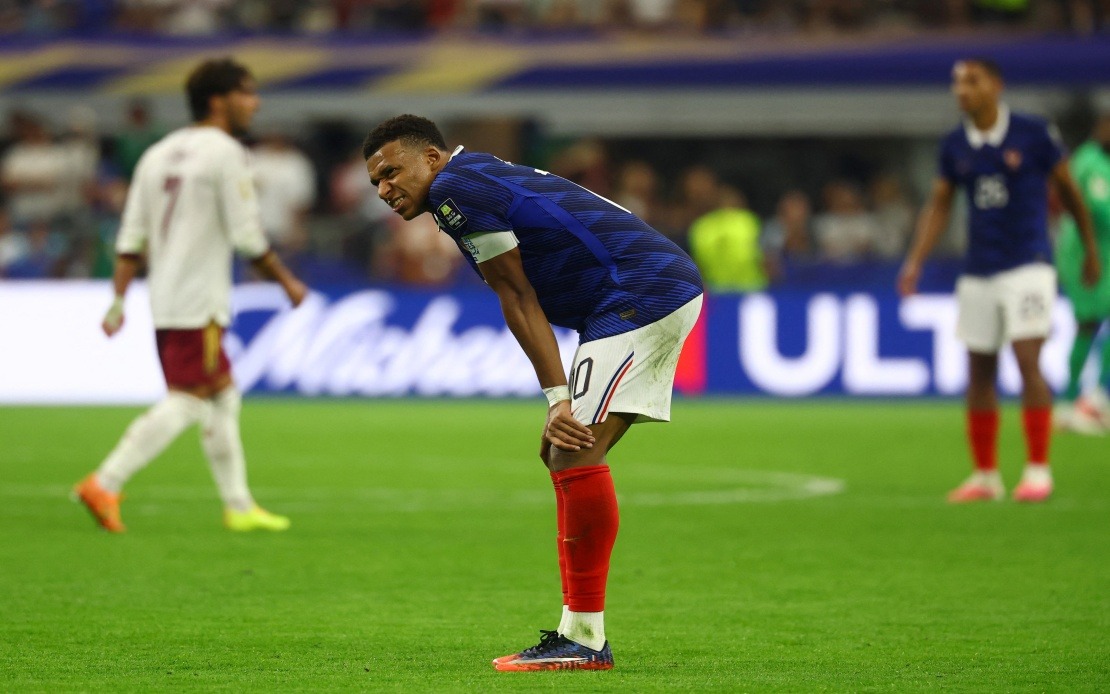
Disorder erupted across France's major cities on Tuesday evening as disappointment over the national football team's World Cup semifinal elimination boiled over into street violence. Police detained 141 people in the Paris region alone following clashes sparked by Spain's decisive 2-0 victory, while authorities in Lyon arrested approximately 20 additional suspects, bringing the combined total to more than 160 detainees according to reporting from broadcaster BFMTV on Wednesday.
The Paris Police Prefecture indicated that the overwhelming majority of arrests stemmed from the deployment of firework mortars against uniformed police officers and emergency responders. These incidents appear to have been concentrated in specific areas where supporters had gathered, though the exact locations and scale of disturbances remain unclear from initial reports. Notably, French authorities confirmed that no serious physical injuries resulted from any of the confrontations, suggesting that while the disturbances were serious enough to warrant mass arrests, the violence did not escalate to life-threatening levels.
In Lyon, the evening had begun peacefully enough as several hundred football fans assembled at Place Bellecour, one of Europe's largest public squares, to collectively watch the semifinal match. The atmosphere shifted dramatically once the final whistle confirmed Spain's progression to the World Cup final at France's expense. As the realisation of elimination sank in, splinter groups began coalescing throughout the plaza, and some individuals started hurling projectiles including fireworks toward riot police who were present in anticipation of potential disorder.
French riot control units responded swiftly to the emerging chaos, deploying conventional crowd-control measures to disperse the crowds and contain the disturbances before they could spread through the city centre. The intervention was sufficiently forceful to secure arrests but measured enough that local authorities reported neither injuries nor significant destruction of property in Lyon, in contrast to the more serious incidents occurring simultaneously in Paris. This measured response in Lyon stands in contrast to some historical precedents where football-related riots in French cities have resulted in extensive property damage and higher injury counts.
Demographic data released by authorities provides insight into the nature of the disorder. The detainees arrested in Lyon were notably young, with birth years spanning from 2002 to 2011, indicating that teenagers and very young adults comprised the bulk of those taken into custody. This youthful profile raises questions about whether these were primarily organised troublemakers or opportunistic youth caught up in moments of collective frustration following the national team's unexpected defeat. Understanding the composition of those arrested becomes crucial for assessing whether France faces a broader social disorder problem or isolated incidents of youthful exuberance turned violent.
The incident reflects broader patterns observed across football-obsessed nations whenever significant matches result in unexpected outcomes. France's trajectory through the World Cup had generated enormous national investment and emotional engagement, particularly given the country's recent successful tournament experiences. When expectations collide with disappointing results, populations gathered in public spaces can rapidly transform from celebratory crowds into sources of disorder, as demonstrated across European cities during previous World Cup tournaments.
For Malaysian and Southeast Asian observers, the French incidents provide instructive lessons regarding crowd management and public order during major sporting events. Nations hosting or supporting teams in international tournaments must weigh the desire to facilitate public celebration against the necessity of preparing law enforcement resources for potential disorder. The French response—rapid deployment of riot police with apparent success in preventing escalation—suggests that visible security preparedness can contain disturbances within manageable parameters.
The incident also underscores how modern sporting disappointments, filtered through social media and instant communication networks, can mobilise disorder with unprecedented speed. What might historically have remained localised expressions of frustration now spread through digital networks, potentially encouraging copycat behaviour in other cities. This pattern holds particular relevance for Southeast Asian nations with passionate sporting populations, where major tournament upsets could similarly trigger public disturbances requiring sophisticated crowd-management responses.
French authorities will likely conduct detailed investigations into the arrested individuals' backgrounds, motivations, and any evidence of organised coordination. Such investigations typically determine whether subsequent charges proceed as simple disorder offences or whether more serious accusations involving assault on police officers or conspiracy might be pursued. The severity of charges could influence sentencing outcomes and potentially affect how future sporting events are policed in France.
Beyond the immediate law-and-order dimensions, the incident raises questions about how nations process collective disappointment through their public spaces. The concentration of disorder in Paris and Lyon, coupled with the demographic profile of those arrested, suggests that specific urban environments and age cohorts are more prone to expressing frustration violently. Understanding these spatial and demographic patterns enables more targeted future interventions that can distinguish between legitimate public expression and genuinely dangerous disorder.

