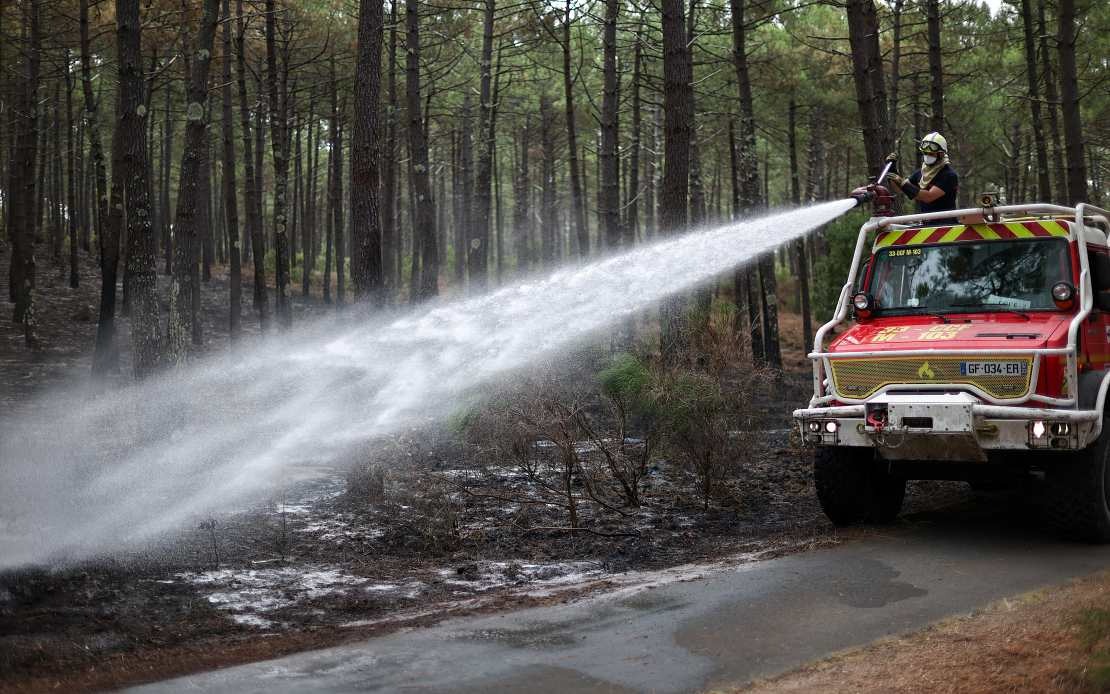
French Interior Minister Laurent Nunez announced Friday that authorities have made over 300 arrests related to wildfires ravaging the country since the fire season began, underscoring the extent to which human activity has fuelled the crisis. Speaking to broadcaster RTL, Nunez revealed that 308 people have been detained, characterising the arrest tally as exceptionally elevated and reflective of intensified enforcement operations across affected regions.
The scale of criminal activity uncovered during the wildfire season points to a troubling pattern. Approximately two-thirds of those arrested face suspicion of deliberately setting fires, suggesting arson constitutes a significant portion of the disaster's human dimension. This finding raises urgent questions about why individuals would ignite blazes during peak fire season and whether organised networks or isolated incidents account for most cases. The motivation behind such dangerous acts—whether criminal intent, revenge, negligence, or other factors—remains a critical area of investigation for French authorities.
Among the 308 detainees, the Interior Ministry disclosed that 127 are minors, a startling revelation that highlights how young people have become implicated in the crisis. The involvement of juveniles suggests either inadequate supervision, peer pressure within communities, or deliberate incitement by older individuals. French authorities will face significant challenges in addressing youth involvement, balancing juvenile justice principles with public safety imperatives.
The legal consequences for those arrested reflect the gravity with which France treats wildfire-related offences. Thirty-three individuals have been remanded in custody pending trial, are currently standing trial, or have already received convictions. This subset represents the most serious cases, where evidence or admissions have warranted detention or prosecution. The convictions already secured suggest that some cases have moved swiftly through the judicial system, enabling courts to impose penalties and deter further conduct.
The southwestern Gironde department has borne the brunt of France's wildfire season, with a single fire consuming nearly 42,000 hectares—an area roughly equivalent to 58,000 football pitches. The sheer scale of this blaze underscores the catastrophic potential when flames escape initial containment, destroying forests, agricultural land, and infrastructure while displacing thousands of residents. Though the fire has stabilised, pockets of flame persist across the burnt landscape, requiring continued vigilance and suppression efforts from firefighting teams.
Nunez cautioned that while the situation has improved markedly, complete containment remains elusive. Multiple hotspots continue to smoulder and flare, demanding constant monitoring lest shifting weather patterns reignite uncontrolled spread. This qualified optimism reflects the unpredictable nature of large-scale wildfires, where containment depends on sustained effort, favourable meteorological conditions, and the absence of fresh ignition sources—precisely the factors vulnerable to disruption by human activity.
As conditions stabilised, French authorities began permitting evacuated residents to return home. The Gironde prefecture announced that an additional 84,000 people across nine municipalities near Bordeaux could immediately reclaim their residences, marking a significant shift in emergency response from evacuation to recovery. This phased return process helps restore normalcy whilst maintaining caution against potential flare-ups, though many returned residents will confront charred landscapes, damaged homes, and the psychological toll of displacement.
On Thursday, Nunez told BFMTV that authorities had reason to believe the acute phase of the crisis had passed. His statement that "the worst may be behind us" signalled cautious confidence that the most dangerous period had concluded, contingent on continued vigilance and favourable conditions. Yet he simultaneously urged the public to remain alert, recognising that seasonal wildfire risk persists and that human carelessness or malice could reignite the emergency at any moment.
The broader picture remains concerning despite localised improvement. Meteo-France's alert system currently places 29 departments under orange-level wildfire warnings, indicating elevated risk across a significant swathe of the country. This distribution suggests that whilst the Gironde represents the most acute manifestation, fire danger remains widespread and requires sustained preventive measures, public awareness campaigns, and enforcement against potential arsonists across multiple jurisdictions.
For Malaysia and Southeast Asia, France's wildfire crisis and the systematic crackdown on suspected arsonists offer instructive lessons. The region experiences its own seasonal fire emergencies, particularly during dry seasons when transboundary haze from Indonesian peatland and forest fires affects air quality across multiple nations. The French approach—combining aggressive arrest policies with public messaging about containment progress—mirrors strategies employed in Southeast Asia, though the region's transnational dimensions and development pressures create distinct challenges that single-nation enforcement cannot fully resolve. Understanding how France addresses both the immediate crisis and its underlying human causes provides a comparative framework for evaluating regional fire management strategies.

