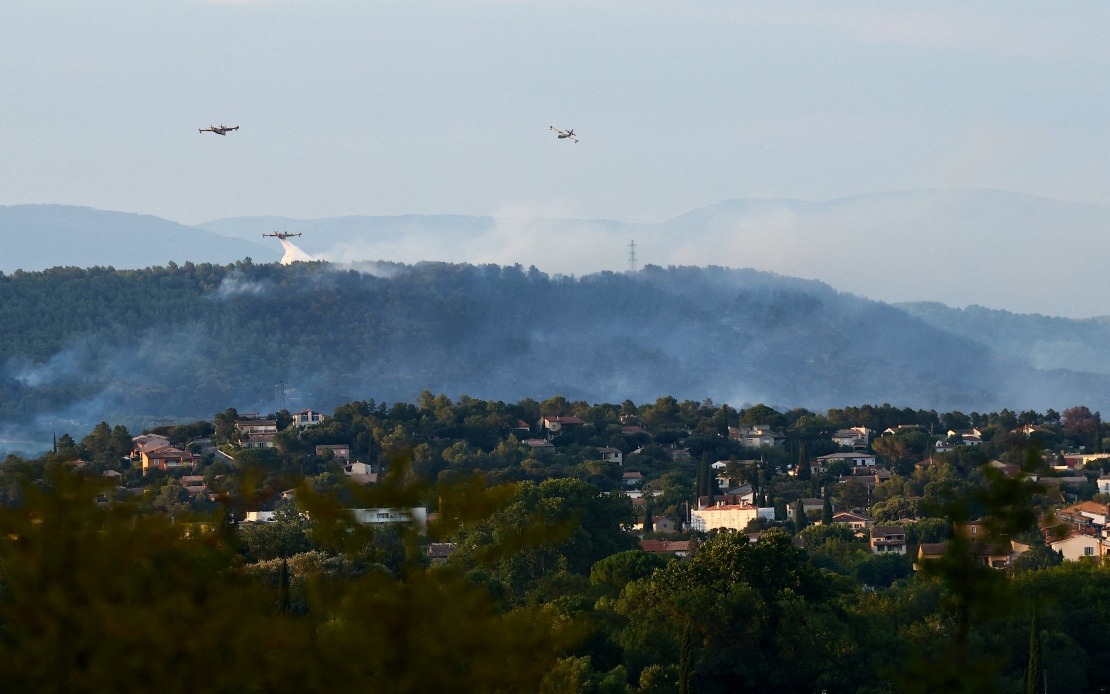
France is grappling with an unprecedented environmental crisis as wildfires continue to devastate the country at an alarming rate. Interior Minister Laurent Nunez revealed on Monday that nearly 40,000 hectares of forest and vegetation have been consumed by flames since the beginning of 2026, a figure that underscores the severity of the ongoing disaster. The scale of destruction represents a dramatic escalation compared with the previous year's toll, prompting government officials to warn that new fires are erupting with troubling regularity across French territory.
The underlying cause of this catastrophic wildfire season is a relentless heat wave that has gripped France throughout the summer months. Temperatures have consistently climbed toward 40 degrees Celsius, with certain regions experiencing even more extreme conditions. This exceptional meteorological phenomenon has created ideal conditions for wildfires to ignite and spread with minimal resistance, overwhelming the capacity of emergency services to contain the blazes. The combination of high temperatures, low humidity, and tinder-dry vegetation has transformed much of the French landscape into a tinderbox.
President Emmanuel Macron characterised the situation in mid-July as representing the highest number of wildfires France has experienced during any summer period since the conclusion of World War II. This assessment from the nation's highest office reflects the gravity of the current emergency and serves as a stark reminder of how climate volatility is reshaping environmental hazards across Europe. The presidential acknowledgment signals that this is not merely a seasonal inconvenience but rather a profound national challenge that demands immediate and sustained governmental response.
Metereological data further illustrates the unprecedented nature of the crisis. At the end of June, France's national weather service issued alerts across 72 of the country's 96 departments—the highest number of weather warnings ever recorded for the period. This near-total coverage of alert zones demonstrates the geographic scope of the extreme conditions, affecting rural regions, urban peripheries, and areas that had previously been considered relatively safe from such atmospheric extremes. The breadth of the warning system activation reflects how the heat wave has become a nationwide phenomenon rather than a localised occurrence.
From a Southeast Asian perspective, France's wildfire emergency serves as a cautionary illustration of climate change impacts that increasingly resemble challenges already familiar to the region. Malaysia and neighbouring countries have themselves experienced devastating forest fires, particularly during El Niño-driven drought periods, with transboundary haze creating regional public health crises. The French experience demonstrates that developed nations with advanced firefighting resources and infrastructure are nonetheless vulnerable to environmental degradation when climatic patterns shift dramatically. This parallel underscores the urgency of international climate action and the reality that no region possesses immunity from intensifying environmental hazards.
The escalating wildfire trend in France also carries implications for European agricultural production and food security networks that extend into global supply chains. As forests burn and vegetation is consumed, the capacity for carbon sequestration declines while fire-damaged agricultural lands require years to recover productivity. These disruptions can create ripple effects across international trade systems, including impacts on pricing and availability of grain, wine, and other agricultural products that Malaysia and the region import from European sources.
French authorities face mounting pressure to implement both immediate emergency responses and longer-term climate adaptation strategies. The current reactive approach—responding to fires as they emerge—appears insufficient given the persistence and scale of ignition events. Officials must consider enhanced early warning systems, expanded firefighting resources, and potentially controversial land management practices such as controlled burns and vegetation clearance that can reduce fuel loads in vulnerable areas. These decisions represent difficult trade-offs between immediate fire suppression and environmental conservation goals.
The financial burden of managing this crisis extends beyond direct firefighting costs to encompass recovery infrastructure, displaced person assistance, and environmental restoration. Insurance markets will likely respond to increased risk assessments, potentially affecting agricultural insurance rates and property values in fire-vulnerable regions. The economic ripples will extend across European economies and touch global commodity markets where France holds significant influence.
Looking forward, the situation in France demonstrates the inadequacy of existing climate adaptation frameworks when confronted with rapidly accelerating environmental change. The nation's experience suggests that even wealthy, technologically advanced societies must fundamentally recalibrate their approach to land use planning, infrastructure resilience, and emergency preparedness. For Malaysia, observing France's struggle offers valuable lessons about the limitations of reactive management and the necessity of proactive climate resilience planning across all economic sectors.

