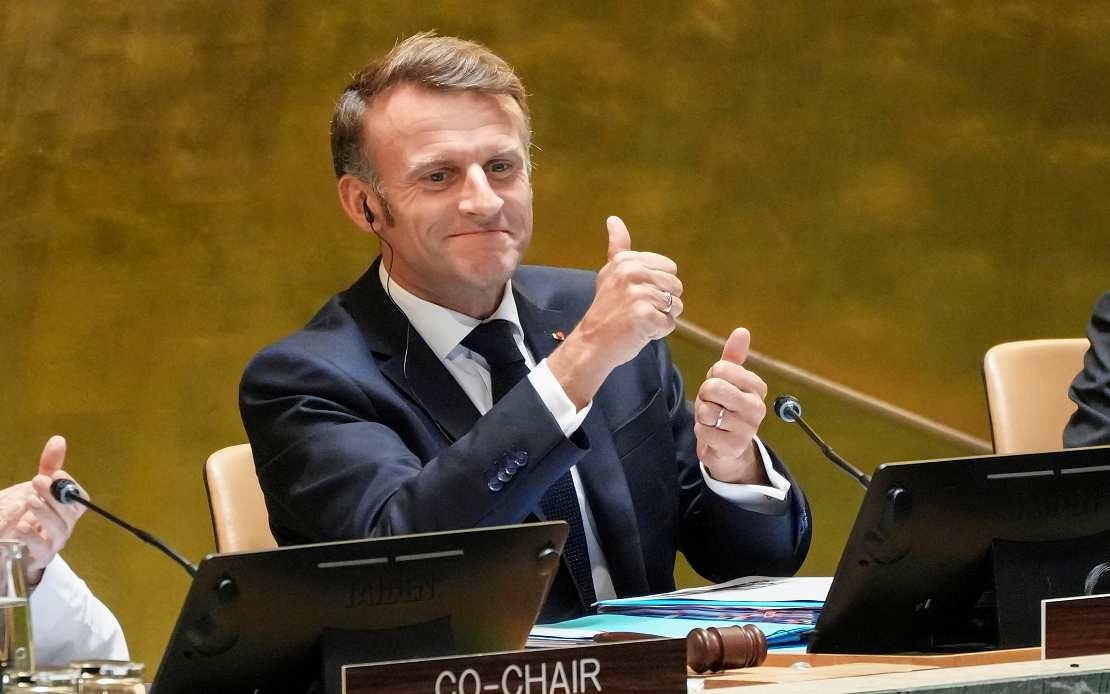
France is responding to mounting migration pressures in the Spanish North African enclave of Ceuta by implementing a comprehensive security upgrade along its border with Spain. The decision, signalled by President Emmanuel Macron, represents a coordinated response to what authorities view as an emerging challenge requiring immediate attention and resourceful deployment of border infrastructure.
The Élysée Palace confirmed on Friday that Macron has instructed Interior Minister Laurent Nuñez to accelerate and intensify border verification procedures at the Spanish frontier without further delay. This directive underscores France's concern that the migrant situation developing in Ceuta could create secondary migration flows northward into European Union territory, potentially straining French resources and complicating asylum processing systems already facing significant caseloads.
Interior Minister Nuñez wasted no time in translating the presidential directive into operational reality, issuing comprehensive orders to his department on Thursday evening to commence enhanced screening immediately. The scope of the escalation extends far beyond the immediate frontier itself, with plans to deploy border agency rapid reaction personnel inland to conduct checks in border regions, substantially broadening the geographic scope of heightened vigilance.
The rapid reaction force being mobilized comprises a cross-disciplinary team drawing from multiple French security services, including regular police, the National Gendarmerie, customs officials, and personnel from Sentinelle, the specialized military unit focused on counter-terrorism operations. This multi-agency composition reflects France's assessment that effective border management requires coordination across law enforcement, intelligence, and military domains. The same unit has been operating effectively along France's Italian frontier to manage migration flows from the Mediterranean, providing tested operational experience for the Spanish border deployment.
The scale of the reinforcement is substantial. Beginning from Saturday, France is mobilizing 334 police officers and gendarmes dedicated specifically to border enforcement operations. Complementing ground-based personnel, the French authorities are deploying three dedicated aircraft equipped for aerial surveillance, supplemented by drone operations that will provide real-time intelligence on cross-border movement patterns. Additionally, railway patrols along French-Spanish train routes will be increased, targeting potential migrant transit via rail networks that have historically served as secondary migration routes when maritime options face restrictions.
France is simultaneously engaging in multilateral diplomatic coordination to address the underlying causes and manage the situation comprehensively. Macron has been consulting directly with both Spanish and Moroccan authorities, acknowledging that Ceuta's location on Moroccan territory means that any sustainable solution requires Moroccan cooperation and involvement. The French president has conveyed to Spanish Prime Minister Pedro Sánchez France's willingness to provide whatever assistance Spain requires, framing the issue as a shared European challenge rather than a bilateral Spanish-Moroccan matter alone.
The migration surge in Ceuta reflects broader Mediterranean dynamics that directly concern France and other European Union members. Ceuta, located on Morocco's Mediterranean coast, has periodically experienced sudden influxes of migrants seeking to reach Europe. These surges often follow seasonal patterns, changing smuggling routes, or shifts in enforcement activities elsewhere along the North African coast. By addressing the issue at the French-Spanish border before migrants can penetrate deeper into EU territory, Paris aims to establish an outer defensive perimeter while avoiding the impression of abandoning Spain to manage the crisis unilaterally.
For Malaysia and Southeast Asian observers, this European response illuminates how developed nations with sophisticated security infrastructure and regional cooperation mechanisms attempt to manage migration pressure. France's layered approach—combining ground personnel, aerial surveillance, railway monitoring, and diplomatic engagement—contrasts sharply with resource constraints many Southeast Asian nations face. Yet the fundamental challenge resonates across regions: managing human migration while respecting humanitarian obligations requires sustained investment in border infrastructure, inter-agency coordination, and sometimes uncomfortable diplomatic conversations with neighboring states.
The situation also underscores the vulnerability of small enclaves like Ceuta and Melilla, Spanish territories surrounded by Morocco. These geographic anomalies periodically become flashpoints when migration pressures intensify, as migrants perceive them as relatively accessible gateways to European Union territory. Spain's historical experience with migration surges in these enclaves, sometimes numbering thousands crossing in single incidents, has made French-Spanish border coordination an increasingly important component of EU migration management strategy.
Macron's personal engagement signals that France considers this issue sufficiently serious to warrant presidential-level attention, likely reflecting concern that unmanaged migration in Ceuta could create second-order effects across the Mediterranean and potentially destabilize other European transit zones. By intervening early and visibly, France attempts to demonstrate both capability and resolve, potentially deterring migrants from viewing the French-Spanish route as a viable passage to northern Europe.
The deployment represents a significant commitment of French security resources, drawing personnel and equipment that might otherwise address other security priorities. This reallocation reveals how migration pressure, even localized to a Spanish enclave, can force reordering of security priorities across EU member states. The message to potential migrants is unmistakable: France is preparing a robust response to any secondary movement from Ceuta, using every available surveillance and enforcement tool at its disposal to maintain border integrity.

