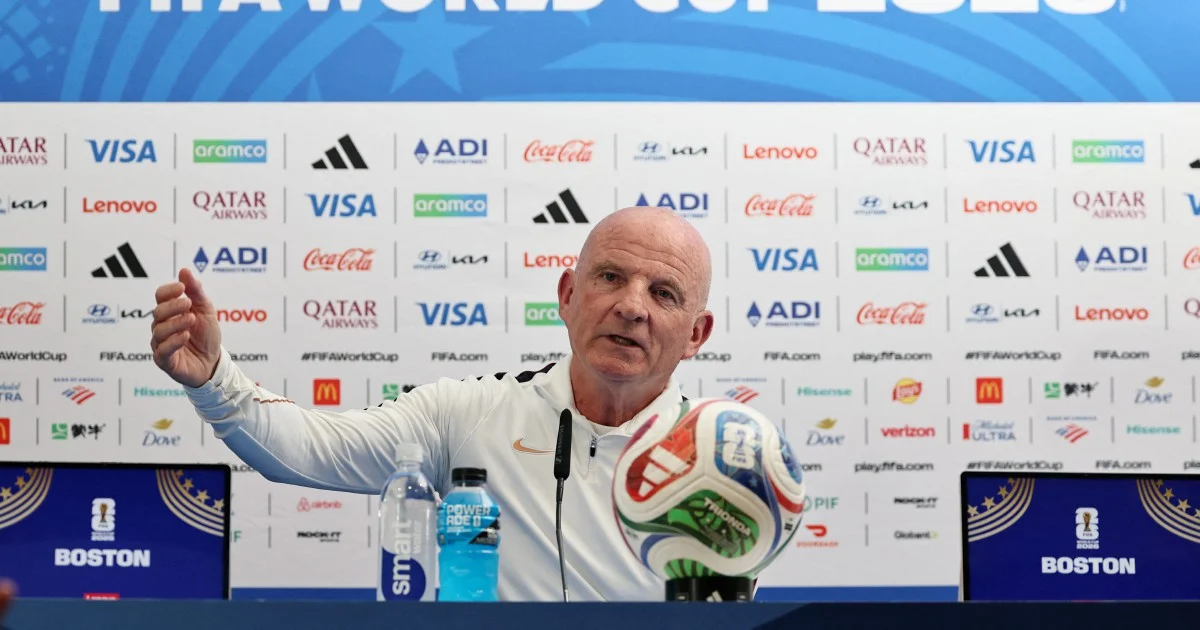
France will attempt to secure first place in World Cup Group I when they face a resurgent Norway on Friday, a victory that would spare the defending champions from navigating the logistical nightmare of long-distance travel across America during the latter stages of the competition. Assistant coach Guy Stephan, deputizing for manager Didier Deschamps who has travelled back to France following his mother's passing, explained that winning the group offers tangible advantages beyond the usual prestige of topping the standings. The strategic importance of the match extends far beyond football, touching on the very practical realities that shape a team's fitness, preparation time, and morale as tournaments progress into their decisive phases.
Stephan articulated the squad's priorities with clarity during Thursday's pre-match briefing, emphasizing that securing top spot represents the collective ambition rather than merely an individual preference. France's position is substantially strengthened by the mathematics of the situation—they have already amassed six points from their opening two matches and need only a draw against Norway to clinch the group thanks to a superior goal difference. This mathematical advantage means the French delegation can approach the fixture with calculated confidence, knowing that a conservative approach could prove sufficient, though a victory would definitively remove any lingering uncertainty about their progression.
The geographic dimension of the group-stage outcome carries considerable weight in the tournament's North American context. Should France finish second, they would face the prospect of relocating multiple times across the sprawling continental United States, with potential fixtures taking them to Dallas, Miami, and Atlanta—cities separated by vast distances that would necessitate gruelling travel between matches. For context, Dallas to Miami alone stretches nearly 2,000 kilometres, a journey that would consume valuable recovery time and disrupt the carefully calibrated training schedules that modern football teams depend upon. Remaining in the Northeastern region, where they are currently based near Boston, would allow France to maintain established routines, preserve squad cohesion, and avoid the cumulative fatigue that cross-country travel invariably produces, particularly in the intense heat and humidity of the American summer.
Beyond logistical considerations, climate emerges as a secondary but significant factor influencing the desirability of remaining in the Northeast. Stephan specifically referenced temperature variations across different American regions, with the implication that the more temperate conditions of the Northeast would suit the squad better than the sweltering heat awaiting teams in southern venues. For European athletes accustomed to cooler continental conditions, such environmental factors can meaningfully impact performance levels, particularly as the tournament advances and cumulative fatigue becomes an increasingly pressing concern.
France's current position stems from their commanding performances in the group stage thus far. Both France and Norway have won their opening two matches and secured advancement to the knockout rounds, establishing themselves as the group's dominant forces. This mutual success sets the stage for a high-quality encounter between two teams operating at peak efficiency, though France's superior goal difference grants them a significant cushion that fundamentally alters the match dynamics. Norway cannot top the group regardless of Friday's result, meaning they play purely for pride and the opportunity to avoid a defeat that might dent their confidence heading into the knockout phase.
Deschamps' temporary absence creates an unusual administrative situation that required careful navigation by the French Football Federation. The manager's decision to return to France for his mother's funeral is understandable and appropriate, yet it leaves his assistant in operational control during a critical fixture. Stephan indicated that communications between the two coaching staff members remain active, though he expects minimal contact on Friday given the funeral's scheduling. This separation of duties, while necessary, nonetheless represents a departure from the ideal of consistent leadership during tournament football, when sudden decisions and tactical adjustments often prove decisive.
Injury concerns further complicate France's preparations for the Norway encounter. Central defender William Saliba's unavailability removes a key component from the defensive architecture, forcing tactical reconsideration in a position where established combinations provide psychological comfort. Additionally, striker Marcus Thuram's reported calf problems raise question marks about his availability, though Stephan's phrasing suggests his status remains uncertain rather than definitively ruled out. These physical setbacks, while not career-threatening, nonetheless force the coaching staff to prepare contingency plans and consider alternative formations that might compensate for the absence of key personnel.
Norway's qualification alongside France demonstrates the group's competitive balance and the quality of opposition that has emerged in this World Cup cycle. The Scandinavian nation's two-victory start indicates they possess the technical and tactical capabilities to trouble established football powers, making them formidable opponents regardless of their mathematical elimination from top-spot contention. For France, complacency represents the primary danger—the temptation to believe that a draw suffices could invite a Norwegian team playing with nothing to lose beyond their tournament dignity.
The broader context of France's tournament objectives extends beyond mere group advancement. As defending champions from 2018, the French squad carries expectations of deep progression and medal contention. Every advantage accrued during the group stage—whether logistical, climatic, or psychological—contributes to the cumulative burden or benefit that accumulates as the competition progresses. Nations that optimize their path through the group stages often find themselves in superior physical and mental condition by the time quarter-finals and semi-finals arrive, when tournament football becomes increasingly unpredictable and marginal advantages determine outcomes.
For Malaysian and Southeast Asian observers, France's tournament trajectory offers insights into how elite football nations approach global competitions with meticulous attention to detail extending well beyond pure sporting considerations. The emphasis on minimizing travel disruption and environmental challenges reflects a professionalization of football management that extends tournament preparation into domains traditionally considered peripheral. This comprehensive approach to tournament optimization exemplifies the gap between elite and aspiring football nations, particularly regarding the infrastructure and planning capabilities that accompany sustained success at international level.

