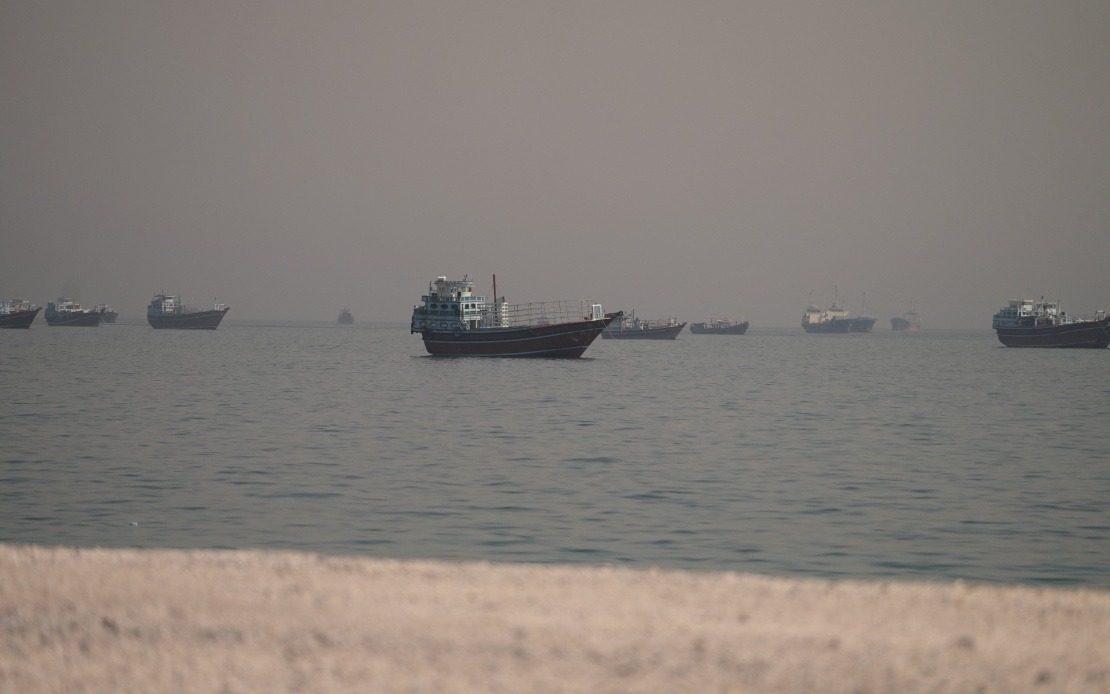
France has identified Syria as a potential alternative corridor for oil transportation, seeking to insulate global energy markets from disruptions caused by mounting tensions between the United States and Iran in the Strait of Hormuz. Foreign Minister Jean-Noel Barrot articulated this strategic vision during a television interview with TF1, positioning the Eastern Mediterranean nation as a crucial hub for diversifying Europe's energy supply chains. The comments come in the wake of President Emmanuel Macron's visit to Damascus on Tuesday, marking a significant diplomatic engagement aimed at solidifying France's partnership with Syria's transitional government.
Barrot underscored the critical importance of establishing multiple energy pathways to shield European economies from potential blockades or disruptions at critical chokepoints. The Strait of Hormuz, through which roughly one-third of globally traded oil passes annually, has long been vulnerable to geopolitical tensions. Recent confrontations between Washington and Tehran have heightened concerns about the security of this vital waterway, prompting major energy-importing nations to explore alternatives that circumvent the Persian Gulf entirely. For France and the European Union, which remain heavily reliant on imported hydrocarbons, such diversification represents a fundamental national security imperative.
Syria's emergence as a potential energy hub reflects the dramatic political transformation that has unfolded in the Levantine nation. Following the overthrow of Bashar al-Assad approximately eighteen months ago, the country has been navigating a complex transition toward reunification and institutional strengthening. Barrot characterised this period as presenting both challenges and unprecedented opportunities for international cooperation. By positioning France alongside Syria during this formative phase, Paris appears to be betting on the country's stabilisation and integration into regional economic structures.
The diplomatic overture carries particular significance for Southeast Asian observers, as supply chain disruptions in the Middle East invariably ripple across Asia-Pacific energy markets. Malaysia and other ASEAN nations, which import substantial quantities of oil and liquefied natural gas through regional shipping lanes, remain acutely vulnerable to Persian Gulf volatility. Any European initiative to develop alternative energy corridors could have indirect benefits for Asian importers by moderating global crude prices and reducing competition for limited supplies from other sources.
France's strategy extends beyond mere energy security considerations. By establishing closer economic and trade partnerships with Damascus, French policymakers aim to position their country as a leading European partner during Syria's reconstruction phase. This positions France advantageously ahead of other European capitals in competition for influence and commercial opportunities in a post-Assad Syria. The timing of the presidential visit demonstrates that Paris is not viewing this engagement as peripheral but rather as central to its broader Middle Eastern strategy.
Barrot's statements during the TF1 interview emphasised comprehensive cooperation across multiple sectors, not solely energy infrastructure. He outlined plans to strengthen diplomatic ties, expand commercial partnerships, and deepen institutional relationships with the Syrian government. This multifaceted approach suggests that France perceives the Syrian transition as creating space for meaningful engagement across economics, security, and cultural domains. The French foreign minister stressed that Paris stands resolute with the Syrian people, framing the relationship through a lens of solidarity rather than strategic opportunism.
The proposal carries notable implications for regional power dynamics. Syria's geographic position spanning the Mediterranean and positioned adjacent to traditional Middle Eastern oil-producing regions makes it strategically valuable for transit infrastructure. Should political stability consolidate over the coming years, the country could indeed function as a nexus connecting European and Asian energy markets while reducing transit dependence on the Strait of Hormuz. However, realising this vision requires sustained international investment in infrastructure and continued political maturation within Syria itself.
For Malaysian readers, this development warrants attention as it illustrates how European energy security concerns translate into policies affecting Asian markets. A successful diversification of European energy sources could indirectly reduce pressure on global oil prices and supply competition, benefiting energy-importing Southeast Asian economies. Conversely, should instability recur in Syria, European attempts to develop alternative corridors could falter, intensifying competition for Gulf supplies and potentially driving prices higher.
The French initiative also reflects broader European recognition that energy security cannot be divorced from geopolitical engagement. By strengthening ties with Syria during its transition, France is attempting to shape regional outcomes favourable to European interests while simultaneously offering tangible support to a nation undertaking difficult transformation. This approach contrasts with purely transactional energy diplomacy, instead embedding energy cooperation within comprehensive political and economic partnership frameworks.
Looking forward, the success of France's Syrian energy corridor initiative depends on multiple factors beyond Paris' control. Continued political stabilisation in Damascus, security improvements throughout the country, and construction of necessary infrastructure all remain essential preconditions. Additionally, other European nations may pursue similar strategies, potentially creating competition rather than coordination. The extent to which Syria can actually function as a reliable alternative to Hormuz-dependent supply chains remains uncertain, but the French government's commitment to exploring this possibility signals serious intent to reduce European vulnerability to Middle Eastern disruptions.

