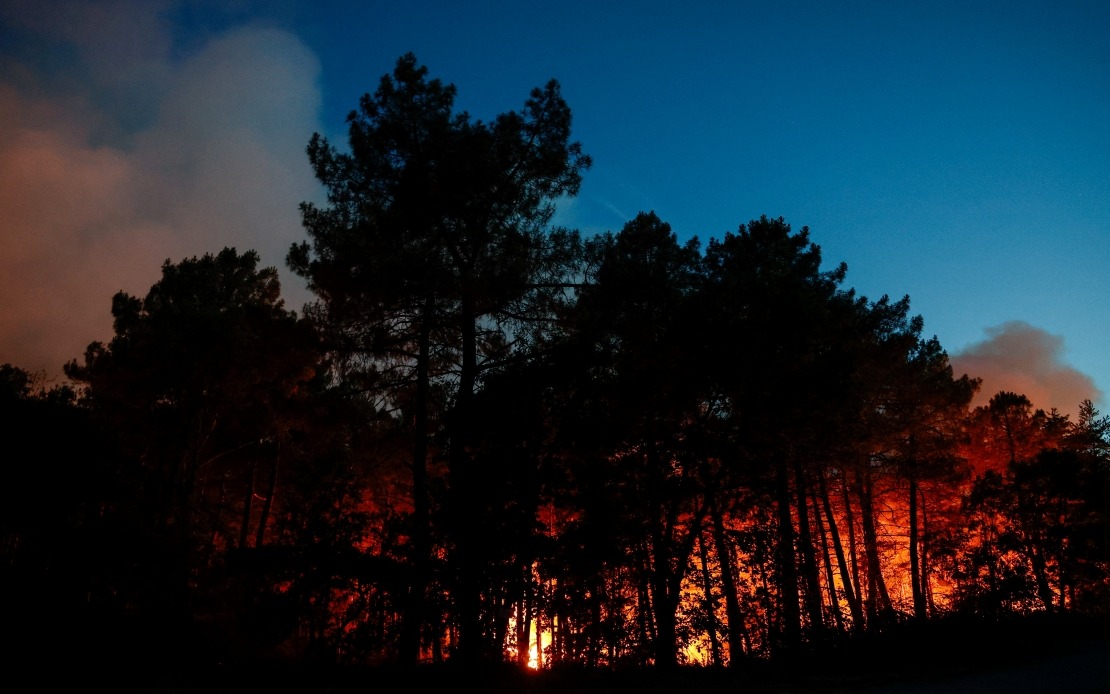
France is confronting an exceptionally severe wildfire season that has already consumed an area larger than the Klang Valley, with Interior Minister Laurent Nunez disclosing that 119,000 hectares have fallen victim to fire since the year began. The scale of destruction underscores the environmental and security challenges facing Western Europe as climate-related hazards intensify, a pattern increasingly familiar to observers across Southeast Asia tracking global warming impacts.
The national toll reflects not merely isolated incidents but a systemic crisis gripping multiple regions simultaneously. Since January, French authorities have documented 14,320 separate wildfire events, a staggering figure that demonstrates how comprehensively fire has infiltrated the national landscape. On Friday alone, 25 major blazes demanded intensive firefighting responses, overwhelming even the substantial resources France has mobilised for this emergency.
Laurent Nunez's assessment underscores why officials view this year as exceptional. The combination of persistently elevated temperatures, soil moisture depletion and vegetation desiccation has created conditions where flames spread with alarming velocity and intensity. These environmental factors align closely with patterns observed during Malaysia's periodic haze crises, though France faces the added complexity of managing active wildfires rather than primarily combating transboundary smoke.
Geographical vulnerability is concentrated in France's most picturesque and densely populated zones. The Mediterranean coastline, the Rhone Valley corridor and western regions all face elevated threat levels, but the Var department and southern Corsica have reached crisis intensity, classified under the highest warning designation of "very severe." This concentration in economically and culturally significant areas amplifies the stakes beyond mere landscape damage.
The Var department's experience exemplifies the unpredictable nature of these fires. A blaze that authorities believed contained reignited on Friday, consuming an additional 1,500 hectares and demonstrating how rapidly suppression efforts can unravel. Such reversals complicate resource planning and exhaust personnel tasked with managing multiple fronts simultaneously. In response, authorities deployed 1,500 supplementary firefighters overnight to shield communities from encroaching flames, supported by intensive aerial bombardment operations that continued until darkness halted visibility.
France's response architecture reveals the institutional scale required to manage contemporary wildfire crises. The nation maintains 65 interdepartmental firefighter reinforcement columns currently activated across the country, having peaked at 72 units in recent days. All aerial firefighting assets remain deployed and operational, indicating that authorities are functioning at near-maximum capacity. Strategic decisions to temporarily stand down certain units reflect calculated risk management, allowing exhausted crews essential recovery time while maintaining rapid reactivation protocols should conditions deteriorate further.
The investigation dimension adds a secondary crisis layer. Security forces have arrested 328 individuals linked to wildfire investigations, suggesting that deliberate arson contributes meaningfully to the overall toll alongside climate-driven natural ignition sources. This criminal element complicates public safety messaging and demands coordination between firefighting and law enforcement agencies, diverting resources from suppression activities.
Nunez's warning that dangerous conditions persist despite modest humidity improvements in certain regions reflects the reality that climatic amelioration at regional scale cannot offset the fundamental environmental preconditions favouring uncontrolled fire spread. The underlying drivers—sustained high temperatures and severely depleted soil and vegetation moisture—remain largely unchanged despite tactical weather variations. This persistence indicates that relief may not arrive for weeks, condemning France to prolonged emergency operations.
The implications extend beyond French borders. European Union coordination on wildfire response, cross-border resource sharing arrangements and the continental pattern of climate-driven seasonal hazards all intersect within this crisis. For Malaysian policymakers and environmental managers, France's experience offers sobering lessons about the trajectory of climate adaptation challenges and the institutional preparedness necessary to manage increasingly severe natural disasters. The scale of resources France has mobilised—drawn from one of the world's wealthiest democracies—illustrates how resource-intensive catastrophe management becomes when baseline conditions shift fundamentally.
French authorities have urged residents to heed local government instructions and maintain constant vigilance. This appeal underscores how managing modern wildfire crises requires not merely bureaucratic response but genuine community participation and information discipline. Miscommunication or complacency can prove fatal when fire spreads with the velocity observed across France's affected regions.
The trajectory of France's 2023 wildfire season suggests that this crisis will likely persist through the summer months, testing institutional resilience and human endurance. As temperatures remain elevated and vegetation stress continues, the conditions that have already consumed an area equivalent to Singapore's land area show no immediate signs of relenting, pointing toward a season whose final toll may substantially exceed current figures.

