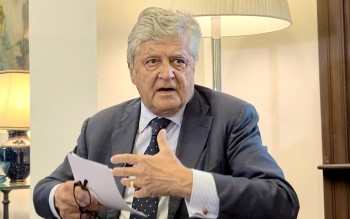
France has extended an offer to collaborate with Malaysia on developing civil nuclear energy capabilities, contingent upon Malaysia's government deciding to include atomic power in its decarbonisation strategy. French Minister Delegate for Foreign Trade and Economic Attractiveness Nicolas Forissier made the proposal during an official visit to Kuala Lumpur, underscoring that Paris stands prepared to transfer decades of nuclear expertise should Malaysian policymakers choose this pathway. The overture comes as Malaysia weighs nuclear energy among various options for achieving cleaner electricity generation, with Forissier acknowledging that the matter remains subject to domestic deliberation and national consultation.
Forissier's diplomatic positioning reflects France's strategic interest in deepening economic ties with Southeast Asia while offering genuine technological assistance. He stressed that the decision fundamentally rests with Malaysia's government, which is currently conducting comprehensive studies and engaging in public debate about the viability of incorporating nuclear capacity into the nation's future energy portfolio. This cautious framing demonstrates respect for Malaysian sovereignty whilst establishing France as a ready partner should officials determine that atomic energy aligns with national development objectives. The minister emphasised that nuclear power represents perhaps the most effective means of generating substantial quantities of decarbonised electricity, a critical consideration as countries globally confront climate imperatives.
France's nuclear credentials are substantial and worth understanding in the Malaysian context. The European nation generates approximately 60 per cent of its electricity from nuclear facilities, with the remaining supply derived from renewable sources including solar and wind installations. This heavy reliance on atomic power has enabled France to maintain one of Europe's lowest carbon footprints for electricity production, a model that French officials believe could offer valuable lessons for developing economies seeking to balance energy security with environmental commitments. By contrast, Malaysia's electricity grid remains dominated by natural gas and coal-fired generation, though the government has articulated ambitions to increase renewable energy contributions significantly by 2050.
The prospect of nuclear collaboration touches on longstanding technical and governance challenges that Malaysia must address before proceeding. Nuclear energy requires sustained institutional capacity, rigorous regulatory frameworks, and substantial long-term financial commitments spanning 50 to 80 years, according to Forissier's assessment. This extended timeframe means any nuclear programme would represent a multi-generational infrastructure commitment, binding future administrations to operational and safety standards. Malaysia would need to develop or strengthen indigenous expertise in reactor operation, waste management, decommissioning protocols, and emergency response procedures—capabilities that currently exist only in nascent form within the country.
Forissier's visit carried broader diplomatic significance beyond nuclear discussions alone. He arrived in Malaysia accompanied by a delegation representing more than 20 French companies, signalling substantial private-sector appetite for expanded bilateral economic engagement. This commercial dimension underscores that France's nuclear proposition sits within a larger framework of deepening economic partnership, encompassing defence procurement, industrial cooperation, and technology transfer initiatives. The diversity of French business interests suggests opportunities for Malaysian firms across multiple sectors, from aerospace and engineering services to renewable energy infrastructure.
The timing of this overture reflects accelerating high-level political engagement between France and Malaysia. Forissier's visit follows a sequence of significant diplomatic exchanges, including bilateral conversations between the foreign ministers of both nations and a March 2025 visit by Malaysia's defence minister to a French aircraft carrier—an event symbolising military-strategic cooperation. Most significantly, Prime Minister Datuk Seri Anwar Ibrahim visited France on July 3 and 4, 2025, just days before Forissier's Kuala Lumpur mission. This compressed diplomatic calendar indicates that both governments are investing political capital in relationship-building and exploring collaboration avenues.
For Malaysia, evaluating nuclear energy involves weighing multiple considerations beyond technical feasibility. Public acceptance remains uncertain; previous Malaysian governments have encountered resistance to nuclear proposals from environmental and safety-conscious constituencies. Additionally, Malaysia possesses significant renewable energy potential through solar and wind resources, raising questions about whether nuclear investment represents the optimal decarbonisation pathway. The country's substantial liquefied natural gas reserves and established gas infrastructure mean that transitioning away from hydrocarbons faces entrenched economic interests and existing capital investments. Nuclear energy would require overcoming these structural obstacles whilst simultaneously building public confidence in atomic safety protocols.
Regional context shapes Malaysia's nuclear deliberations as well. Several Southeast Asian neighbours have pursued or considered nuclear capacity. Vietnam has encountered setbacks in advancing planned reactors, whilst Thailand has explored nuclear options intermittently. Indonesia, blessed with geothermal resources, has maintained limited nuclear ambitions. The absence of established nuclear programmes in the region means Malaysia would likely pioneer atomic energy deployment in Southeast Asia, bearing associated reputational risks should any operational difficulties emerge. This pioneering position could, conversely, establish Malaysia as a regional leader in advanced low-carbon technology if nuclear development succeeds.
The financial dimensions warrant careful scrutiny as well. Nuclear facilities demand enormous upfront capital expenditure, typically billions of dollars per reactor, with costs frequently exceeding initial projections. Malaysia would need to secure long-term financing mechanisms, whether through government budgets, international loans, or public-private partnerships. France's experience suggests that state involvement proves essential, as purely commercial investment in nuclear infrastructure remains challenging. The Malaysian government would need to commit substantial resources whilst managing competing budgetary priorities in education, healthcare, and conventional infrastructure development.
Forissier's framing of the French offer as a long-term partnership reflects realistic expectations about nuclear development timelines. Construction periods typically span a decade or more, regulatory approval processes consume years, and operational life extends across generations. This extended horizon means any Malaysian nuclear programme announced today would not generate significant electricity for 15 to 20 years minimum. Such delayed benefits contrast with the more immediate returns from expanding solar and wind capacity, which can be deployed within 2 to 5 years. This timing consideration shapes the strategic calculus for policymakers balancing near-term decarbonisation targets against longer-term emissions reduction commitments.
The Malaysian government's approach thus far emphasises measured evaluation rather than commitment. Officials have indicated openness to exploring all low-carbon technologies without excluding nuclear from consideration. This pragmatic stance acknowledges nuclear's potential whilst remaining attentive to public sentiment and technical feasibility assessments. France's willingness to provide technical support and knowledge transfer could facilitate informed decision-making, allowing Malaysian experts to conduct thorough evaluations of whether civil nuclear energy suits national circumstances. Such technical cooperation would complement broader discussions about energy transition pathways and decarbonisation strategies appropriate to Malaysia's development stage and resource endowments.
Moving forward, Malaysia's nuclear decision will likely depend on several converging factors: renewable energy cost trajectories, grid modernisation requirements, public acceptance levels, and international financing availability. France's offer provides a valuable option within this broader decision-making framework, ensuring that Malaysian policymakers can access world-class expertise should they determine that atomic energy deserves inclusion in the national energy strategy. The willingness of a major industrial power to share technological knowledge and operational experience demonstrates international recognition of Malaysia's potential as a significant Southeast Asian economy capable of deploying advanced energy infrastructure.

