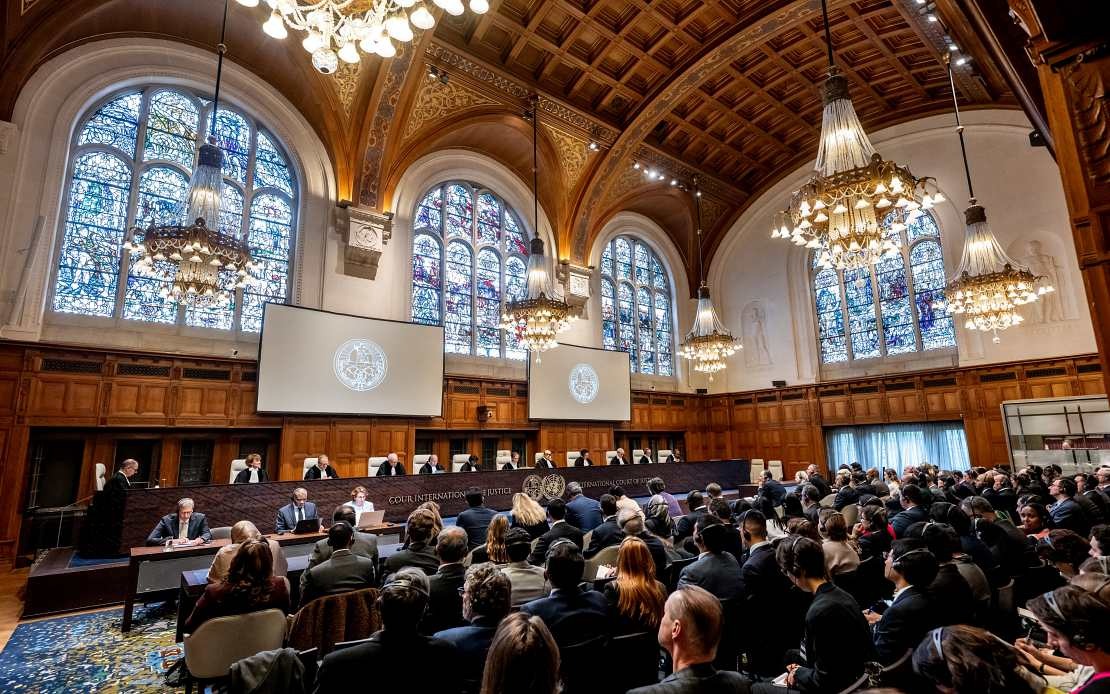
France has doubled down on its commitment to the International Criminal Court, firmly rejecting assertions from the United States that the multilateral justice institution represents a threat to sovereign nations. The French government's position, articulated through Foreign Ministry spokesman Pascal Confavreux on Thursday, reflects a widening diplomatic rift between Washington and several key Western allies over the future direction of international criminal justice mechanisms.
Confavreux's remarks directly addressed the core complaint lodged by US Secretary of State Marco Rubio, who recently characterised the ICC as an existential challenge to American sovereignty and signalled Washington's intention to campaign actively against the court's membership. The French official sought to reframe the debate by emphasising that the ICC's mandate focuses exclusively on prosecuting individuals guilty of the most egregious international crimes—genocide, war crimes, crimes against humanity, and aggression—rather than on holding governments accountable as institutional entities.
This clarification carries particular importance in the current geopolitical environment, where scepticism towards multilateral institutions has intensified among certain powerful governments. France's restatement of unwavering support underscores Europe's commitment to maintaining robust mechanisms for addressing mass atrocities and preventing impunity for those responsible for catastrophic human rights violations. For Southeast Asian nations, which have seen their own conflicts and alleged war crimes, the viability of such international accountability systems carries direct relevance to regional stability and justice.
The dispute emerged after the US State Department unveiled an initiative explicitly designed to constrain what it characterised as the ICC's ability to challenge or infringe upon American sovereignty. This bureaucratic machinery, combined with Rubio's public statements calling for other nations to withdraw from the court, signals a more aggressive American posture towards international criminal justice than in previous administrations. The Trump-allied secretary of state has long viewed multilateral institutions with suspicion, viewing them as potential constraints on American freedom of action.
France's response transcends symbolic solidarity. By publicly restating its position, the French government is protecting not only the institutional integrity of the ICC but also signalling to like-minded democracies that they should maintain their commitments to international law and accountability mechanisms. Such gestures matter significantly in shaping the behaviour of smaller nations that might otherwise face pressure to align with American preferences.
The ICC, headquartered in The Hague and operational since 2002, represents the first permanent international court established to prosecute individuals responsible for humanity's most serious offences. The United States notably declined to join this framework, remaining outside the court's jurisdiction despite being a permanent Security Council member and a major power in shaping international norms. France, by contrast, has long championed the court's work and remains among its staunchest institutional supporters.
Confavreux also raised concerns about the safety and security environment facing ICC personnel and associated staff members, condemning as unacceptable any attacks, intimidation campaigns, or threats directed at those engaged in the court's operations. This focus highlights a practical challenge confronting international justice institutions: the vulnerability of investigators, prosecutors, and witnesses to pressure from powerful states or non-state actors determined to obstruct accountability efforts.
For Malaysia and other Southeast Asian nations, the Franco-American tension over the ICC carries implications for how international justice evolves in coming years. Countries like Cambodia, which ratified the Rome Statute and joined the ICC, have demonstrated regional commitment to these accountability mechanisms. Should the United States succeed in dismantling or substantially weakening the court's authority, the consequences could reverberate across Asia, particularly for populations in conflict-affected regions seeking justice for mass atrocities.
The dispute also illustrates broader fractures in the Western alliance regarding the architecture of international governance. While the United States increasingly views multilateral organisations as constraints on its strategic autonomy, many allies see them as essential to maintaining a rules-based international order. France's public stance therefore serves not only to defend the ICC but to articulate a competing vision of international relations centred on law and collective accountability rather than unilateral power.
French officials have historically positioned their nation as a guardian of international law and human rights frameworks. This identity has proven essential to France's soft power and influence, particularly in Africa and parts of Asia where former colonial relationships remain sensitive. By defending the ICC against what many view as American pressure, France reinforces its diplomatic positioning as a counterweight to unilateral approaches.
Looking ahead, the escalating American campaign against the ICC may prompt other nations to recalculate their positions. Some countries might fold under pressure; others will likely rally around the institution. France's forthright endorsement could embolden European nations and like-minded democracies to maintain their commitments despite American pressure tactics, ensuring that the court retains sufficient institutional support to continue its work prosecuting those responsible for the world's gravest crimes.

