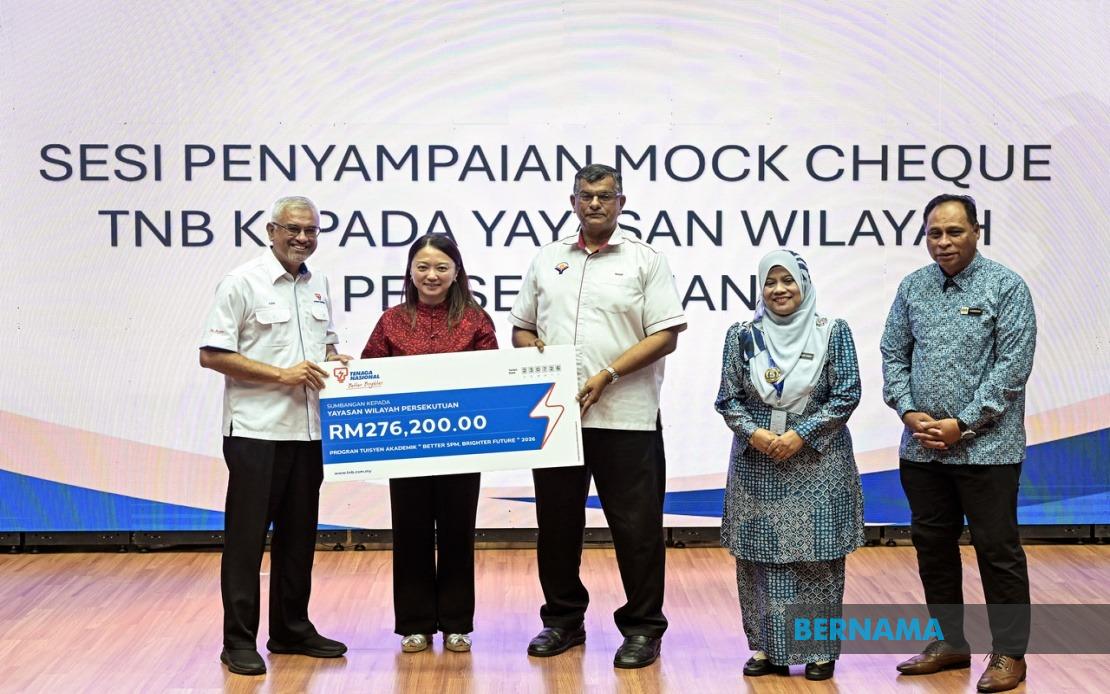
The Better SPM Brighter Future Programme has commenced operations to provide complimentary academic support to 1,600 Sijil Pelajaran Malaysia (SPM) candidates enrolled across 40 secondary schools throughout Kuala Lumpur. The initiative, unveiled at Sekolah Seni Malaysia Kuala Lumpur, represents a coordinated effort to strengthen examination readiness among students in the federal territory while simultaneously reducing the financial pressures on households seeking additional educational assistance.
Hannah Yeoh, who holds the position of Minister in the Prime Minister's Department (Federal Territories) and serves as chairman of Yayasan Wilayah Persekutuan (YWP), outlined the rationale underlying the programme's establishment. She emphasised that the scheme removes barriers to quality supplementary instruction by eliminating tuition fees, a particularly significant consideration for families with constrained budgets. By absorbing these costs through collaborative funding mechanisms, the initiative aims to ensure that academic preparation remains accessible regardless of socioeconomic circumstances, thereby promoting educational equity across the capital.
Tenaga Nasional Berhad (TNB) has demonstrated corporate social responsibility by allocating RM276,200 to YWP to facilitate programme implementation. This financial commitment enables the delivery of comprehensive tuition services in partnership with the Kuala Lumpur Federal Territories Education Department, establishing a three-way collaborative framework that leverages both public sector expertise and private sector resources. Such public-private partnerships have become increasingly common in Malaysian education policy, offering a pragmatic approach to scaling interventions without proportional increases in government expenditure.
The curricular focus of the programme concentrates on four subjects deemed critical to student success at the SPM level: Bahasa Melayu, English, History, and Mathematics. This targeted approach reflects careful consideration of which subjects present the greatest challenges to candidates and carry substantial weight in overall examination outcomes. By directing resources toward these foundational and assessment-heavy disciplines, the programme optimises its potential impact on student achievement while managing implementation scope effectively across participating schools.
The timing of this initiative aligns with broader concerns about examination performance and student preparedness in Malaysian secondary education. SPM results carry significant implications for students' educational trajectories and career prospects, making adequate preparation essential. For many students, particularly those from lower-income households, supplementary tuition has become quasi-mandatory for competitive performance. By providing free alternative instruction, the Better SPM Brighter Future Programme addresses a genuine access gap and may help level the playing field between students with varying family resources.
From a policy perspective, this scheme reflects recognition among education stakeholders that systemic support mechanisms must complement regular classroom instruction. The partnership structure involving a government ministry, a statutory foundation, and a major corporate entity demonstrates the multifaceted approach increasingly required to address educational challenges comprehensively. The involvement of TNB, a significant energy corporation, also highlights how large enterprises are being engaged in social initiatives beyond their primary commercial operations.
Yeoh additionally addressed concerns raised following the FIFA World Cup final screening at Dataran Merdeka, where significant quantities of rubbish accumulated. Rather than assigning blame to particular entities, she framed the issue as an opportunity for public education regarding civic responsibility and environmental stewardship. Her comments emphasised that waste management constitutes a shared responsibility rather than an obligation to be delegated exclusively to sanitation workers or migrant labourers. She underscored that young people develop behavioural norms by observing adult conduct, suggesting that cultivating conscientiousness among children requires demonstrable role-modeling from older generations.
The broader implication of these remarks concerns public space utilisation and collective maintenance in urban environments. Dataran Merdeka, as a symbolic and recreational hub for Kuala Lumpur residents, requires sustained accessibility and cleanliness. Hannah Yeoh's emphasis on maintaining Dataran Merdeka as a functional public space reflected awareness that iconic venues remain focal points for community gatherings and national celebrations. Her position that responsible usage constitutes a prerequisite for continued public access represents an important framing of citizen-state relations regarding shared urban infrastructure.
For Malaysian parents and students, the Better SPM Brighter Future Programme offers tangible relief from tuition costs while providing structured academic support from qualified instructors. The scheme's geographic focus on Kuala Lumpur, while initially limited, could potentially serve as a pilot model for expansion to other federal territories or larger urban centres facing similar educational resource constraints. The programme's success metrics, including student examination outcomes and participant satisfaction, will likely influence discussions about scaling comparable initiatives nationwide.
Looking forward, the sustainability and expansion of such programmes depends on continued corporate engagement and government budgetary allocation. As Malaysian education systems grapple with persistent performance gaps and equity challenges, interventions combining public funding, private sector participation, and community-focused implementation offer promising pathways forward. The Better SPM Brighter Future Programme exemplifies how targeted, well-resourced initiatives can meaningfully enhance educational opportunities for examination candidates while addressing broader concerns about inclusive access to quality academic preparation across Malaysian urban centres.

