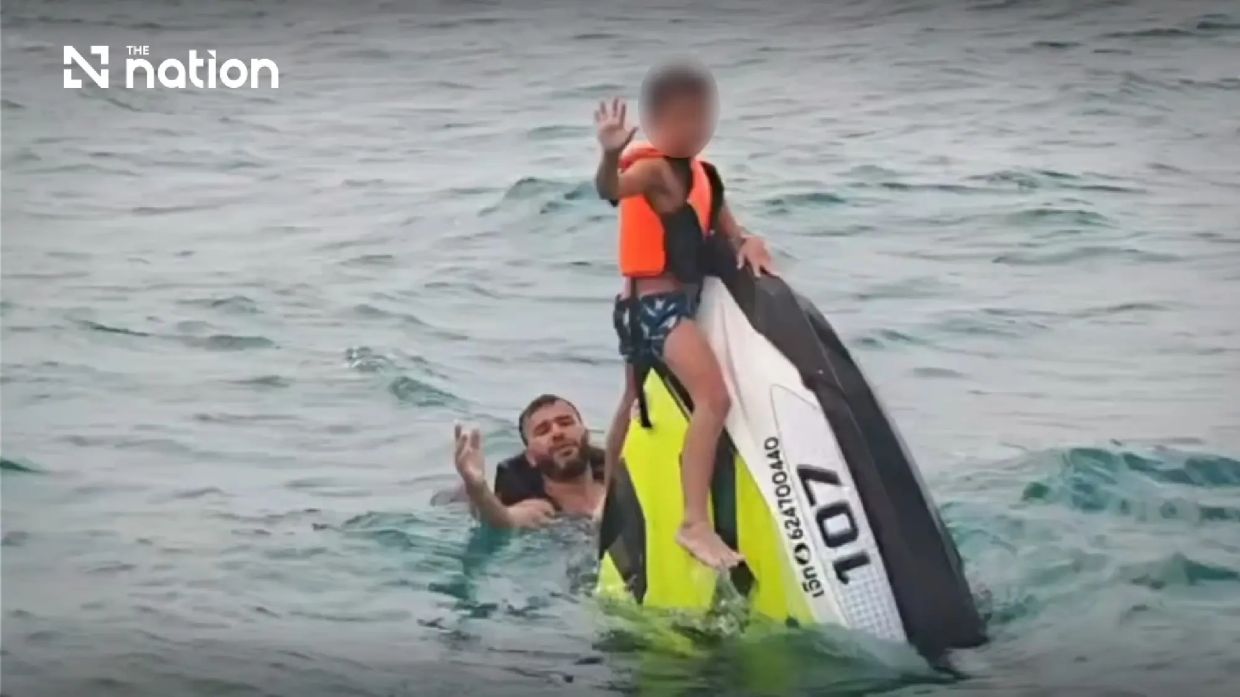
A French family endured an ordeal lasting over 16 hours stranded at sea after their rented jet ski capsized near Koh Samui, one of Thailand's premier resort destinations, before being located and brought to safety by rescue teams on Friday morning. The incident involved a 50-year-old father and his two young sons, ages five and seven, who were discovered exhausted and suffering from seawater ingestion after their overnight drift. Local authorities moved quickly to hospitalise all three family members for medical evaluation, though they were discharged shortly after assessment, indicating their condition had stabilised.
The sequence of events began Thursday evening when the father rented a jet ski from a local operator on the island at approximately 5pm. Within just fifteen minutes of departure, the watercraft capsized under circumstances that investigators are still working to clarify. The rental operator, growing increasingly concerned as the agreed return time passed without the family's appearance, immediately flagged the situation with local rescue personnel and provincial officials. This swift action proved critical in initiating the search and rescue response that would ultimately bring the family back to safety.
Rescuers located the family at roughly 10am Friday, having drifted through the overnight hours in open water. The recovery footage released by the Koh Samui district office reveals the extent of their vulnerability during those long hours—the jet ski lay almost entirely submerged with only its triangular bow section breaking the water's surface. The father and one of his sons remained visible in the water near the capsized vessel, both wearing life jackets that likely proved instrumental in their survival. Rescuers responded with clear verbal direction and reassurance, with audio from the rescue effort capturing responders urging the family to remain calm and confirming their survival.
The investigation into the capsizing has already identified several potential contributing factors worth examining. Authorities are investigating the mechanical integrity of the jet ski itself, given that the vessel failed after such a brief operational period. However, the rental operator has suggested to local media that the family may have ventured into waters beyond the designated area specified in their rental agreement, which could have exposed them to more challenging sea conditions or different water characteristics than anticipated. The father, according to officials' statements, claimed considerable experience operating jet skis, raising questions about whether the accident resulted from equipment failure, navigational error, or environmental factors.
The incident underscores the inherent risks associated with water sports tourism in Thailand's resort destinations, despite their general reputation for safety and accessibility. Koh Samui attracts millions of international visitors annually, many drawn by its reputation for calm waters and extensive resort infrastructure. The island's popularity with families rests on perceptions of tranquility and controlled leisure environments, yet accidents involving rented water equipment occur with sufficient regularity to warrant attention from both operators and vacationers. This particular rescue operation highlights the importance of adequate safety briefings, proper equipment maintenance, clearly defined operational boundaries, and reliable life jacket provisions for all participants, especially when children are involved.
Life jackets clearly played a decisive role in the family's survival during their extended period in open water. The footage shows both the father and children equipped with personal flotation devices, which would have prevented exhaustion from constant swimming efforts and reduced the risk of submersion. This detail emphasises the critical value of enforcing mandatory safety equipment usage, particularly for younger passengers who may lack the physical endurance and swimming capability of adults during extended emergencies. The rescue response also demonstrated professional competence, with personnel providing water and clear verbal guidance to help the family remain composed during their retrieval.
The broader tourism infrastructure in Thailand has faced scrutiny in recent years regarding safety standards and enforcement in adventure and water sports activities. Rental operators often operate under varying standards of oversight, maintenance protocols, and customer briefing procedures. While many businesses maintain exemplary safety records, incidents like this jet ski mishap serve as reminders that regulatory consistency and operational best practices remain essential components of visitor protection. Malaysian tourists and residents travelling to Thai islands should remain aware of safety considerations when engaging with water sports vendors and should insist on comprehensive safety briefings and functional equipment before participation.
Notably, rather than cutting short their holiday following this traumatic experience, the family chose to remain in Thailand and continue their vacation. This decision suggests either remarkable resilience on their part or perhaps confidence in the effectiveness of the rescue response and medical care they received. The incident appears to have been treated as an unfortunate accident rather than systemic failure, and the swift rescue operation may have reinforced the family's sense of security in the destination's emergency response capabilities.
The rescue operation reflects Thailand's established capacity to mobilise maritime rescue resources effectively in tourist areas. The rapid response from local authorities, the coordination between different agencies, and the successful outcome of a potentially tragic situation demonstrate the infrastructure available for emergency intervention in populated resort zones. For regional travellers, this incident provides both a cautionary note about water sports risks and evidence of professional rescue capabilities, suggesting that while accidents can occur anywhere, response systems in major tourist destinations remain functional and effective.

