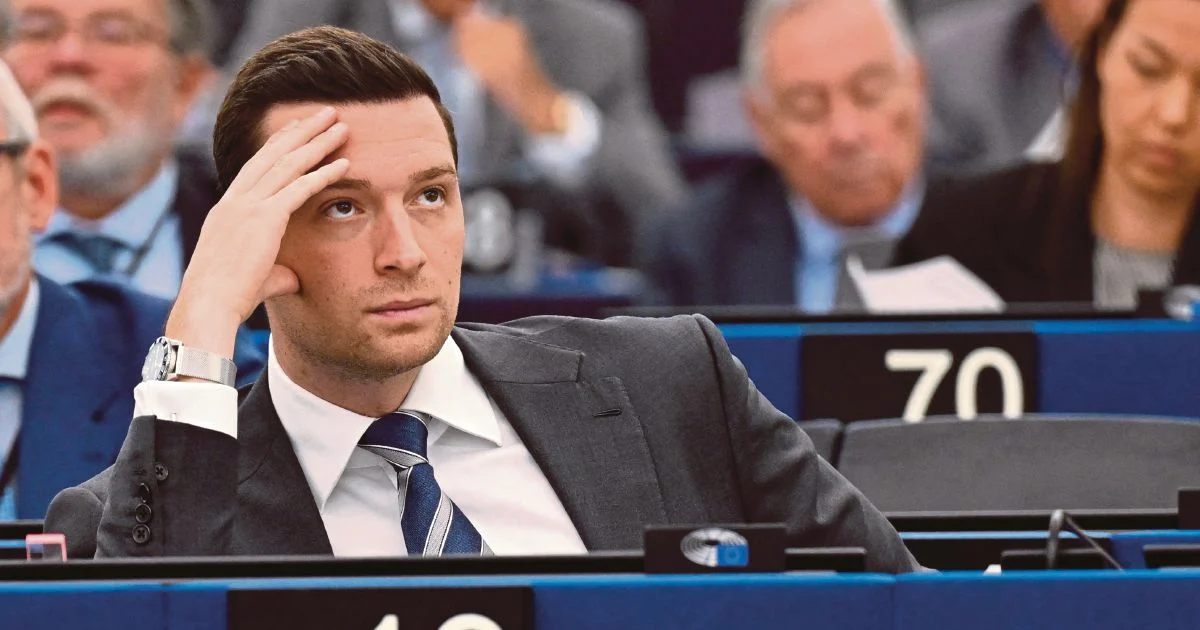
A French corruption watchdog called Tuesday for an investigation into allegations that Jordan Bardella, the presumed next presidential candidate for the far-right National Rally, once held a sham job as an assistant in the European Parliament. The accusations, which Bardella's party has firmly rejected, centre on whether he was genuinely employed to carry out duties or whether the position was created primarily to funnel public funds.
The timing of the watchdog's intervention marks another turbulent chapter for France's political landscape, particularly as the National Rally under Marine Le Pen has risen to become one of the country's most electorally competitive forces. Bardella, who represents the party's younger generation and has been positioned as a successor to Le Pen's leadership, now faces questions that could undermine his public standing and the party's carefully cultivated image of respectability as it seeks to broaden its electoral coalition beyond its traditional base.
The European Parliament maintains a system whereby elected members from each nation can hire assistants with public funds to support their legislative work. This arrangement, while legitimate, has attracted scrutiny across Europe for decades, with various parties accused of misusing the allowances to employ family members or party loyalists who perform minimal actual work. Such allegations have previously ensnared politicians across the ideological spectrum, from socialist parties to conservative groupings, making this less a scandal unique to the far right and more a reflection of broader institutional vulnerabilities within EU structures.
Bardella's case enters a wider pattern of legal and administrative pressures facing France's far-right movement. The National Rally itself has faced separate investigations and financial difficulties, including disputes with EU authorities over campaign finance rules. These cumulative challenges have occasionally been weaponised by opponents, yet legitimate institutional scrutiny has also revealed genuine administrative irregularities within the party's operations, creating a complex backdrop to individual cases involving party figures.
For Malaysian readers and those in Southeast Asia following European politics, the Bardella situation illustrates how established democracies grapple with populist movements that challenge traditional power structures. The willingness of independent oversight bodies to investigate prominent political figures—regardless of their electoral viability—demonstrates institutional resilience that remains important to preserve as nationalist and anti-establishment movements gain traction globally. The mechanisms through which Western democracies hold power accountable differ markedly from systems in Asia, offering valuable lessons in the importance of institutional independence.
The allegations specifically target the period when Bardella held a position within the European Parliament framework, suggesting he may have been registered as an assistant while devoting limited or no actual time to parliamentary duties. Watchdogs and investigative journalists have previously documented similar patterns involving politicians across multiple EU countries, where assistantships served as convenient revenue streams without corresponding work. The investigation sought by French authorities will likely examine documentary evidence of Bardella's actual activities, communication records, and financial reimbursements to establish whether legitimate work occurred.
Bardella's political trajectory has been meteoric within French far-right circles, positioning him as a potentially more electable face of the National Rally compared to Le Pen herself, who remains legally barred from holding elected office following previous convictions. His youth, media sophistication, and less divisive public persona have attracted younger voters and those seeking protest votes against establishment parties. The corruption allegation, if substantiated, could complicate this narrative of a modern, reformed far-right politics.
The party's denial was issued swiftly and categorically, reflecting the political stakes involved. Such accusations carry significant reputational weight in European politics, where corruption and financial impropriety trigger visceral public reaction. Even investigations that ultimately clear individuals can damage credibility and provide ammunition for electoral opponents. The National Rally will likely argue that any investigation represents persecution of a party deemed unacceptable by establishment elites—a narrative that resonates with its base but may complicate its ongoing effort to gain acceptance from mainstream parties and institutional structures.
The specific administrative procedures for such investigations within France vary depending on the nature of the allegations and applicable regulations. Corruption watchdogs typically prepare preliminary assessments before formal investigations commence, allowing time for initial evidence gathering and legal assessment. The distinction between investigative recommendations and actual prosecutions remains important; the watchdog's call for a probe does not constitute proof of wrongdoing, merely the determination that credible questions warrant formal examination.
For international observers, the case underscores how European institutions attempt to maintain standards of propriety while remaining vulnerable to accusations of selective prosecution. The European Parliament itself has faced persistent criticism for insufficient oversight of assistant hiring practices, prompting periodic reforms that usually fall short of comprehensive change. These systemic weaknesses create the conditions within which individual cases emerge, making it difficult to separate genuine malfeasance from the normal operation of poorly regulated institutional practices that many politicians exploit without consequence.
As French politics navigates coming elections and the National Rally's continued rise, the Bardella investigation represents a crucial test of whether institutional independence functions effectively in challenging circumstances. Both the watchdog's decision to pursue the matter and the eventual investigative findings will carry implications extending beyond the individual case, shaping perceptions of institutional fairness and the feasibility of governing coalitions that might someday include the far-right party.

