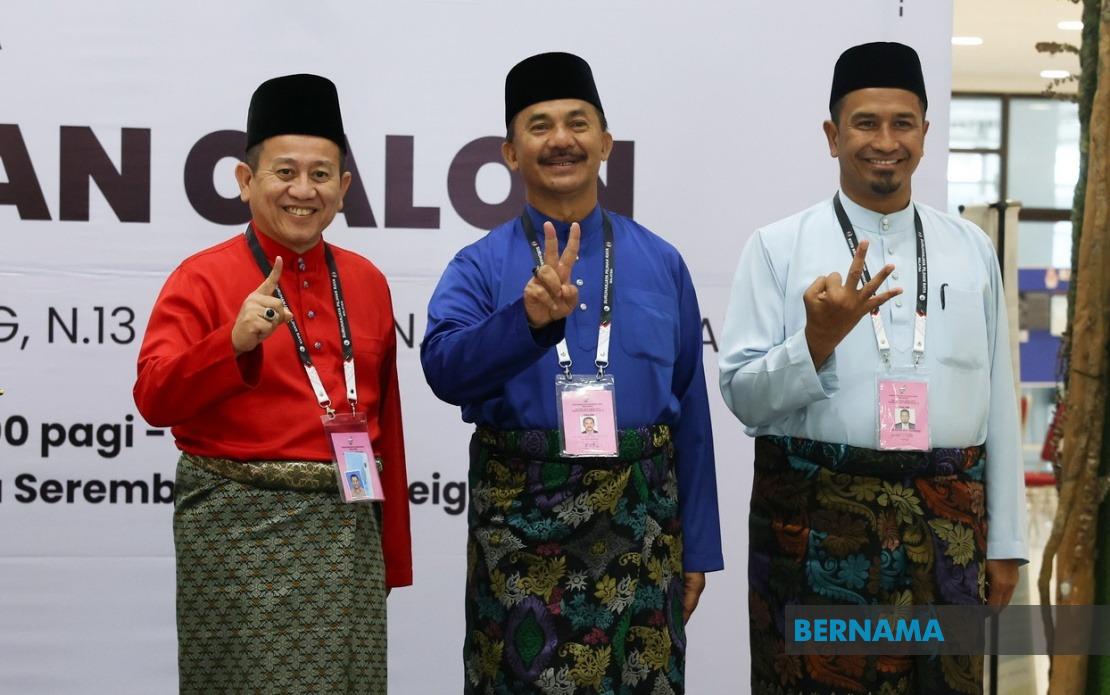
The 16th Negeri Sembilan State Election has unveiled a notably revitalised candidate roster, signalling potential shifts in how voters might engage with the political landscape in Malaysia's central state. Across the three major political coalitions and independent contenders, the infusion of fresh faces represents a deliberate strategy to balance experience with new perspectives, fundamentally altering the campaign dynamics heading into the August 1 polling date.
Pakatan Harapan's decision to contest all 36 State Legislative Assembly seats demonstrates the coalition's comprehensive commitment to the contest, yet their candidate selection reveals a sophisticated approach to balancing continuity with renewal. By fielding 24 new candidates out of their full complement, PH is essentially betting that fresh voices can energise voter turnout, particularly among younger demographics increasingly demanding different political narratives. This substantial rookie contingent operates alongside seasoned politicians, creating a dual-track strategy where established figures like Datuk Seri Aminuddin Harun, the state PH chairman, can mentor incoming talent while lending credibility to the slate.
Aminuddin's strategic repositioning from Sekamat to Linggi exemplifies how senior figures are recalibrating their political geography to strengthen overall party performance. Similarly, DAP Secretary-General Anthony Loke's presence as Transport Minister defending the Chennah seat underscores how national figures remain embedded in state-level contests, lending ministerial weight to PH's campaign apparatus. These high-profile incumbents effectively anchor PH's message while the 24 newcomers canvass neighbourhoods for grassroots support, a division of labour that could prove decisive in competitive constituencies.
Barisan Nasional's contrasting approach reflects different electoral mathematics and party dynamics. By fielding 13 new candidates from a total slate of 25, BN allocates roughly half their roster to fresh entrants, suggesting a more conservative generational transition compared to PH. This measured approach may reflect UMNO's calculation that core constituencies reward loyalty and familiarity, with selective new blood injected into marginal or challenging seats. Datuk Seri Mohamad Hasan, UMNO's Deputy President and Foreign Minister, continues defending Rantau, demonstrating that the coalition maintains heavyweight anchors in key battlegrounds.
The shuffling within BN's ranks reveals tactical repositioning beyond mere generational change. Datuk Ismail Lasim's migration from Senaling to Juasseh suggests internal party strategising to optimise candidate placement based on performance data and demographic shifts. Meanwhile, Negeri Sembilan BN chairman Datuk Seri Jalaluddin Alias defending Pertang maintains party organisational continuity at the state level, ensuring institutional memory guides campaign strategy. These recalibrations indicate BN's recognition that sitting tight in 2023-won constituencies requires active defence, particularly against a resurgent PH.
Perikatan Nasional's decentralised candidate approach, spanning PAS, Gerakan, Wawasan, and MIPP across 11 seats, reflects the coalition's structural limitations compared to monolithic rivals. This multi-party structure necessarily produces varied candidate profiles reflecting each component party's recruitment processes and member bases. The coalition's competitive footprint, while modest, suggests strategic focus on winnable seats rather than comprehensive coverage, a resource-conscious approach befitting PN's positioning as a challenger bloc in Negeri Sembilan.
Bersatu's repositioning warrants particular scrutiny given its electoral trajectory. Running 24 candidates under its own logo rather than the PN banner signals both organisational ambition and implicit distance from PN's alliance framework in this particular contest. Datuk Tun Faisal Ismail Aziz's appearance as a new face reflects Bersatu's recruitment efforts to expand its grassroots reach, while Hanifah Abu Bakar's continued defence of Labu provides incumbency advantage in familiar territory. This dual-track candidate strategy positions Bersatu as simultaneously a PN participant and independent operator, a delicate balancing act with implications for post-election coalition mathematics.
The presence of fringe parties—Berjasa, ASLI, and PSM each fielding single candidates—alongside four independents enriches the electoral marketplace with ideological alternatives and protest vote opportunities. While individually unlikely to secure legislative seats, their participation broadens voter choice beyond the binary PH-BN competition that has historically dominated Malaysian state politics. For voters dissatisfied with mainstream offerings, these alternatives provide democratic outlets, however marginal their ultimate impact.
The candidate demographic spread, from 23-year-old Leevineshwaraan Murugan contesting Sri Tanjung for Bersatu to 70-year-old Datuk Abd Latiff A Tambi fielded by PH in Gemencheh, illustrates the generational span represented across 103 total candidates. This age diversity reflects evolving political recruitment patterns, with younger candidates potentially better positioned to connect with digitally-native voters while experienced candidates maintain institutional relationships within their constituencies. The composition suggests political parties recognise that contemporary electoral success demands multigenerational appeal rather than single-age-group targeting.
The nomination closure confirmed 103 candidates distributed across multiple competing entities, a robust field indicating genuine electoral competition rather than uncontested formality. This candidate volume creates logistical and messaging challenges for voters attempting to evaluate platforms across 36 individual contests, potentially favouring better-resourced coalitions capable of narrative cohesion. PH and BN's comprehensive slates ensure virtually all constituencies feature candidates from Malaysia's two dominant political forces, while voters in PN-contested seats face actual choice variance depending on coalition presence.
The election timeline—early voting on July 28 and polling day August 1—compresses the campaign period, potentially advantaging established parties with existing voter mobilisation infrastructure over challengers requiring time to build grassroots presence. The fresh candidate contingents must rapidly develop campaign visibility and policy articulation despite compressed opportunity windows, placing premium value on supporting party machinery and messaging efficiency. This time constraint likely favours coalitions like PH and BN that operate integrated campaign ecosystems versus fragmented competitors managing multiple party identities simultaneously.
For Malaysian voters observing these candidate compositions, the generational transition carries implications extending beyond Negeri Sembilan's 36 seats. State elections increasingly function as testing grounds for national political recalibration, with successful newcomers potentially ascending to federal prominence while underperforming incumbents face parliamentary vulnerability in subsequent contests. The heavy recruitment of fresh candidates signals all major coalitions recognise that voter appetite for political renewal may be shifting, necessitating apparent responsiveness through candidate selection even where underlying party structures remain relatively unchanged. Negeri Sembilan's election thus becomes a barometer for whether contemporary Malaysian voters genuinely reward fresh faces or whether established political dynamics ultimately predominate when voters enter ballot boxes.

