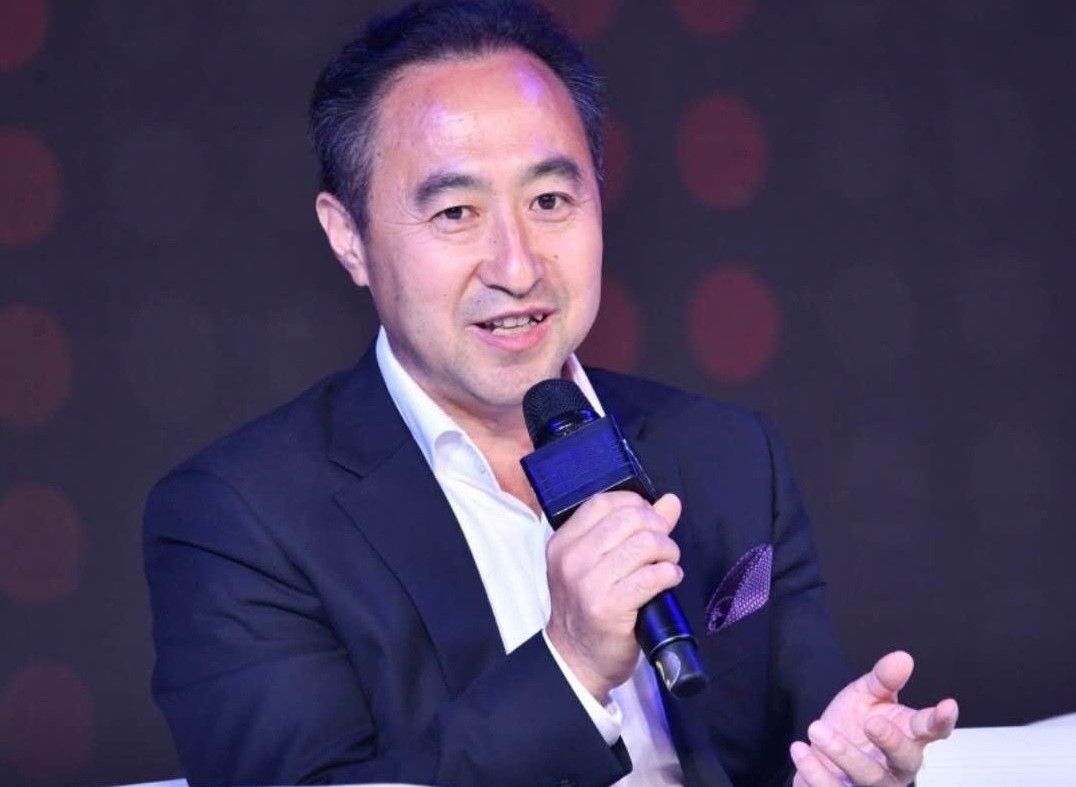
CJ Wang's path to becoming a billionaire began not in a laboratory or boardroom, but in the mundane chore of grinding soybeans. The Chinese entrepreneur, whose fortune now stands at US$10.4 billion, abandoned a secure teaching career in the 1990s to pursue an engineering dream rooted in his childhood experience of watching his uncle operate a laborious stone mill to make soy milk. This unconventional pivot from education to entrepreneurship would eventually reshape the home appliance landscape across Asia and North America, establishing Wang as one of the region's most influential but least publicly known industrialists.
Born in 1969 in Yantai, a coastal city in Shandong Province, Wang grew up surrounded by the daily rituals of traditional Chinese food preparation. The repetitive work required to produce soy milk, then a breakfast staple across the country, left an impression that would later crystallise into commercial ambition. After completing a degree in electrical engineering at Beijing Jiaotong University, Wang initially followed the family tradition by entering the teaching profession, a choice he now describes as almost inevitable given his parents' similar careers. However, the pull of engineering innovation proved stronger than familial expectation, and in 1994 he made the decisive break from steady employment to pursue what he termed "something bigger."
Wang's first invention was crude and imperfect by modern standards, yet it represented a genuine technological leap forward. His automatic soy milk maker eliminated the manual labour that had defined the process for generations, dramatically reducing preparation time and effort. The market response validated his instincts about consumer demand. By founding Joyoung that same year, Wang tapped into a fundamental insight: ordinary Chinese households needed affordable, reliable appliances that made daily cooking tasks less burdensome. The company's trajectory proved meteoric. Within a decade, Joyoung had sold more than one million soy milk makers, establishing itself as a household name across China through efficient manufacturing and consistent product quality.
As Joyoung matured into the 2000s, it diversified beyond its signature product into a comprehensive range of kitchen appliances. Blenders, rice cookers, and other small appliances extended the company's reach beyond specialist markets into mainstream Chinese homes. The brand became synonymous with affordable functionality rather than premium positioning, a strategy that generated enormous volume and market penetration. By the late 2010s, Joyoung had achieved dominant market position in China with a public listing on the Shenzhen Stock Exchange, yet Wang recognised a critical limitation: the company's brand recognition barely existed beyond Asia's borders, and European and North American consumers remained largely unaware of his products despite their quality and affordability.
Rather than attempting to build Western market presence through organic expansion, Wang adopted a more ambitious strategy in 2017 when his private equity firm acquired a majority stake in SharkNinja, an established American appliance manufacturer already enjoying considerable traction in United States households. The acquisition reflected a sophisticated understanding of market dynamics: why invest years establishing brand recognition when an existing platform with proven consumer loyalty could be acquired and revitalised? SharkNinja brought established distribution channels, retail relationships, and manufacturing expertise that would have taken Joyoung decades to replicate independently. Wang's decision to retain CEO Mark Barrocas signalled confidence in the company's existing leadership while positioning himself to inject operational excellence and strategic direction.
Wang's vision for SharkNinja combined Eastern manufacturing efficiency with Western brand heritage and product innovation. He identified specific weaknesses in SharkNinja's operating model: the product range was comparatively narrow, the marketing approach relied heavily on traditional television infomercials, and the supply chain concentrated risk among a limited number of Chinese manufacturers. These weren't fundamental flaws but operational inefficiencies that Wang's experience at Joyoung equipped him to address systematically. He prioritised expanding product development, strengthening research and development capabilities, and modernising sales strategies to leverage social media platforms, particularly TikTok, where younger consumers congregate and viral product moments generate extraordinary sales momentum.
Under Wang's stewardship, SharkNinja transformed into a multibillion-dollar operation by consistently releasing products engineered for maximum social media appeal. The company's two-brand strategy, with Shark dominating the vacuum and beauty categories while Ninja established leadership in kitchen appliances, created distinct market positioning while sharing operational infrastructure. Products were designed not merely for functional excellence but for the aesthetic and experiential qualities that generate organic social media sharing. This approach proved remarkably effective in an era where influencer marketing and user-generated content drive consumer purchasing decisions. When SharkNinja separated from Wang's holding company JS Global Lifestyle and completed its New York Stock Exchange debut through direct listing in 2023, Wall Street recognised the company's transformation from a mid-sized American appliance maker into a globally competitive consumer brand.
Wang's current portfolio reveals the strategic architecture underlying his wealth accumulation. As SharkNinja's chairman, he maintains approximately 35 per cent shareholding in the publicly listed company, while simultaneously controlling 52 per cent of JS Global Lifestyle, his Hong Kong-listed holding company that oversees his broader business interests. This dual structure allows him to benefit from SharkNinja's growth while maintaining operational flexibility through JS Global. His wealth concentration in appliance manufacturing reflects remarkable consistency: from his first soy milk maker invention through acquisitions and strategic pivots, Wang has remained focused on the home appliance sector, developing deeper expertise and scale advantages with each expansion.
Despite accumulating substantial wealth over three decades, Wang maintains a deliberately low public profile that contrasts sharply with other Chinese entrepreneurs who actively cultivate media presence and brand recognition. Colleagues describe him as soft-spoken and private, preferring to exercise influence through operational excellence rather than public pronouncements or social media engagement. His interests outside business—golf and premium whisky collecting—reflect the refined tastes of an ultra-high-net-worth individual, yet he deliberately shields details of his personal life from public scrutiny. In 2024, Wang became Hong Kong's second-highest-paid director, receiving total remuneration exceeding HK$520 million (US$66.3 million), though this compensation package remained relatively obscure outside specialist financial reporting circles.
Wang's recent decision to grant his first international media interview to Time magazine, breaking decades of near-complete silence, appears strategically calculated rather than a departure from his privacy preferences. He explicitly acknowledged wanting to "get ahead of the curve" by proactively controlling his narrative, recognising that the intersection of his Chinese background, significant American business interests, and substantial wealth creates vulnerability to speculation and mischaracterisation within an environment of intensifying US-China geopolitical tensions. His concern about misinformation and unsubstantiated claims about his background and business motivations reflects the precarious position occupied by successful Chinese entrepreneurs operating across Pacific markets. By voluntarily sharing his story through established international media, Wang attempts to anchor public perception in his actual biography and business logic rather than allowing vacuum to fill with hostile speculation or conspiracy narratives.
For regional observers in Southeast Asia, Wang's trajectory offers several instructive lessons about contemporary business development patterns. His pivot from Joyoung's domestic dominance to acquiring Western platforms mirrors strategic choices adopted by other ambitious Asian manufacturers seeking global reach. The success of SharkNinja's social media-driven product strategy, particularly on TikTok, demonstrates how digital-native marketing can overcome traditional disadvantages for companies seeking to penetrate competitive North American consumer markets. Additionally, Wang's structural approach—maintaining operational control through multiple listed entities while preserving majority stakes—provides a blueprint for founders attempting to achieve liquidity events and professional capital markets access while retaining strategic influence. As China-US relations continue affecting business relationships and investment patterns, Wang's experience navigating dual-market positioning will likely influence how other Asian entrepreneurs approach global expansion and headquarters location decisions.

