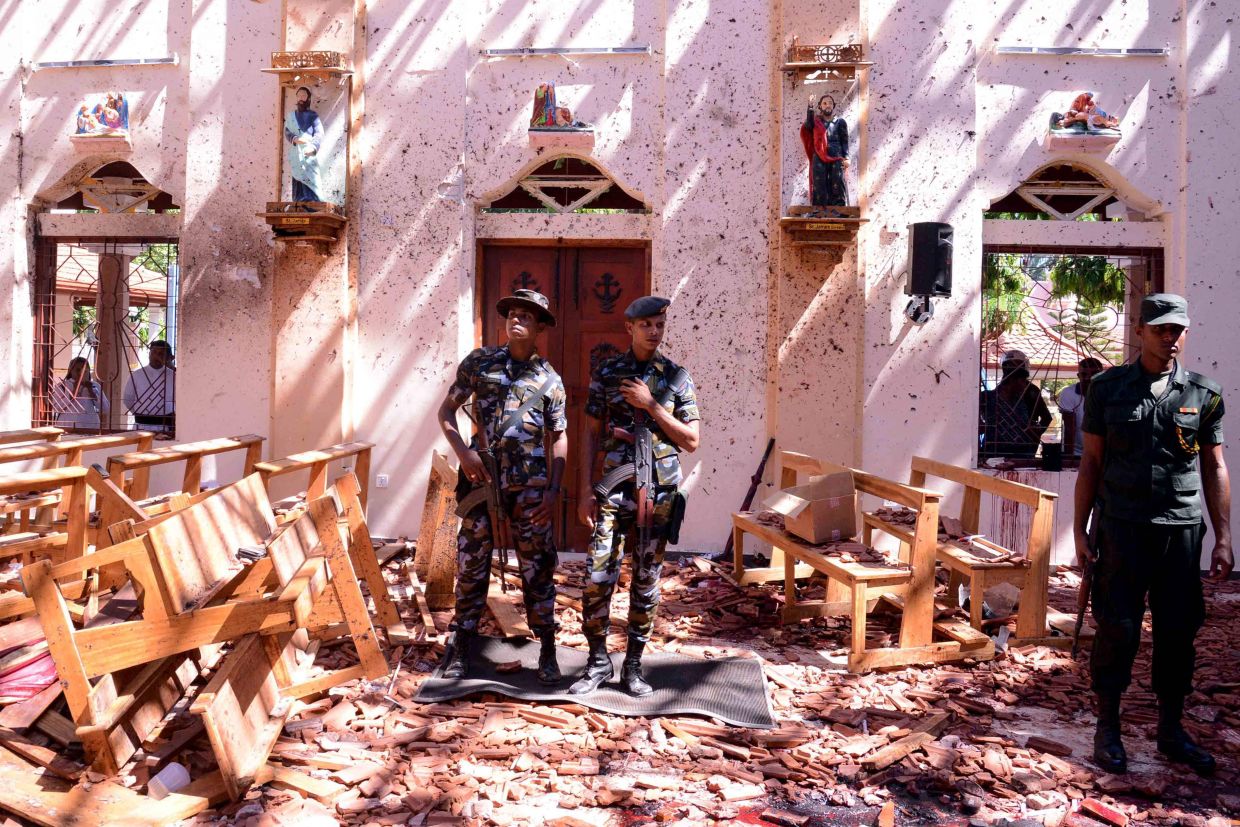
Suresh Sallay's career arc encapsulates one of the most troubling paradoxes in Sri Lanka's recent history. The retired major general and counter-terrorism specialist was once a trusted international voice on extremism, addressing the Pentagon and the United Nations on how social media fuels radicalization and violence. Yet in February, the government he once served arrested him under anti-terrorism statutes, accusing him of masterminding the deadliest terrorist attack against civilians in Sri Lanka's modern history—the Easter bombings of April 21, 2019, which claimed 279 lives and wounded more than 500.
The shift from celebrated security expert to accused architect of mass violence represents a dramatic reversal in the official narrative surrounding one of Asia's most shocking attacks. The bombings targeted three luxury hotels and three churches in coordinated suicide strikes. Among those killed were 45 foreigners, including tourists from Australia, Britain, China, Denmark, the Netherlands, Japan and the United States, making the attacks a truly international tragedy. Initial investigations blamed the violence on Sunni Muslim suicide bombers allegedly inspired by the Islamic State group, a conclusion that seemed straightforward enough given the group's well-documented capacity for synchronized attacks.
Yet questions emerged almost immediately about the attack's execution and prevention. Indian intelligence had warned Sri Lankan authorities about potential threats, warnings that were reportedly ignored. More troublingly, investigators soon discovered that the bombers had evaded detection despite the apparent sophistication of Sri Lanka's security apparatus. These inconsistencies prompted a fundamental reorientation of the inquiry, shifting focus from a straightforward case of IS-inspired extremism to allegations of something far more sinister: a deep-state conspiracy involving intelligence operatives themselves.
The new theory suggests the bombings were orchestrated not by foreign-inspired jihadists acting independently, but by elements within Sri Lanka's own security establishment. Public Security Minister Ananda Wijepala told parliament in June that Sallay was the "mastermind" who "conspired with and strategically directed Islamic extremists until they carried out the attacks." According to Wijepala's statement, Sallay met with Muslim men just three weeks before the bombings to gather intelligence about specific locations, implying foreknowledge and involvement rather than oversight failure.
This theory gains credibility when placed within Sri Lanka's political context. Government inquiries have uncovered links between the bombers and at least two state intelligence agencies, a revelation that demands explanation. Critics argue the extremist network was deliberately cultivated and maintained not for genuine counter-terrorism purposes but to create a convenient enemy. According to this analysis, the manufactured threat would justify expanded state powers and provide political ammunition for a particular faction: the powerful Rajapaksa dynasty, which was then seeking to consolidate electoral dominance.
Britain's Channel 4 reported in 2023 that a whistleblower alleged the attack was permitted to proceed to help Gotabaya Rajapaksa win the 2019 presidential election on a hardline security platform. The strategy apparently exploited public fear of Islamist terrorism to position Rajapaksa as the strong leader needed to crush militancy—a narrative he had already cultivated by claiming success against Tamil militants during the 1983-2009 civil war. According to this account, Sallay's role involved directing the extremists toward their targets, creating the chaos necessary to engineer Rajapaksa's rise to power.
Historically, the Rajapaksa administrations have indeed acknowledged funding jihadist groups during the civil conflict, ostensibly to gather intelligence on Tamil separatists. However, they maintain that these militants subsequently double-crossed their handlers and independently carried out the Easter bombings. This explanation strains credibility given the evidence of state intelligence agency connections and Sallay's alleged pre-attack coordination with the bombers.
Sallay's background itself reflects Sri Lanka's multicultural fabric in ways that complicate the current accusations. A Muslim married to a Buddhist woman with a Catholic mother who has appealed to Pope Francis for his release, Sallay embodies the island's religious diversity. Nearly 70 percent of Sri Lanka's 22 million inhabitants are Buddhist, with significant Tamil Hindu, Muslim and Christian minorities. His international education—including studies at India's prestigious National Defence College and institutions in Britain—positioned him as a cosmopolitan security specialist rather than a sectarian actor.
Paradoxically, Sallay rose to prominence precisely because he represented the kind of sophisticated, globally-connected security professional the Rajapaksas sought to retain. After Gotabaya Rajapaksa's 2019 election victory, Sallay was appointed to head the State Intelligence Service, becoming the first military officer to lead the organization. His ascent reflected both competence and political alignment. Yet within months, Sallay himself had weaponized intelligence authority, orchestrating the arrest of Muslim human rights lawyer Hejaaz Hizbullah in 2020 and falsely accusing him of masterminding the very attacks Sallay is now accused of directing. Hizbullah was eventually released 22 months later after authorities failed to produce credible evidence—a humiliation that foreshadowed Sallay's own legal predicament.
As of his latest court hearing in July, Sallay remains uncharged despite the bombastic accusations from government officials. This legal limbo reflects the precarious position of those who know too much about operations sanctioned at the highest levels. Whether Sallay was genuinely the orchestrator of mass murder, a scapegoat for institutional failures, or a convenient target for political rivals within the security apparatus remains unresolved. His case exemplifies how intelligence agencies can become instruments of elite power consolidation, how national security justifications can mask political calculations, and how those who master the art of espionage can find themselves ensnared by the same systems they once controlled.
For Malaysia and other Southeast Asian nations with complex intelligence architectures and intense political competition, Sallay's case offers sobering lessons. It demonstrates how security expertise can be weaponized for electoral advantage, how extremist networks can be maintained and directed by state actors ostensibly fighting terrorism, and how little oversight exists over intelligence services even in nominally democratic systems. The allegations against Sallay suggest that the greatest threats to civilian security sometimes originate not from international terrorist groups but from those entrusted with defending against them.

