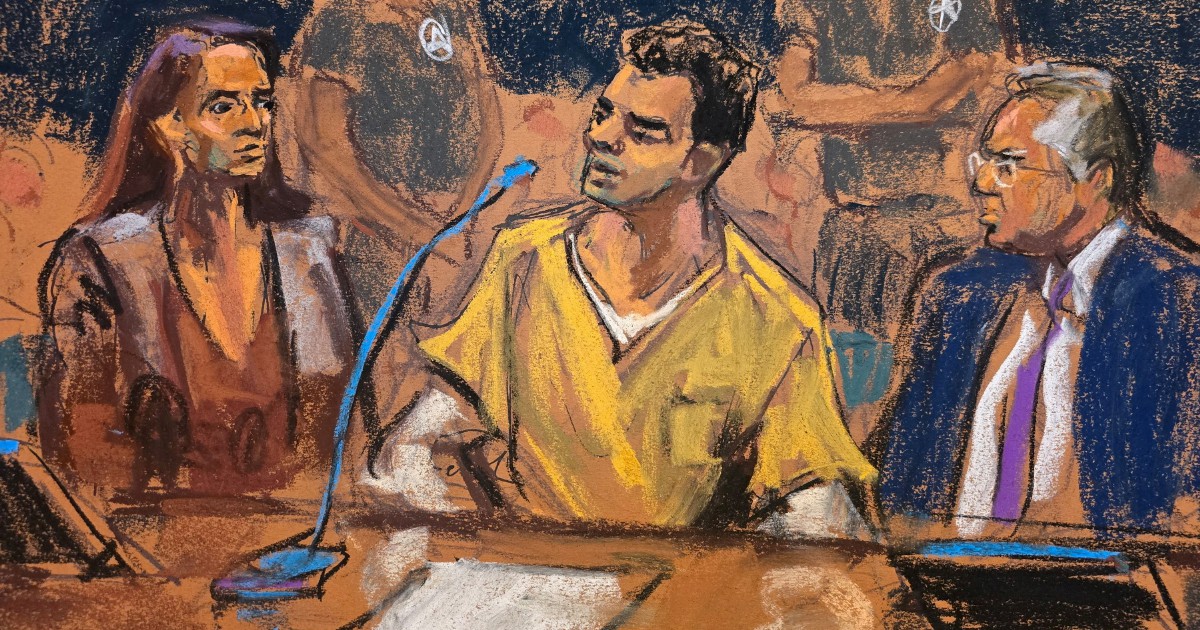
Luigi Mangione's courtroom appearance this week marked a stunning transformation from what acquaintances describe as an ordinary, educated young man into a figure at the centre of America's growing fury over its healthcare system. The defendant, who has admitted to the fatal shooting of United Healthcare chief executive Brian Thompson in December, used his legal proceedings to articulate a narrative of personal grievance merged with systemic critique. In doing so, he has inadvertently crystallized broader public anxieties about the role of private health insurers in determining access to medical care across the United States.
Mangione's claims about suffering from a serious back injury form the emotional core of his stated motivation. Rather than presenting himself as politically motivated or ideologically driven, he positioned himself as a victim of circumstances—someone whose personal medical crisis allegedly exposed fundamental flaws in how American healthcare allocates resources and determines who receives treatment. This framing suggests a descent rooted not in radical conviction but in accumulated frustration with institutional indifference. For many Americans already grappling with denial of insurance claims and gaps in coverage, such narratives resonate powerfully, even when they culminate in violence.
The shooting of Thompson became emblematic of mounting public dissatisfaction with health insurance companies. United Healthcare, one of America's largest insurers, operates within a system where denials of coverage are routine business decisions. The company's practices have drawn particular scrutiny in recent months, with reports detailing allegedly wrongful claim denials that left patients without necessary medical care. Mangione's stated intention to make "health care work better for everyone" reflects a conviction, however distorted, that targeting insurance executives might somehow pressure systemic change.
For Malaysian readers and others in Southeast Asia observing American healthcare debates, Mangione's case illuminates why the United States remains an outlier among developed nations. Unlike Malaysia's government-subsidized healthcare system and most other advanced economies' universal or heavily regulated approaches, the US relies predominantly on private insurance markets where profit incentives directly influence coverage decisions. When a system permits such stark gaps between patient needs and institutional willingness to pay, it creates conditions for profound alienation, particularly among those experiencing medical crises without adequate support.
The backdrop of Mangione's actions involves documented cases where patients faced financial ruin or death after insurance denials. A significant portion of American bankruptcies stem from medical debt, and insurance claims denials have become sufficiently common that they barely register as scandals anymore. This normalization of institutional obstruction to healthcare access represents a failure that extends far beyond individual cases. When someone like Mangione—described by those who knew him before the incident as intelligent and accomplished—becomes convinced that violence represents a legitimate response to systematic injustice, it signals a dangerous breakdown in civil mechanisms for accountability.
The courtroom strategy of linking personal suffering to broader healthcare critique suggests Mangione may be attempting to transform his case into a platform for exposing industry practices. Whether calculated or genuine, this approach reflects how healthcare frustration has permeated American culture deeply enough to influence even criminal defendants' self-presentation. His willingness to speak openly about his motivations, rather than remaining silent or claiming innocence, indicates conviction in the righteousness of his grievance, even as it complicates the legal proceedings.
Thompson's death generated an unusual public response for a corporate executive's murder. Rather than universal condemnation, significant portions of social media and public commentary expressed understanding, if not outright support, for actions targeting insurance industry leadership. This phenomenon shocked many observers and underscored how severely public trust in health insurers has eroded. The company Thompson led had faced increasing criticism for claim denial patterns that affected thousands of patients annually, creating a reservoir of accumulated resentment.
For Southeast Asian healthcare systems, including Malaysia's largely public model, Mangione's trajectory offers cautionary perspective on the consequences of allowing profit-driven intermediaries excessive control over medical access. While no Malaysian system is perfect, and private healthcare exists alongside public provision, the dominance of for-profit insurance in determining coverage creates structural incentives directly opposed to universal access principles. Mangione's case demonstrates what happens when millions of people experience repeated institutional rejection during moments of genuine medical vulnerability.
The broader question emerging from these events concerns whether democratic societies can tolerate such profound disconnection between public health needs and institutional response. When people like Mangione conclude that normal channels for addressing grievance have failed, and when substantial portions of the public seem to understand his violent response, the system has experienced a fundamental legitimacy crisis. This extends beyond any individual case to challenge assumptions about how American healthcare can remain functional if public confidence continues deteriorating.
Mangione's courtroom appearance thus represents more than one man's criminal defense strategy. It embodies a watershed moment in American healthcare politics, where institutional failures have accumulated to the point where violence against senior insurance executives can be understood, by many citizens, as a rational response to systemic injustice. How the legal system resolves this case, and whether it prompts actual healthcare industry reform, will significantly influence whether similar incidents occur.

