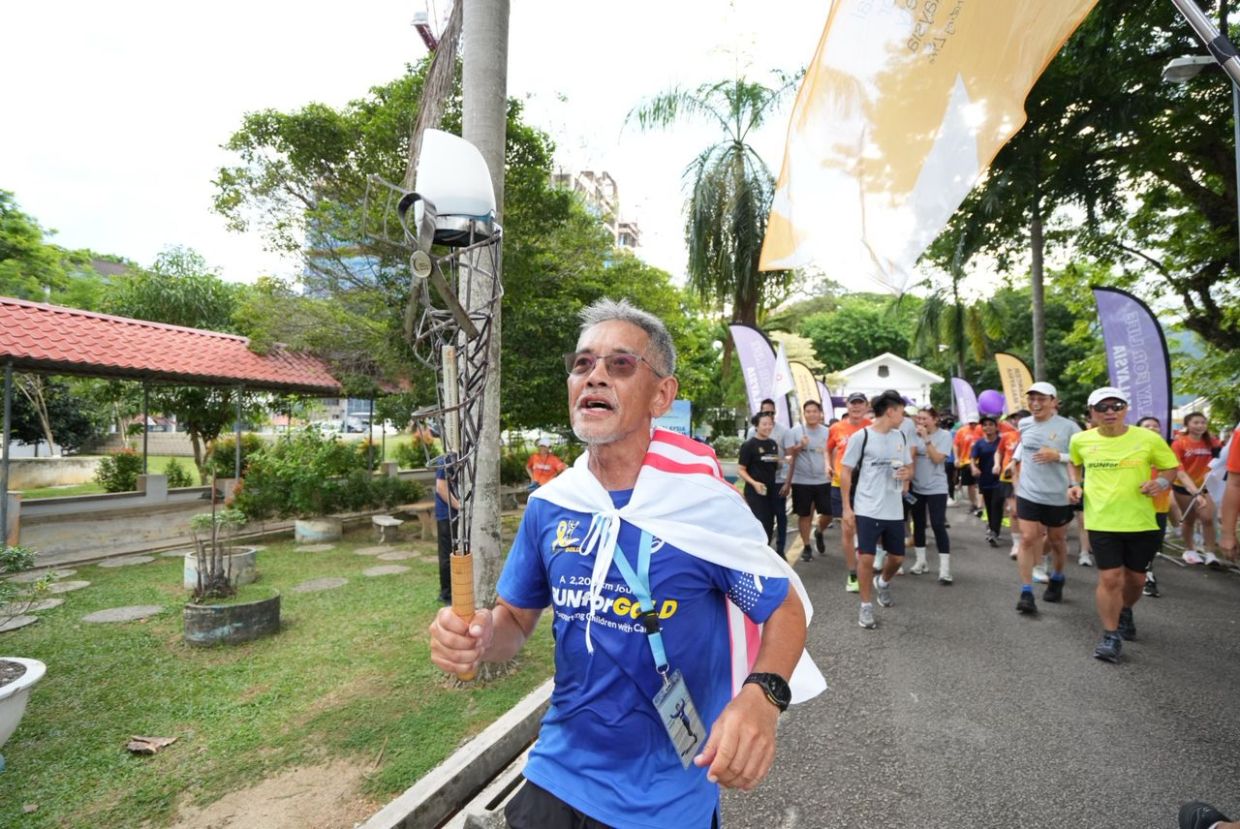
When Lim Shyang Guey, a 66-year-old retired civil engineer from Penang commonly known as SG Lim, reached his retirement years, he did not retreat into a quieter life. Instead, the accomplished runner discovered himself navigating an unexpectedly different kind of journey after his wife of decades, Goh Joo Lee, succumbed to cancer in 2024 at the age of 63. What followed was a deliberate transformation of loss into purposeful action—a nearly three-month expedition spanning over 2,200 kilometres across eleven states and federal territories of Peninsular Malaysia.
In the months following Goh's passing, Lim divided his time between continents, splitting his days between Australia where his two children live, Malaysia where his mother and siblings reside, and Hong Kong for personal reflection. Yet these geographical shifts could not ease the fundamental absence. When describing his late wife, Lim requires only two words: "loving" and "caring." Her compassion extended beyond her immediate circle; even while battling cancer in hospital, she remained preoccupied with the wellbeing of others. Lim recalls how she requested flowers for a stranger hospitalised in the ward opposite hers, a gesture that brought unexpected joy to both the woman and her devoted husband. This generosity of spirit, coupled with her artistic talents—drawing, painting, and creating works that now serve as digital memorials on social media—defined a woman whose influence transcended her lifespan.
The turning point came when Lim encountered a book by Laurence Carter that sparked an unconventional idea. Rather than allowing grief to diminish him, he envisioned a monumental physical undertaking: traversing Peninsular Malaysia on foot or by running. He sought counsel from Carter himself before commencing this ambitious vision. With backing from the National Cancer Society Malaysia (NCSM), the endeavour crystallised into "Run For Gold," an initiative designed to simultaneously raise awareness and funds specifically for children fighting cancer—a cause deeply personal given his recent loss and his wife's compassionate nature.
Preparing for such an undertaking demanded meticulous discipline. Following his completion of the Sydney Marathon in August of the previous year, Lim methodically increased his running mileage week by week. He restructured his daily routine to commence at 5am, acclimating his body to Malaysia's intense midday heat through deliberate practice runs. Strength training sessions supplemented his road work, while he self-taught video editing to document his progress across social media platforms, creating a digital narrative of his expedition that would inspire and mobilise supporters.
The true catalyst for Lim's resolve emerged not from solitary determination but from human connection. His first visit to a children's oncology ward organised by NCSM profoundly affected him. Witnessing fragile young patients and the palpable helplessness etched across parents' faces crystallised his purpose: this marathon existed to save lives and alleviate suffering for both children and families confronting an unforgiving diagnosis. The abstract goal of "raising awareness" transformed into something visceral and undeniable.
Throughout his journey, ordinary people demonstrated extraordinary commitment to his cause. In Pekan, Pahang, a retired schoolteacher and his wife encountered Lim during one of his running stages. Unable to contribute financially, they offered something arguably more valuable—their physical presence and tireless advocacy. The retired teacher systematically visited local eateries ahead of Lim's arrival, engaging proprietors and patrons about the child cancer initiative. This couple became his steadfast companions through multiple states including Johor, Melaka, and finally Penang, the wife providing ground support while her husband matched Lim's pace on the road. Their devotion to one another, maintained after decades of marriage, stirred Lim's memories of his own departed spouse and reminded him that his mission resonated across generations and experiences.
When Lim eventually approached the finish line in George Town after nearly three months of continuous movement, crossing 2,200 kilometres of Malaysian roads, his emotional state centred entirely upon the woman who had inspired this odyssey. His first utterance upon completion was not a shout of personal triumph but an intimate address to his absent companion: "Darling, we made it!" The conclusion of the physical marathon did not represent an ending but rather a transformation of his relationship with grief—from a weight carried in solitude to a burden shared and lightened by community.
The final stretch from Johor to Penang brought unexpected magnitude to the personal expedition. As Lim approached his native state, the barriers between his private grief and public purpose dissolved entirely. Family members, longtime friends, university classmates, and complete strangers converged to welcome him across the final 80 kilometres. What had begun as one widower's attempt to honour his late wife's compassion had evolved into a movement that touched countless lives along Malaysia's highways and in its communities. The run transformed from individual catharsis into collective purpose, proving that channelling personal loss toward service creates ripples extending far beyond the original intention.
Lim's marathon exemplifies how retirement and loss, conventionally viewed as periods of diminishment, can catalyse profound contribution when paired with determination and community support. Through Run For Gold, a retired civil engineer demonstrated that the most meaningful adventures often emerge not from seeking escape but from embracing responsibility to others. His wife's legacy—expressed through her lifelong compassion and artistic vision—found new expression in 2,200 kilometres of pavement, awareness campaigns, fundraising achievements, and the tangible support now available to Malaysian children battling cancer. In this way, Goh Joo Lee's caring spirit continues its work through her husband's extraordinary persistence.
The initiative also underscores the critical need for increased awareness and resources dedicated to childhood cancer in Malaysia. While children's oncology remains underfunded relative to adult cancer research across much of Southeast Asia, grassroots campaigns like Run For Gold mobilise both financial support and public consciousness. The National Cancer Society Malaysia's partnership with Lim's marathon demonstrates how individual journeys of healing can align with institutional mandates to serve vulnerable populations. As awareness spreads through social media documentation and community engagement along the marathon route, the initiative creates multiple entry points for Malaysians to contribute, whether through direct donation, volunteering, or simply amplifying the message that child cancer demands urgent attention and sustained support from society.

