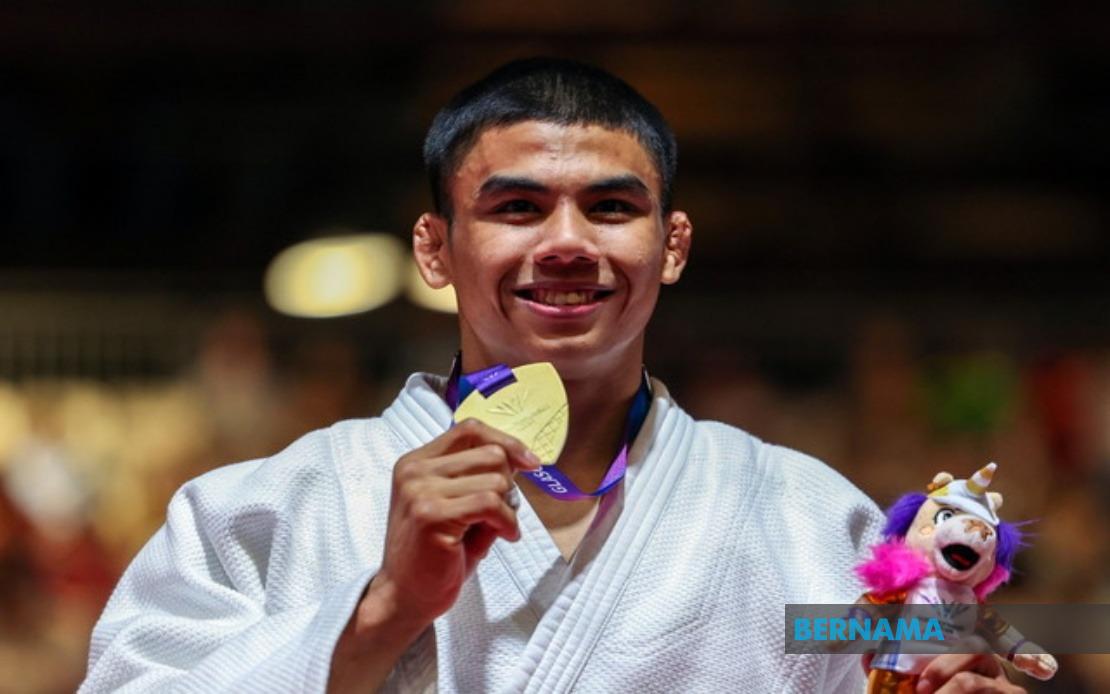
At 21 years old, Amir Daniel Abdul Majeed faces an unexpected challenge that cuts deeper than any opponent on the mat. The Commonwealth Games gold medallist has stepped into his first coaching role as assistant mentor for Penang's judo contingent at SUKMA Selangor 2026, and the psychological toll of guiding athletes from the sidelines has proven far more taxing than the intensity of personal competition ever was.
Speaking at the IDCC Ideal Convention Centre in Shah Alam following Penang's completion of their campaign, Amir articulated the seismic shift in mental demands. Where once he bore sole responsibility for his own performance during bouts, he now orchestrates and manages the efforts of 13 athletes—each carrying their own pressures, each requiring individualized strategic input. That multiplication of responsibility has transformed his relationship with the sport fundamentally. The nerves that accompany watching young athletes he has known since childhood step onto the competitive stage represent a different breed of anxiety altogether.
Amir's path to coaching mirrors a growing trend among elite Southeast Asian athletes who transition early into mentorship roles, leveraging their recent competitive experience and intimate understanding of current methodologies. His maturity in recognizing this psychological evolution demonstrates the emotional intelligence required to make such a career pivot successfully. He emphasized that while personal competition allowed him to compartmentalize stress within the confines of his own bout, coaching demands constant vigilance and the ability to absorb the emotional outcomes of multiple competitors simultaneously.
The Penang judo team's performance at SUKMA Selangor 2026 vindicated Amir's contributions to the coaching staff, though the tournament structure meant his influence was one voice among several instructors. The team concluded their three-day participation with a respectable medal haul of three gold, one silver, and five bronze medals—a result sufficiently competitive to see Penang share the top position in the overall medal tally with Johor. This early success in his coaching tenure provides validation that his transition from athlete to mentor carries substance beyond mere aspirational thinking.
Yet Amir's attention remains partially divided as he awaits formal confirmation of his selection for Aichi-Nagoya 2026 Asian Games in Japan. A selection meeting scheduled for this week will determine whether he continues balancing both roles or must consolidate his focus entirely upon the international stage. The timing presents both opportunity and complication—many athletes find the dual pressure of competing at elite levels while simultaneously mentoring emerging talent to be unsustainable, though others have managed it successfully within the Asian judo community.
The prospect of competing in Japan appeals to Amir not merely as an end in itself but as strategic preparation for larger ambitions. Asian Games competitions represent a meaningful stepping stone toward his Olympic dream, a realistic acknowledgment that elite athletes cannot skip developmental stages in their progression toward the sport's ultimate platform. The Aichi-Nagoya Games offer exposure to international-standard opposition at a stage when such matches provide constructive learning experiences rather than unrealistic benchmarks.
Amir's long-term vision encompasses not just Asian Games glory but sustained relevance through SEA Games Malaysia 2027, where home advantage and regional competition will present their own distinct challenges and opportunities. By competing at the Asian Games—should his selection materialize—he positions himself optimally for the regional championships on Malaysian soil, where domestic expectations will reach their crescendo. The caliber of Japanese judo, recognized globally as among the sport's most technically sophisticated and physically demanding, offers training conditions and competitive partners that few other venues in the region can replicate.
For Malaysian judo more broadly, Amir's early entry into coaching signals confidence within the national federation that young athletes can successfully bridge the gap between elite performance and the development of future generations. This approach contrasts with some regional counterparts who prefer greater temporal separation between personal competitive retirement and coaching appointments. However, it carries inherent risks if not managed carefully, as early burnout or divided focus can undermine both coaching effectiveness and competitive performance.
The psychological complexity of Amir's situation resonates beyond judo itself. Across Southeast Asian sports, numerous athletes face the challenge of maintaining competitive edge while contributing to athlete development—a balancing act that few sports systems have adequately addressed through structured support mechanisms. Coaching education programs, sports psychology resources, and deliberate scheduling that prevents overcommitment remain underdeveloped in many regional federations, leaving individuals like Amir to navigate these pressures through intuition and resilience rather than systematic frameworks.
Amir's willingness to articulate the emotional and psychological dimensions of his coaching experience represents valuable insight for younger athletes contemplating similar transitions. Rather than presenting the move from competition to mentorship as a straightforward progression, he acknowledges it as a genuine shift requiring different skills and emotional resilience. This honesty about the challenges involved may help both his peers and his athletes understand that coaching demands deserve equal recognition to athletic achievement within the broader sports ecosystem.

