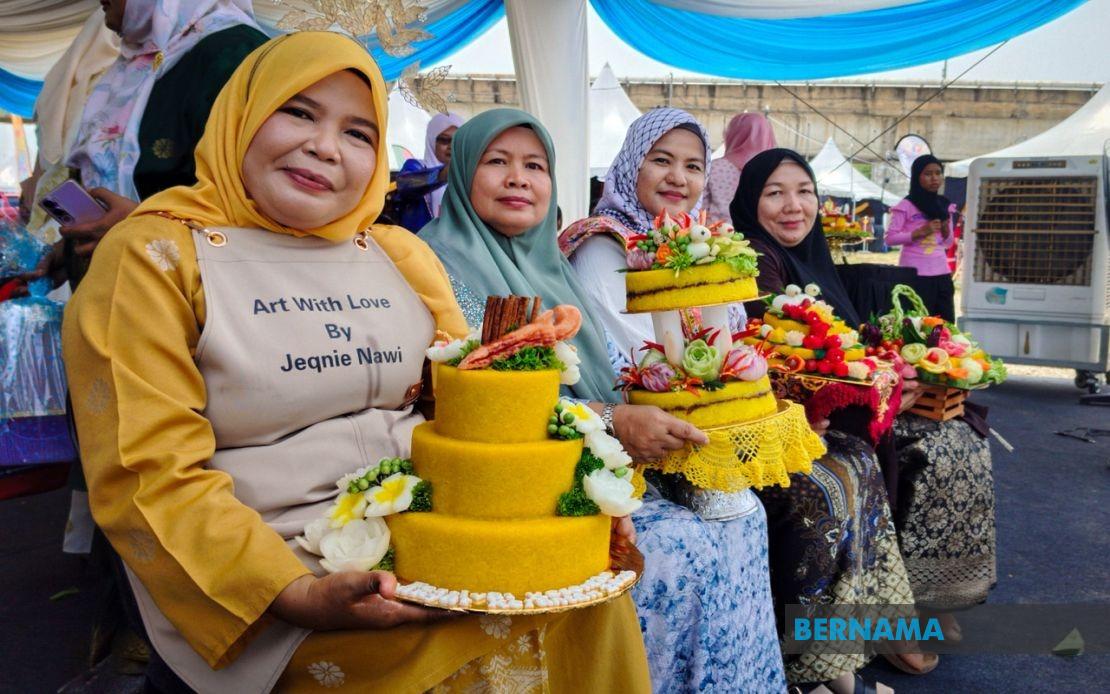
Nortiny Nawi's decision to leave her position as a resort marketing officer four years ago has proven far more rewarding than a conventional career path might have offered. Today, operating from her modest home in Kampung Gong Cokoh in Pasir Puteh, the 46-year-old has established herself as a specialist in crafting pulut kuning—the vibrant turmeric-infused glutinous rice that has become her signature product and main income source.
The transformation from corporate employment to culinary entrepreneurship reflects a broader trend among Malaysian professionals seeking meaningful work aligned with their personal interests. For Nortiny, the shift was not impulsive but rather the culmination of years of quiet observation and skill development. During her resort years, she seized moments between duties to study chefs' techniques in the kitchen, gradually deepening her understanding of food preparation and presentation. This foundation proved invaluable when she eventually committed fully to her culinary passion.
Her decorative pulut kuning arrangements command impressive market rates, ranging from RM100 to RM280 depending on the rice quantity and design intricacy. The pricing structure reflects not merely ingredient costs but the labour intensity and artistic skill embedded in each creation. Despite these premium prices, demand has grown substantially, with bookings arriving almost daily from diverse clientele across Kelantan including individuals, educational institutions, and government departments. The orders often come for significant occasions—thanksgiving celebrations, birthday parties, and makan beradab (formal bridal dinners)—where the visual presentation carries cultural and ceremonial importance.
Nortiny's artistic credentials were validated when she earned the top prize at the Kelantan Folk Arts Festival (FKRK) held in Tok Bali, competing with an eight-kilogramme pulut kuning arrangement adorned with intricate floral carvings fashioned from white radish. The recognition underscores the level of craftsmanship required in the field and establishes her work within the broader context of Malaysian culinary arts and folk traditions. Such competition success not only enhances her market credibility but also contributes to the preservation and celebration of traditional Kelantanese food culture.
The operational reality of the business demands considerable discipline and early rising. Production begins as early as 3 am, when Nortiny steams the glutinous rice, a foundational step that cannot be rushed or shortcuts taken. Following steaming, the rice must be kneaded, cooled, and then shaped into decorative forms—a sequence that differs fundamentally from cake production, which permits advance preparation and refrigeration. This constraint means Nortiny cannot stockpile finished products or stagger her work across days; each order requires fresh execution according to the customer's specifications and the event date.
The physical and mental demands of the work are substantial. The pre-dawn starts, the repetitive kneading and shaping motions, the pressure to maintain consistent quality across multiple daily orders, and the creativity required to execute varied designs would overwhelm many workers. Yet Nortiny describes the routine as tiring rather than unsustainable, attributing her perseverance to genuine passion. She explains that customer compliments and positive feedback serve as continuous motivation, driving her to refine techniques and expand her design repertoire rather than settling into complacency.
Operating from home provides obvious advantages—low overhead costs, flexibility, and direct customer contact—but also presents scalability challenges. With capacity limited to approximately six orders daily depending on design complexity, and with each order requiring several hours of hands-on labour, growth becomes constrained by physical time availability and kitchen space. Recognising this limitation, Nortiny has articulated a strategic vision to expand into larger commercial premises, a move that would enable increased production capacity and potentially the hiring of apprentices or employees.
For Malaysian readers, Nortiny's story carries several relevant implications. First, it demonstrates that career satisfaction and financial security need not come through traditional corporate advancement or government service. Second, it illustrates how traditional food crafts can generate substantial income in the digital age, particularly when quality, authenticity, and cultural relevance are maintained. Third, it highlights the often-overlooked economic value embedded in Malaysia's culinary heritage—pulut kuning is not merely comfort food but a sophisticated artisanal product commanding premium market prices.
The broader context of Southeast Asian food entrepreneurship suggests that Nortiny's model aligns with regional trends. As middle-class consumers in Malaysia and the region increasingly seek authentic, artisanally-made food items for special occasions, home-based food businesses have multiplied. The rise of social media has simultaneously made product visibility and customer discovery easier while intensifying competition and requiring producers to maintain exceptionally high quality standards. Nortiny's consistent bookings suggest she has navigated this landscape successfully.
Looking forward, her expansion aspirations raise interesting questions about scalability without compromising the artisanal character that customers value. How would her business evolve with hired staff? Could semi-industrialisation maintain the handcrafted quality and cultural authenticity that justify premium pricing? These questions extend beyond one entrepreneur's business plan to encompass broader challenges facing Malaysian artisanal food producers navigating growth.
The success of Nortiny Nawi ultimately reflects the potential for Malaysian entrepreneurs to build sustainable livelihoods by honouring cultural traditions and executing them with excellence. Her willingness to abandon professional security for genuine passion, combined with genuine skill development and market responsiveness, has generated reliable income and personal satisfaction. As Malaysia continues developing its creative and cultural economy, stories like hers—grounded in traditional knowledge yet commercially viable—deserve recognition and support.

