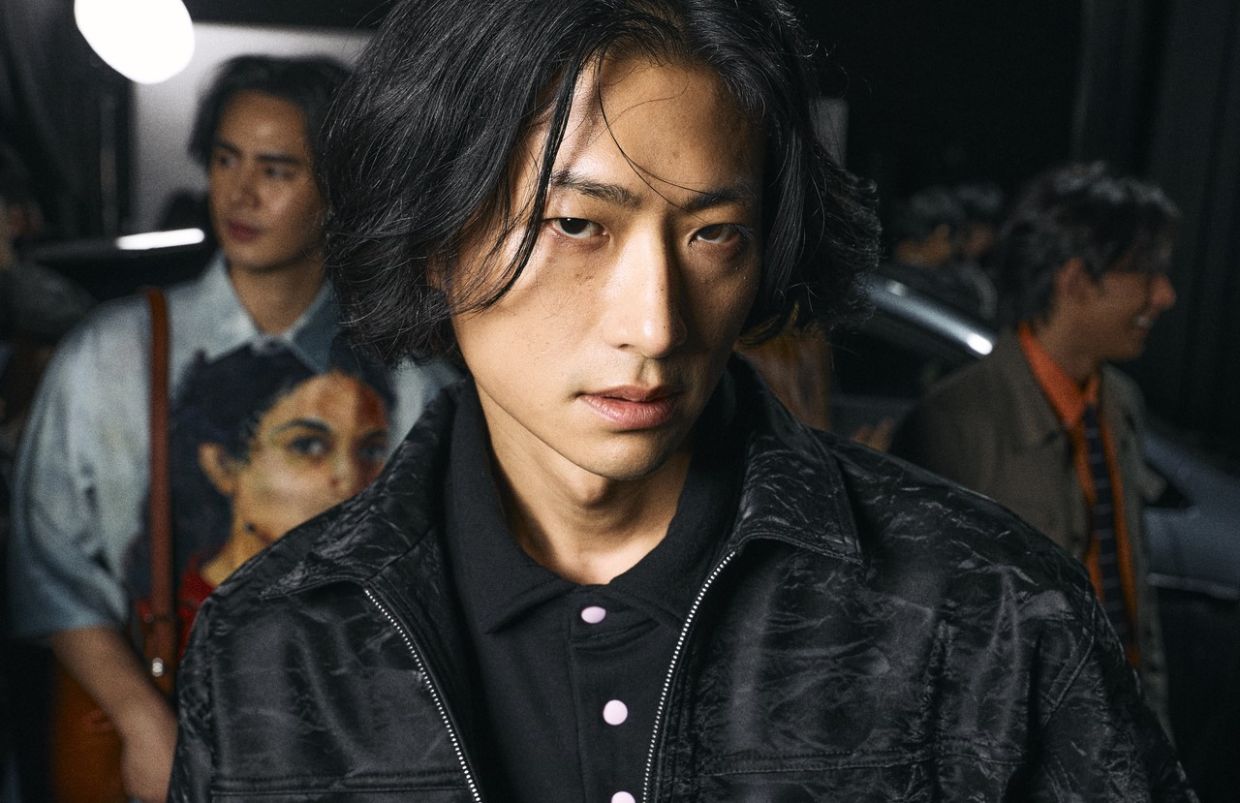
Heo Yong-jin's decision to leave behind a decade-long career in litigation support at Kim & Chang, South Korea's leading law firm, came not from desperation but from a chance observation by his wife. Now 40, the former attorney has discovered an unexpected second act as a fashion model, walking in prestigious trunk shows and building a quietly impressive portfolio across Asia that has captured the attention of regional audiences and luxury brands alike.
The transformation began pragmatically enough in early 2023, when Heo and his wife relocated to Spain with modest educational objectives—he wanted to study sports management and the agency business. However, a shift in his daily habits during that first year abroad proved catalytic. Surrounded by classmates passionate about fitness, he gradually joined them for football and padel, the racket sport sweeping across European recreation facilities. As his activity levels increased, the physical changes followed naturally. His wife, observing this evolution, posed a simple but consequential question: why not explore modelling given his 188-centimetre height and transformed physique?
For many, such a suggestion at 40 years old would seem absurd. But Heo possessed practical advantages that made the notion worth considering. He began researching the European modelling landscape and discovered robust demand for Asian male models, particularly across Spain and the broader continent. With roughly four months remaining on his Spanish visa, he made an unconventional calculation: the window of opportunity, however improbable, was worth pursuing before returning to South Korea. He invested his remaining time in building a portfolio from scratch, hiring photographers, and directly contacting potential clients to generate initial work.
That European foundation proved essential when Heo returned to South Korea with genuine clips and images. Yet the domestic market's response was deflating. Established agencies dismissed him consistently, citing his age and lack of professional experience in an industry that typically recruits models in their late teens and early twenties. Rather than interpreting this rejection as a final verdict, Heo systematised his approach to regional markets. He methodically reached out to agencies across China and Southeast Asia, submitting portfolios through websites and via email solicitation. Eventually, an agency based in Thailand responded positively, offering representation and marking the beginning of his Asian career trajectory.
The breakthrough came in July of the previous year, when Heo received an invitation to walk in an exclusive Louis Vuitton trunk show in Bangkok. The French luxury house was presenting a collaborative menswear collection conceived by creative director Pharrell Williams in partnership with Japanese designer Nigo. For a 40-year-old new entrant to the profession, such a booking represented an extraordinary affirmation. The experience itself, as Heo recounted in subsequent interviews, felt almost surreal—validation that an unconventional career pivot could actually materialise in tangible professional opportunities.
Building momentum from the Bangkok engagement, Heo secured additional regional work. He appeared in campaigns for multiple local brands, ranging from sunglasses advertisements to insurance company commercials where he was cast as a Malaysian father. These assignments, seemingly modest in isolation, accumulated into a growing portfolio and expanding client network across Thailand and South Korea. Perhaps most striking was the viral resonance his journey achieved on digital platforms. An Instagram reel documenting his unlikely transition from corporate law to fashion modelling accumulated four million views, transforming Heo into a minor internet phenomenon and demonstrating the contemporary appetite for narratives of adult reinvention and defying industry convention.
Yet despite this external validation and growing visibility, Heo remains cautious about framing his trajectory as a complete success story. The modelling industry's structural uncertainties persist, particularly for someone entering at an unconventional age without the developmental pathway most models follow. After his Louis Vuitton appearance, a significant booking drought followed, forcing him to reckon with the reality that a single prestigious assignment does not guarantee sustained employment in an intensely competitive sector. The financial precarity of freelance modelling contrasts sharply with the stability he previously enjoyed in law, creating genuine anxiety about sustainability and future income.
What appears to motivate Heo beyond commercial outcomes is the profound psychological shift that accompanies his new career. During his decade practising litigation support, he cultivated an external persona of confidence that did not reflect internal certainty. His legal work was competent and respectable, yet ultimately did not engage his deeper capacities for self-expression or genuine enthusiasm. Modelling, by contrast, provided something unexpected: authentic confidence rooted in real professional interest rather than performative competence. He describes the work as enabling him to inhabit a character, articulate personal expression, and collaboratively bring a brand's creative vision to life—satisfactions that litigation support fundamentally could not offer.
This psychological dimension deserves emphasis because it reveals the deeper logic of Heo's decision. Many early-career professionals experience dissatisfaction with established trajectories, but most remain locked within them through inertia, financial obligation, or fear of external judgment. Heo's particular circumstance—international relocation for education, spousal partnership that entertained unconventional possibilities, and physical transformation that coincided with self-reflection—created rare conditions permitting genuine reinvention. The financial uncertainty that accompanies his new life sometimes frightens him, yet he has concluded that material comfort, when coupled with meaningful disengagement from one's work, produces diminishing returns on actual happiness or fulfilment.
Currently, Heo is pursuing ambitious goals within the modelling profession that would test his commitment and market viability at the highest levels. He is actively seeking representation through an agency willing to campaign for him at Milan and Paris Fashion Weeks, scheduled for late September through early October. These premier showcases feature major houses including Prada, Bottega Veneta, Saint Laurent, and Tom Ford—precisely the kind of high-stakes professional environment where his relative obscurity and age work against him. Simultaneously, South Korean domestic brands have begun generating direct inquiries, including a fashion lookbook project, suggesting that his regional profile is translating into commercial interest in his home market.
The symmetry between where Heo began and where he now stands contains an unresolved tension that may ultimately define his narrative. He does not characterise his transformation as particularly remarkable—merely a combination of lifestyle change and professional exploration. Yet the circumstances enabling his reinvention at 40 remain genuinely uncommon. Few professionals possess the geographic freedom, spousal partnership, financial buffer, and psychological flexibility to abandon established careers for unpredictable creative pursuits. For Malaysian and Southeast Asian readers observing similar patterns of economic stability coupled with professional ambivalence, Heo's trajectory offers neither false encouragement nor resigned acceptance, but rather a complicated testament to the possibilities available when practical preconditions align with genuine willingness to embrace uncertainty.

