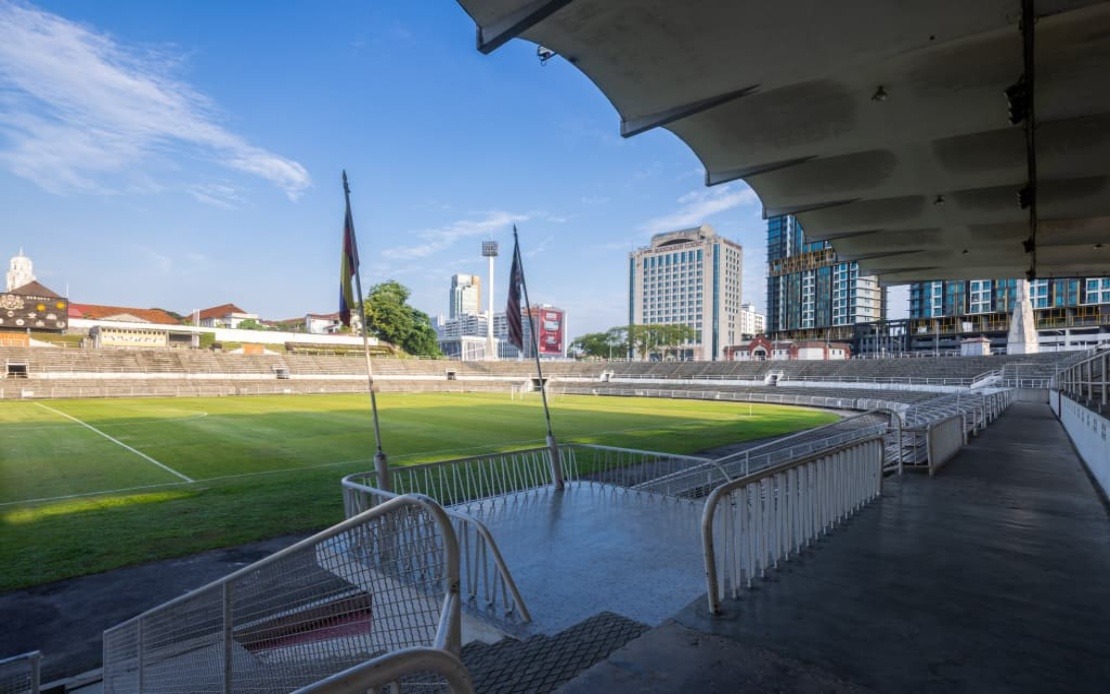
When Tunku Abdul Rahman Putra Al-Haj delivered the resounding cry of "Merdeka!" seven times at Stadium Merdeka on August 31, 1957, he did far more than ceremonially conclude British colonial rule. That momentous declaration represented Malaysia's birth as an independent nation and the commencement of a sovereignity built on negotiation, consensus, and a multicultural social contract. Nearly seven decades later, the nation continues to mark this milestone, though the physical geography of commemoration has undergone significant evolution. Today, that same flame of national pride burns equally brightly at Dataran Putrajaya, the gleaming administrative heart of modern Malaysia, demonstrating how historical consciousness and contemporary governance can coexist within a nation's identity.
The decision to relocate major National Day celebrations from Stadium Merdeka to various venues nationwide, culminating in Putrajaya's designation as the primary host from 2025 to 2027, tells a broader story about Malaysia's development trajectory. Putrajaya itself embodies this transformation—developed from swampland formerly known as Prang Besar into the Federal administrative centre since 1995, the city symbolizes Malaysia's leap into modernity. When the federal government first held its national-level National Day celebration in Putrajaya in 2003 under the theme "Keranamu Malaysia," it inaugurated a new chapter in how the nation publicly remembers itself. This year marks the tenth instance of Putrajaya hosting these celebrations, with previous editions occurring in 2003, 2005, 2018, 2019, 2020, 2021, 2023, 2024, and 2025, demonstrating a consistent pattern of relocation over the past two decades.
The strategic choice to anchor national celebrations at Putrajaya reflects Cabinet decisions made in April 2025, establishing the city as the venue for three consecutive years. However, this geographic shift inevitably raises questions about collective memory and generational understanding of independence. Does moving celebrations away from the original historic site diminish the poignancy of that August 1957 moment for younger Malaysians who have no living memory of colonialism? Prof Dr Sarjit Singh Gill, Chairman of the National Unity and Progressive Society Cluster at the Malaysian Professors Council and a Professor of Anthropology and Sociology at Universiti Putra Malaysia, offers a nuanced perspective that reframes this apparent tension. Rather than viewing Stadium Merdeka and Putrajaya as competing narratives, he argues they function as complementary historical symbols, each contributing distinct yet equally valuable meanings to Malaysia's national story.
Professor Sarjit distinguishes between the two venues by their generational resonance. Stadium Merdeka carries profound emotional weight particularly for older Malaysians—those aged 70 and above—who possess direct or near-direct memories of the independence movement and early nationhood. The original venue evokes what he describes as deep social nostalgia, anchoring living memory to physical space. Conversely, Putrajaya represents something fundamentally different: a contemporary administrative centre explicitly designed as a "smart city in a garden," embodying Malaysia's present-day aspirations and technological orientation. By celebrating at both locations, the nation creates a temporal bridge for younger generations, allowing them to comprehend not merely historical facts but the tangible social transformations that have enabled national progress. This dual-venue approach transforms what might otherwise appear as historical abandonment into a pedagogical strategy that illustrates Malaysia's journey across seven decades.
Preserving patriotism among postmodern youth requires deliberate institutional choices, according to Professor Sarjit. He emphasizes two historical elements must remain central to every National Day celebration, regardless of venue. First, celebrations must explicitly recognize the sacrifices and diplomatic achievements of past leaders who secured independence through negotiation and consensus-building rather than violent conflict—a distinctive feature of Malaysia's independence trajectory compared to regional neighbours. Second, celebrations must consistently reaffirm Malaysia's foundational principle of racial diversity united through the concept of unity in diversity, or "Rukun Negara." These elements transcend physical location; they depend instead on intentional programming and narrative framing. Professor Sarjit draws on his personal experience, having participated in the 1990 National Day parade themed "Berjaya" (Success), to underscore that active youth involvement proves crucial in developing authentic, enduring patriotism. Younger Malaysians must become active participants rather than passive audiences, embedding independence narratives into their lived experience.
From a purely logistical perspective, Putrajaya's selection reflects practical advantages that increasingly matter for mass public events in Malaysia's urbanized landscape. According to the Event Management and Innovation Unit of the Management Services Division at the Ministry of Communications, Putrajaya offers superior accessibility compared to Stadium Merdeka through the Mass Rapid Transit network, water taxi services, and shuttle buses. These modern transportation alternatives reduce congestion and facilitate attendance for Malaysians from across the Klang Valley and beyond, while enabling efficient management of large crowds. The strategic infrastructure supporting Putrajaya reflects Malaysia's investment in public mobility systems since the Klang Valley's population has grown substantially since 1957. This logistical efficiency is not merely administrative convenience; it democratizes access to national celebrations, ensuring that Malaysians of varying means can participate without requiring private vehicle ownership.
The Ministry's communications unit articulates a symbolic framework that validates the venue shift. If Stadium Merdeka represents the commencement point of Malaysia's independence journey, Putrajaya embodies the continuation of that voyage into Malaysia's future. Rather than suggesting historical discontinuity, this framing positions venue changes as reflecting Malaysia's evolutionary development. This narrative finds concrete expression in the 2026 National Day and Malaysia Day theme, "Malaysia MADANI: Kesejahteraan Dinikmati" (Malaysia MADANI: Shared Prosperity), which explicitly traces the arc from independence struggle to contemporary national development and people's wellbeing. The theme itself demonstrates deliberate effort to connect past sacrifices to present achievements, ensuring younger Malaysians comprehend that independence represents not merely a 1957 moment but an ongoing national project demanding continuous commitment.
Recognizing that younger Malaysians require different engagement modes than previous generations, organizers have incorporated creative and technological elements into contemporary National Day celebrations. The 2025 programme features performances such as "Gema Inovasi MADANI" (Echoes of MADANI Innovation), the musical fusion "Rentak MADANI, Paluan Tradisi" (MADANI Rhythms, Traditional Beats), and a "Human Graphic" visual formation involving 1,500 schoolchildren. These elements blend tradition with innovation, creating spectacles that resonate with youth accustomed to multimedia engagement while maintaining connection to Malaysia's cultural heritage. The participation of schoolchildren in human graphic formations proves particularly significant, embedding younger generations directly into the nation's self-representation rather than positioning them as external observers.
Beyond administrative and artistic considerations, National Day celebrations create experiential opportunities through which young Malaysians encounter patriotism firsthand. Muhammad Nasrul Nasir, a 30-year-old Administrative Assistant (Finance) at the Federal Territories Department, exemplifies this generational engagement. Having attended last year's celebration at Dataran Putrajaya as a spectator with family and friends, he experienced memorable moments including captivating skydiving performances that created lasting impressions. This year, Muhammad Nasrul has progressed from spectatorship to active participation, joining the parade as a representative of his agency. His trajectory illustrates how well-designed celebrations can catalyze deepening engagement, transforming casual attendance into institutional and personal commitment. More significantly, witnessing performances and ceremonies prompted him to reflect on past heroes' contributions to independence, demonstrating how contemporary celebrations can organically connect younger Malaysians to historical consciousness.
The National Day celebration's evolution from Stadium Merdeka to Putrajaya ultimately reflects Malaysian society's own maturation. While Stadium Merdeka remains symbolically irreplaceable—the physical site where independence was declared—Putrajaya's designation as contemporary celebration venue need not diminish that historical significance. Instead, the parallel existence of both venues within national memory creates space for multiple truths: that independence occurred in a specific moment and place, yet its meaning perpetually unfolds across time and space. For Malaysia's younger generations, particularly those too young to remember pre-digital Malaysia, celebrations at Putrajaya offer accessible entry points into national identity. The venue's modernity mirrors their own lived experience, potentially making historical narratives feel more immediately relevant. The true measure of Malaysia's success in preserving independence consciousness lies not in venue selection but in whether celebrations—wherever held—genuinely transmit to younger Malaysians the understanding that their present prosperity and opportunity emerged from past leaders' sacrifices, and that maintaining national unity remains an ongoing responsibility requiring their participation and commitment.

