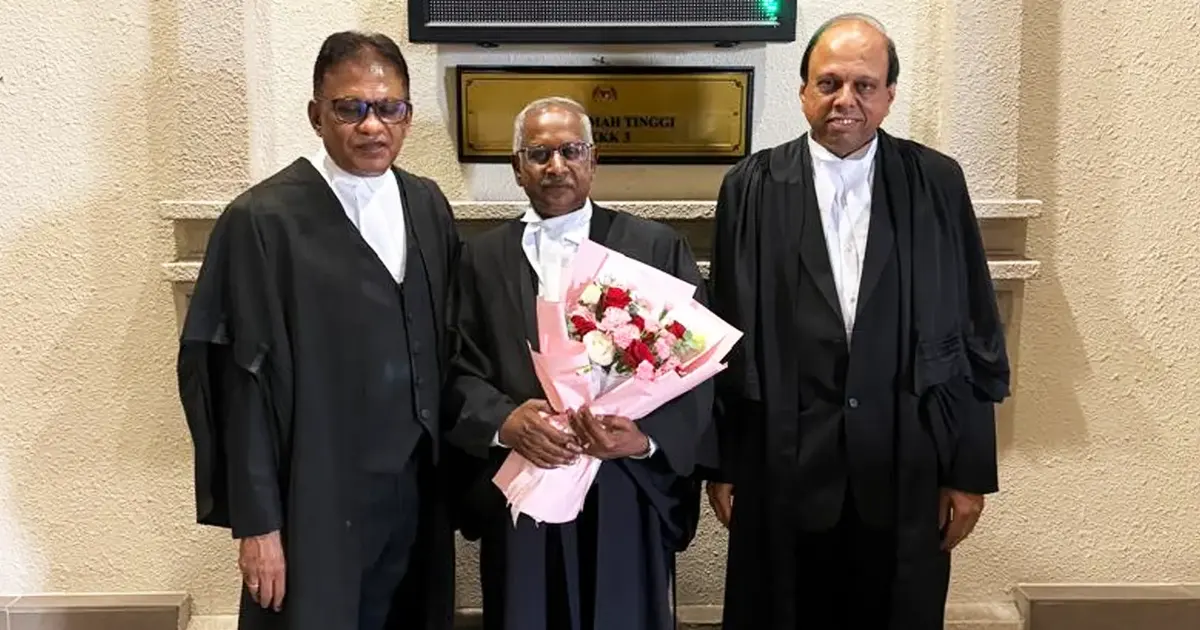
Gunalan, who spent considerable years serving on the judicial bench, has taken the formal step of being admitted as an advocate and solicitor of the High Court of Malaya, signalling his transition into private legal practice. The 69-year-old retired jurist made this move three years after stepping down from his judicial position, illustrating the deliberate pace at which senior members of Malaysia's legal establishment sometimes pursue new professional chapters following their time on the bench.
The timing of Gunalan's admission reflects a broader pattern observed among Malaysia's retiring judges, many of whom eventually seek to leverage their extensive legal expertise and judicial experience within the private sector. His decision to pursue formal admission as an advocate and solicitor represents not merely a change in professional designation, but a substantive shift from the interpretive and adjudicative role he maintained as a judge to the advocacy and client-focused work inherent in private practice.
The High Court of Malaya, which recognized Gunalan's credentials and approved his admission, serves as the primary superior court for Peninsular Malaysia and handles a vast range of civil and criminal matters. Advocates and solicitors admitted to this court operate at the highest tier of Malaysia's legal profession, entitled to appear in senior courts and handle matters of considerable complexity and significance. Gunalan's admission places him among this elite group of legal practitioners, lending considerable weight to his prospective private practice.
Retiring judicial officers who transition to private practice bring distinctive advantages to their new roles. The intimate familiarity with courtroom procedures, the established relationships with fellow legal professionals across the judiciary and bar, and the profound understanding of judicial reasoning and legal precedent derived from years on the bench all position individuals like Gunalan as particularly valuable to law firms and clients seeking seasoned counsel. His perspective on how judges approach legal arguments and evidence will inform his advisory work in the private sphere.
The three-year gap between Gunalan's retirement from the bench and his admission to the bar may reflect various considerations, ranging from personal circumstances to the practical requirements for transitioning between these distinct professional roles. Some retiring judges spend their initial post-judicial years in scholarly pursuits, arbitration, or other dispute resolution activities before formally re-entering private legal practice. This interval can also accommodate any professional requirements or administrative procedures necessary for formal admission in a changed capacity.
Malaysia's legal profession has long benefited from the contributions of former judges who establish practices in the private sector. These individuals often become go-to practitioners for complex litigation, appellate work, and high-stakes advisory matters, given their unparalleled understanding of judicial perspectives. Law firms frequently seek to attract such figures, recognizing that their presence elevates the firm's credibility and capacity to handle sophisticated legal challenges. Gunalan's admission therefore carries significance not only for his personal career trajectory but potentially for the institutional landscape of Malaysia's legal services industry.
The admission process for advocates and solicitors to the High Court of Malaya involves meeting stringent professional standards and satisfying established regulatory requirements. That Gunalan successfully navigated this process at the age of 69, after an extended period away from active legal practice, underscores both his commitment to remaining engaged with the profession and the maintenance of his professional standing. His admission demonstrates that the legal profession in Malaysia continues to welcome experienced practitioners returning to active roles.
For Malaysian legal circles and the broader business community, Gunalan's re-entry into private practice represents the continued vitality of the country's legal services sector. Clients seeking specialized guidance on matters likely to be reviewed or adjudicated within the courts benefit considerably from counsel who understand judicial temperaments and reasoning processes. His expertise in navigating Malaysia's legal system, combined with practical experience counselling clients through complex legal challenges, positions him to contribute meaningfully to the profession's evolution.
The phenomenon of retired judges transitioning to private practice also reflects the career longevity and professional relevance of Malaysia's senior legal figures. Rather than withdrawing entirely from legal work, practitioners of Gunalan's calibre remain engaged with the profession they helped shape, continuing to influence its development through client work, mentorship of younger lawyers, and participation in the broader legal community. His formal admission as an advocate and solicitor crystallizes this commitment, marking not an ending but a significant transition within an enduring legal career that has already spanned decades and now enters yet another distinct phase.

