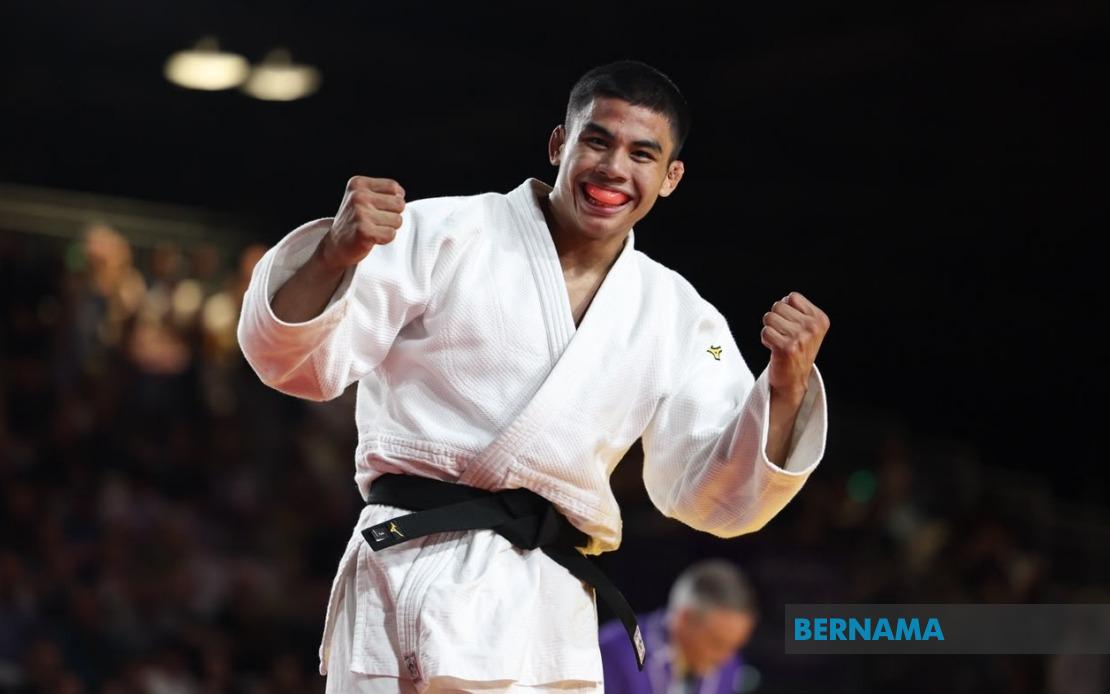
Amir Daniel's journey to becoming Malaysia's first Commonwealth Games judo gold medallist began not in a gymnasium, but in a storybook promise made when he was barely four years old. The 21-year-old Penang athlete defeated South Africa's Timothy Meuwsen in the final at the Scottish Event Campus, securing the men's under-81 kilogramme crown and delivering Malaysia's eighth gold medal at the Glasgow 2026 Games. Yet his mother, Yeoh Suatkhim, traces the roots of his extraordinary achievement back to a simple bargain struck during his early childhood, revealing an insight into the character traits that would eventually propel him to sporting immortality.
Yeoh recounts how her young son possessed a stubborn habit of thumb-sucking that proved resistant to conventional parenting approaches. Frustrated by traditional methods of correction, she struck upon an unconventional solution, leveraging her son's desire for a particular storybook as the motivation for behavioural change. When she promised Amir Daniel he could have the book if he stopped sucking his thumb, the transformation was immediate and absolute. By the following day, he had completely abandoned the habit, driven by his desire to claim his reward. This seemingly trivial episode in his early life encapsulated a defining characteristic that would shape his entire existence: an almost supernatural capacity for focused determination when pursuing a goal.
The parallels between that four-year-old's single-minded pursuit of a storybook and the adult athlete's dedication to excellence in judo are striking and deliberate. Yeoh emphasises that this determination never wavered as her son matured, becoming increasingly refined and channelled into productive outlets. When Amir Daniel eventually discovered judo at age five under the coaching of national mentor Md Nashriq Md Nassir, he had already developed the psychological foundations necessary to excel in a demanding combat sport. The discipline required to master judo techniques, the mental fortitude needed to endure gruelling training sessions, and the resilience to recover from defeats all flowed naturally from a temperament forged in childhood through small acts of self-mastery.
Md Nashriq's role in developing Amir Daniel's capabilities extended far beyond the confines of the gymnasium mat. According to Yeoh, the coach functioned as an extended family member and trusted confidant, actively participating in decisions regarding her son's holistic development. When academic pressures arose, particularly during examination periods, Yeoh would consult with Md Nashriq to establish agreements that ensured judo training did not overshadow educational commitments. The coach's ability to negotiate these balancing acts, and Amir Daniel's unwavering commitment to honouring whatever agreements were reached, created a structure that allowed him to develop as both athlete and scholar. This integrated approach to personal development distinguishes Amir Daniel from athletes who pursue sporting excellence at the expense of educational foundation.
The significance of Amir Daniel's victory at Glasgow 2026 extends beyond the individual achievement, though that achievement remains historically momentous for Malaysia. His Commonwealth Games gold represents a breakthrough for Malaysian judo on the international stage, demonstrating that the country possesses the talent, coaching infrastructure, and philosophical approach necessary to compete at the highest echelon of combat sports. At the Birmingham 2022 Commonwealth Games, Amir Daniel had already demonstrated promise by securing a bronze medal in the men's under-73 kilogrammes category, suggesting a trajectory of continuous improvement rather than sudden emergence. The progression from bronze to gold across two Commonwealth Games cycles indicates genuine development rather than fortunate circumstance.
Yeoh's philosophy regarding childhood development carries particular relevance for Malaysian parents and educators navigating questions about how to nurture talented young people. She advocates for early exposure to structured sporting activities and formal learning, arguing that such engagement provides children with meaningful pursuits while simultaneously building character and resilience. This approach, which she implemented with both her eldest child Nur Yasmeen and subsequently with Amir Daniel, recognises that athletic training serves broader developmental purposes beyond physical fitness. The discipline, goal-setting abilities, and perseverance developed through sports become transferable skills applicable across all life domains, from academics to professional endeavours.
Looking forward, Yeoh articulates aspirations that transcend even the Commonwealth Games achievement. She envisions her son competing at the Olympic Games, representing Malaysia on the sport's grandest stage and potentially earning Olympic medals that would further elevate the nation's sporting profile. However, she balances these lofty ambitions with pragmatic expectations grounded in her son's character. Amir Daniel's success should not come at the cost of neglecting his ongoing education, nor should his achievements lead him to abandon responsibility toward fellow judokas who continue developing their own capabilities. This holistic vision of athletic success, embedded within broader frameworks of educational and social responsibility, reflects parental wisdom that recognises sporting triumph as one element within a more comprehensive life journey.
For Malaysian readers, Amir Daniel's triumph carries implications extending beyond the judo mat and sporting accolades. His victory demonstrates that Malaysian athletes can compete successfully at Commonwealth Games level, vindicating investment in sports infrastructure and coaching development. The 2026 Glasgow Games have already yielded promising results, with Amir Daniel's gold medal contributing meaningfully to the national medal tally. Moreover, his example may inspire younger Malaysians to pursue judo seriously, potentially creating a pipeline of talent that sustains the sport's development within the country. The combination of individual brilliance, supportive family structures, and quality coaching that enabled his ascent represents a replicable model worth examining as Malaysian sports authorities seek to identify and develop future champions.
The story of Amir Daniel ultimately transcends sports journalism, instead offering a meditation on character formation, parental guidance, and the power of small commitments honoured across years. A storybook promised to a thumb-sucking four-year-old may seem inconsequential within the grand sweep of an athlete's career, yet it planted seeds of determination that would eventually bear fruit at Glasgow 2026. As the 21-year-old judoka stands atop the Commonwealth Games podium, that childhood promise echoes across two decades, a reminder that excellence is built incrementally through countless small acts of commitment and perseverance, beginning long before the spotlight illuminates the final triumph.

