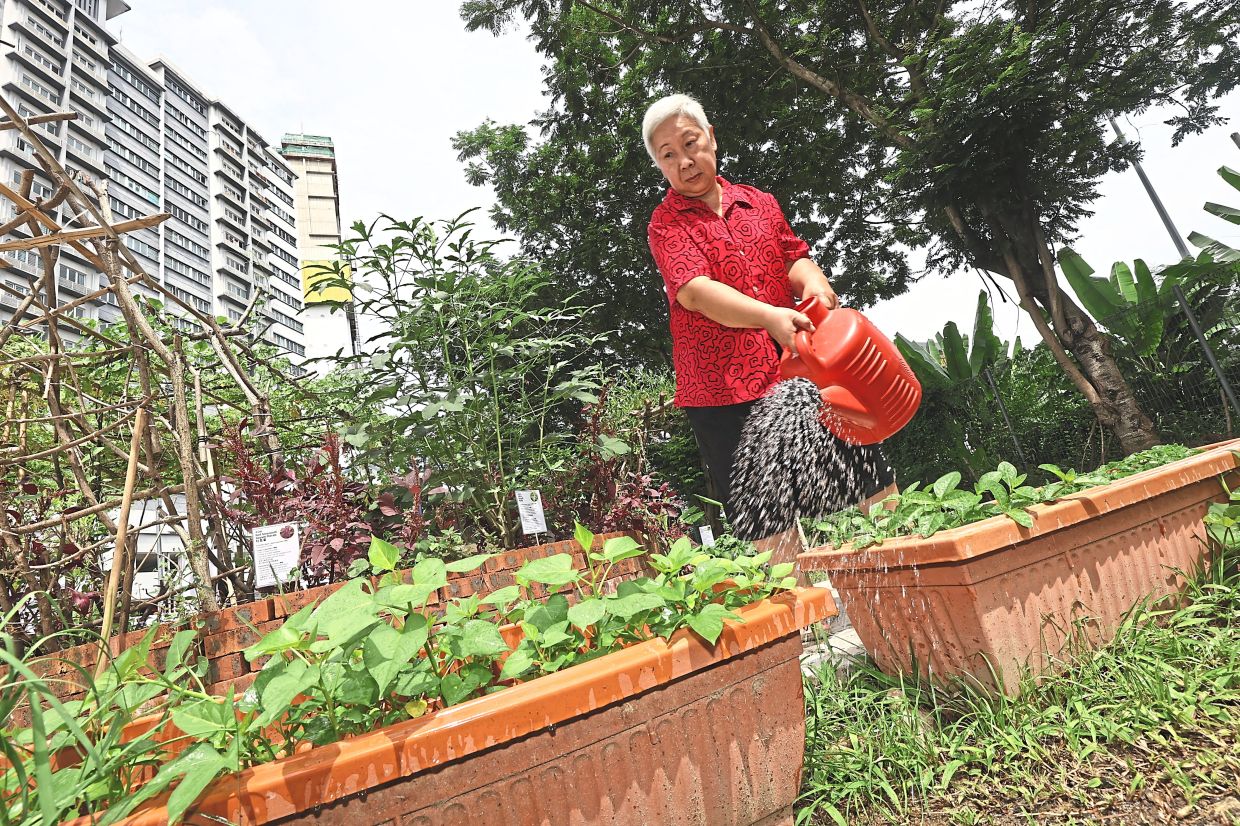
What was once an overgrown, neglected patch of land wedged behind 1Razak Mansion in Kuala Lumpur has undergone a remarkable transformation. The abandoned field, choked with trees and overgrowth, now flourishes as a carefully tended garden bursting with herbs, vegetables, fruit-bearing plants and flowers. The 1Razak Mansion Food Forest, officially launched recently through a partnership between social enterprise PWD Smart FarmAbility, the building's management corporation and its residents, represents far more than a cosmetic improvement to the residential compound. It signals a growing recognition that urban green spaces can serve as powerful tools for addressing the health and social needs of ageing populations in Malaysia's densely packed cities.
The demographic composition of 1Razak Mansion provides crucial context for understanding why this project carries particular significance. Around 80% of the residents are senior citizens, a proportion that reflects broader demographic shifts across Malaysia as the population ages. Minister in the Prime Minister's Department (Federal Territories) Hannah Yeoh highlighted this reality during the launch, noting that while residents enjoy access to physical exercise programmes such as tai chi classes, mental health support remains equally pressing yet frequently overlooked. The food forest addresses this gap by creating a purposeful activity that engages both body and mind, offering what gerontologists increasingly recognise as essential ingredients for healthy ageing: purpose, social connection and engagement with nature.
For 64-year-old resident Alice Fernandez, the garden's opening has fundamentally altered her daily experience of the residential community. Beyond the obvious practical benefit of producing fresh food that residents can harvest for their own consumption, thereby reducing household expenses, Fernandez emphasises the psychological dimension that urban planners and policymakers often underestimate. She observes that the formerly desolate area, positioned near the garbage room and therefore avoided by residents, has been revitalised into a welcoming destination. The transformation has already become woven into her routine; she visits the food forest after her morning jog to water plants and help maintain the space. This pattern of regular engagement reflects what researchers studying age-friendly communities have documented: when elderly residents have accessible, purpose-driven activities in their immediate environment, participation rates increase dramatically compared to programmes requiring them to venture beyond their residential compound.
Thieeben Sivabalasingam, 38, played a crucial logistical role in bringing the project to fruition, coordinating the material delivery and construction phases over several months. His account of witnessing the garden's transformation from raw materials and preparations to a fully realised landscape underscores the complexity of creating such community infrastructure. The experience of standing in the completed garden with his three-year-old son Aiden appears to have crystallised for Sivabalasingam the intergenerational potential of the initiative. He recognises that beyond nutritional benefits, the food forest provides the elderly residents with something equally vital: a reason to rise each day, an activity to anticipate and a role to play in maintaining something beautiful within their community. This element of purpose is particularly significant given documented correlations between purposeful activity and longevity in elderly populations.
Interest in the food forest extends beyond 1Razak Mansion itself. Jenny Wong, 70, and her husband KC Wong, 76, residents of the neighbouring Razak City Residences, attended the launch and recognised both the environmental and lifestyle benefits of such an initiative. KC Wong's expressed hope that a similar programme might be implemented in his own community reflects the growing appetite among Malaysia's urban elderly for meaningful engagement opportunities. For a retired couple with time on their hands and a desire to contribute to their surroundings, the food forest model offers a template for active, purposeful ageing that stands in marked contrast to passive recreational activities. The potential for such initiatives to spread across other residential communities in the Klang Valley and beyond suggests a broader shift toward recognising elderly residents as active agents in community improvement rather than passive recipients of services.
Dr Billy Tang Chee Seng, founder of PWD Smart FarmAbility and the driving force behind the project, articulates an ambitious vision that extends well beyond the current garden. At 60 years old, Tang approaches the food forest not as a finished product but as a foundation upon which to build a more comprehensive ecosystem of learning and skill development. His plans for future expansion include constructing a modest kitchen hub within the garden itself, enabling residents to learn practical cooking techniques using ingredients they have cultivated. This educational dimension transforms the food forest from a passive resource into an active learning environment where intergenerational knowledge transfer can occur.
The educational ambitions extend to the younger generation as well. Tang envisions introducing microscopes into the garden space, enabling children living in the compound to learn about soil science, microorganisms and the biological foundations of sustainable food production. This approach addresses a significant gap in urban children's environmental literacy, as many young Malaysians grow up with limited direct experience of food production systems. By embedding scientific education within the food forest, the initiative creates opportunities for children to understand the connections between soil health, biodiversity and nutrition at a formative stage in their development. Such understanding proves increasingly valuable as Malaysian society grapples with questions about food security, environmental sustainability and the ecological implications of urban expansion.
The food forest model sits within broader conversations about urban agriculture and green infrastructure that are gaining traction across Southeast Asia. As cities become denser and populations age, the integration of productive green spaces into residential compounds represents a practical response to multiple interconnected challenges: food costs, mental health, social isolation and environmental degradation. For Malaysia, where urbanisation continues at a rapid pace and housing compounds often feel divorced from natural systems, such initiatives model how limited space can be repurposed to serve community wellbeing. The success of the 1Razak Mansion project may inspire similar ventures in other residential communities, potentially creating a network of food-producing spaces distributed throughout urban areas.
The project also demonstrates the value of cross-sector collaboration in addressing social challenges. The involvement of a social enterprise alongside building management and residents themselves reveals how shared investment in community improvement can mobilise resources and expertise that might otherwise remain scattered. PWD Smart FarmAbility's technical knowledge, the management corporation's willingness to provide space and logistical support, and residents' voluntary labour and ongoing stewardship all proved essential to transforming the concept into a thriving reality. This collaborative model offers lessons for other communities seeking to implement similar projects, suggesting that success depends not on massive capital investment but on alignment of diverse stakeholders around a common vision.
As Malaysia's elderly population continues to grow, residential communities will increasingly need to provide environments that support not merely survival but genuine flourishing. The 1Razak Mansion Food Forest exemplifies how thoughtful design, community engagement and purposeful activity can transform underutilised spaces into hubs of wellbeing. The garden produces food, certainly, but its true harvest consists of daily purpose, social connection, environmental awareness and the intangible but essential ingredient that gerontologists have long recognised as central to healthy ageing: a sense that one remains a valued, active participant in community life. The broader implications for Malaysian urban planning and senior care policy merit serious consideration as other communities look to replicate this model.

