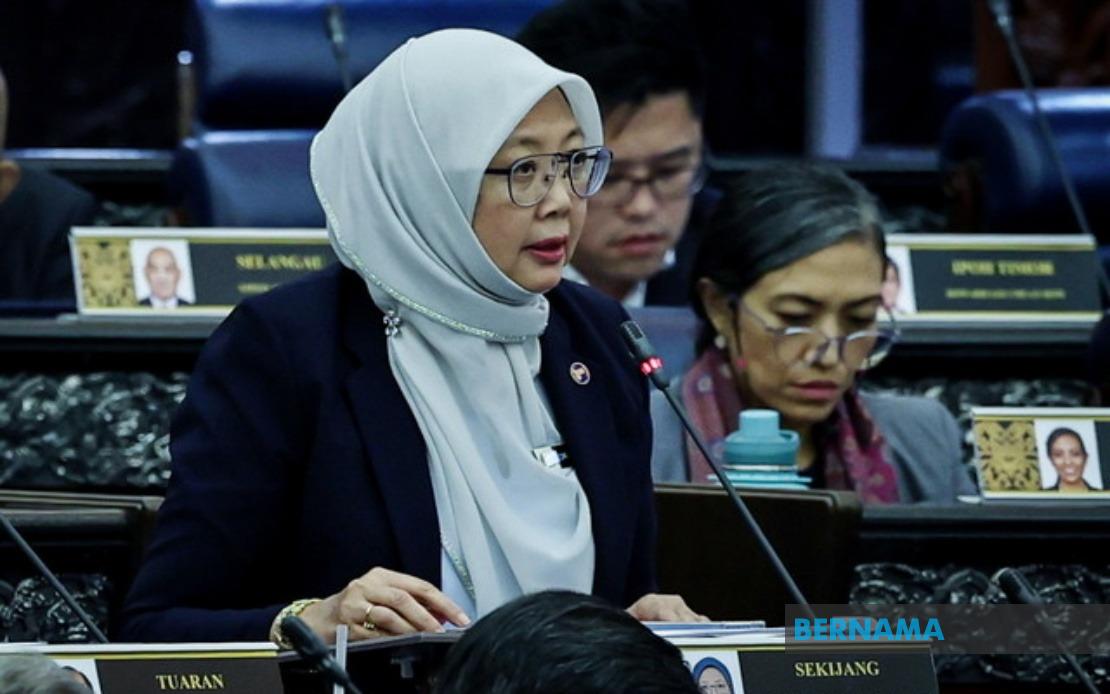
The Government Backbenchers Club chairman and Sekijang MP Datuk Seri Dr Zaliha Mustafa has demanded that Parliament receive a comprehensive account of how Lembaga Tabung Haji (TH) is implementing sweeping reforms outlined by a Royal Commission of Inquiry, alongside detailed updates on efforts to recover the Islamic pilgrimage fund's substantial losses. Dr Zaliha made her call during parliamentary debate following a ministerial briefing on the RCI findings, underscoring that such openness is essential to rebuild public trust in an institution serving millions of Malaysian Muslims saving for the haj pilgrimage.
The Royal Commission of Inquiry was established in 2021 and formally constituted on January 20, 2022, before delivering its 211-page report to the Yang di-Pertuan Agong on August 30, 2022. The document remained confidential for months until recent public release, detailing operational and management shortcomings within TH spanning the 2014-2020 period and proposing 25 specific recommendations for institutional overhaul. Current government progress indicates that as of July 30 this year, TH had completed approximately 75 per cent of the prescribed reforms, though Dr Zaliha stressed that Parliament and the public deserve itemised clarity on which measures are finished, which remain active, and realistic timelines for outstanding work.
Dr Zaliha's intervention reflects mounting pressure for institutional accountability at TH, an organisation managing billions in Muslim savings earmarked for one of Islam's five pillars. The backbencher emphasised that alongside implementation metrics, the government must publicly disclose comprehensive loss-recovery strategies, including specific actions undertaken, initiatives underway, and future plans to address the financial damage that triggered the RCI inquiry. Her argument carries particular weight given TH's unique role bridging religious obligation and financial stewardship within Malaysia's Islamic community.
Central to Dr Zaliha's parliamentary address was the RCI's significant finding that political pressure surrounding electoral cycles substantially contributed to TH's financial crisis. This revelation strikes at governance fundamentals, suggesting that short-term political considerations superseded the fiduciary responsibilities owed to millions of ordinary Malaysian Muslims whose savings had been placed in the institution's care. The implication troubles Dr Zaliha, who argued that invoking concepts of Muslim unity rings hollow when entrusted funds are mismanaged and institutional leaders responsible for questionable decisions escape meaningful scrutiny.
The backbencher specifically trained focus on former TH chairman Datuk Seri Abdul Azeez Abdul Rahim, highlighting apparent conflicts of interest arising from his simultaneous roles as board chairman and officeholder across multiple TH subsidiaries and related corporate entities. Although formally designated as non-executive chairman, available evidence suggests his involvement in major investment negotiations extended considerably beyond typical non-executive parameters. Dr Zaliha called upon the government to quantify precisely how active this engagement was and to address allegations that cash holdings within accounts linked to the former chairman at one juncture accumulated to approximately RM170 million.
These governance concerns assume heightened significance within Malaysia's corporate accountability context, where institutional independence and transparent separation of authority remain subjects of ongoing reform. The apparent dual roles occupied by TH's former leadership suggest structural weaknesses permitting concentrated decision-making authority among individuals with overlapping financial and operational interests. Such arrangements create obvious capacity for problematic judgement calls, particularly when combined with external political pressures during election periods seeking to boost short-term returns or fund distributions.
Dr Zaliha structured her parliamentary intervention around three substantive pillars: TH's financial condition and dividend distribution policies, the fund's investment portfolio composition and decision-making processes, and broader governance accountability mechanisms. Each domain requires transparent reassessment following the RCI findings, she argued, to ensure future management adheres to fiduciary standards and institutional independence. The financial dimension proves especially sensitive given TH's obligations to multiple demographic groups with different pilgrimage timelines and risk tolerances.
The delayed public release of the RCI report itself raises questions about information management within government circles. The document's completion and presentation to the royal institution occurred in August 2022, yet months elapsed before official publication, potentially delaying necessary course corrections and public understanding of what transpired within TH's management structures. This gap in transparency arguably complicated trust-restoration efforts among depositors and the broader Muslim community dependent upon TH services.
Dr Zaliha's call resonates beyond parliamentary rhetoric, reflecting genuine anxiety within Malaysia's Muslim constituency regarding institutional stewardship of savings designated for spiritual obligation. When financial mismanagement becomes entangled with electoral politics, the resulting loss extends beyond monetary dimensions to encompass institutional legitimacy and community confidence. Her demand for comprehensive public disclosure represents a rational response to this erosion, proposing that transparency itself becomes the mechanism through which TH rehabilitation proceeds and stakeholder assurance rebuilds.
The backbencher's emphasis on unity without accountability draws implicit contrast with alternative approaches emphasising internal resolution or limited disclosure. Instead, she positions full transparency as compatible with—indeed, supportive of—genuine Muslim solidarity, arguing that protecting the institution's integrity and restoring depositor confidence ultimately strengthens rather than weakens communal bonds. This framing redefines accountability not as destructive scrutiny but as essential foundation for renewed trust.
Moving forward, TH management faces pressure to demonstrate that the 75 per cent implementation rate translates into measurable governance improvement and loss-mitigation outcomes. Parliamentary transparency regarding specific reform metrics, investment recovery progress, and former leadership accountability will determine whether the institution successfully rebuilds its standing among Malaysia's Muslim savers. Dr Zaliha's intervention suggests Parliament itself may demand increasingly detailed progress reports, reflecting backbench determination to ensure that RCI recommendations become embedded institutional practice rather than technical compliance exercises.

