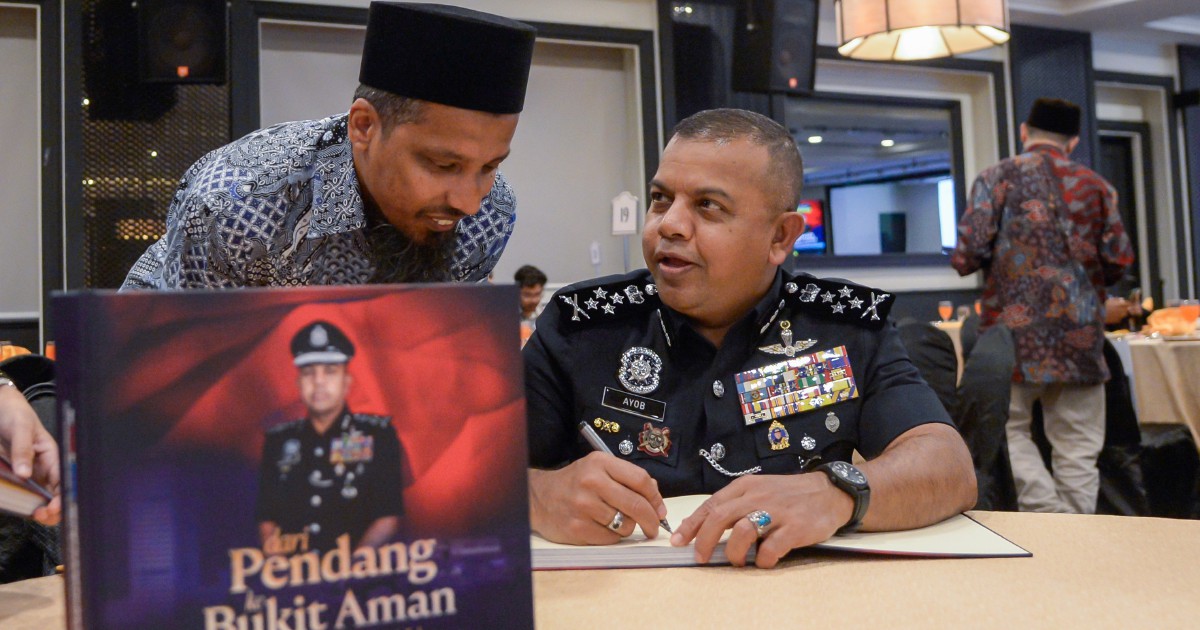
The Gang Nicky investigation stands out in the career of Tan Sri Ayob Khan Mydin Pitchay as a case that tested the mettle of Malaysia's law enforcement establishment at its highest levels. As former deputy Inspector-General of Police, Ayob Khan has overseen countless operations during his tenure at Bukit Aman, yet the probe into the criminal network orchestrated by the central figure known as Nicky Liow occupies a place of particular significance in his recollection of major cases handled by the national police headquarters.
Investigations of this magnitude and complexity demand exceptional coordination across multiple police divisions and often require sustained commitment over extended periods. The Gang Nicky case exemplified the type of organised crime challenge that posed considerable difficulties for investigators seeking to dismantle networks deeply embedded in criminal ecosystems across the country. Such operations frequently involve unravelling chains of command, establishing financial flows, and building evidential foundations robust enough to withstand rigorous legal scrutiny.
The prominence of this case within Ayob Khan's professional portfolio reflects broader patterns in Malaysian law enforcement during the period in question. High-profile organised crime investigations capture institutional resources and command sustained attention from senior leadership precisely because they represent systemic threats to public order and security. The Gang Nicky investigation would have required coordination between field operatives, intelligence units, and support services, making it the type of comprehensive operation that tests an organisation's capacity and strategic planning.
For a former deputy IGP to identify a particular case as among the most significant handled by Bukit Aman speaks to its operational scale and the challenges it presented. Such cases often generate extensive media coverage, which adds another layer of complexity to investigative work. The balance between maintaining operational security and managing public expectations becomes critical when investigations receive sustained attention from the press and public commentary.
The institutional memory surrounding cases like Gang Nicky serves important functions within police organisations. They become reference points for training programmes, case study material for professional development, and foundational experiences that shape investigative doctrine. Officers who participated in such operations carry forward lessons about evidence gathering, witness management, and the coordination mechanisms required to sustain complex investigations over their duration.
Malaysia's experience with organised crime investigations reflects patterns observed across Southeast Asia, where criminal networks often operate across state and national boundaries, requiring coordinated responses that extend beyond individual jurisdictions. The effectiveness of such investigations depends heavily on the institutional capacity of law enforcement agencies and their ability to adapt tactics and strategies as criminal networks themselves evolve.
The legacy of cases like Gang Nicky extends beyond their immediate outcomes to their role in shaping public confidence in law enforcement institutions. When significant criminal networks are dismantled through sustained investigative effort, it demonstrates the capacity of police organisations to respond to serious criminal challenges. Conversely, high-profile cases that receive substantial attention become benchmarks against which public evaluates institutional performance.
Ayob Khan's recognition of the Gang Nicky investigation as among Bukit Aman's major cases reflects the standards by which significant operations are judged within policing hierarchies. The factors that typically elevate an investigation to such status include the scale of criminal activity involved, the sophistication of the network structure, the geographical spread of operations, and the difficulty of developing sufficient evidence for successful prosecutions.
For Malaysian readers following developments in national security and law enforcement matters, Ayob Khan's reflection on the Gang Nicky case provides insight into how senior police leadership evaluates the success and significance of major operations. It underscores the demand placed on investigative resources and the institutional effort required to address organised crime challenges that threaten public safety and security.
The case remains relevant to contemporary discussions about organised crime management in Malaysia and the broader Southeast Asian region. As criminal networks continue to adapt their methods and exploit emerging technologies, the lessons derived from previous major investigations provide valuable guidance for developing more effective law enforcement strategies. The Gang Nicky investigation, viewed through the lens of Ayob Khan's experience, exemplifies the type of comprehensive, sustained operation that modern police forces must be prepared to execute when confronting serious criminal enterprises.
Ayob Khan's career at the senior levels of Malaysia's police hierarchy positioned him to observe evolving criminal threats and the institutional responses they demanded. His perspective on cases like Gang Nicky contributes to understanding how law enforcement agencies in Malaysia have grappled with organised crime challenges and refined their approaches to investigation and prosecution over successive periods. The standards he applies in characterising the case as among the most significant reflect the professionalism expected at Bukit Aman's leadership level and the rigour with which major operations are evaluated and assessed.

