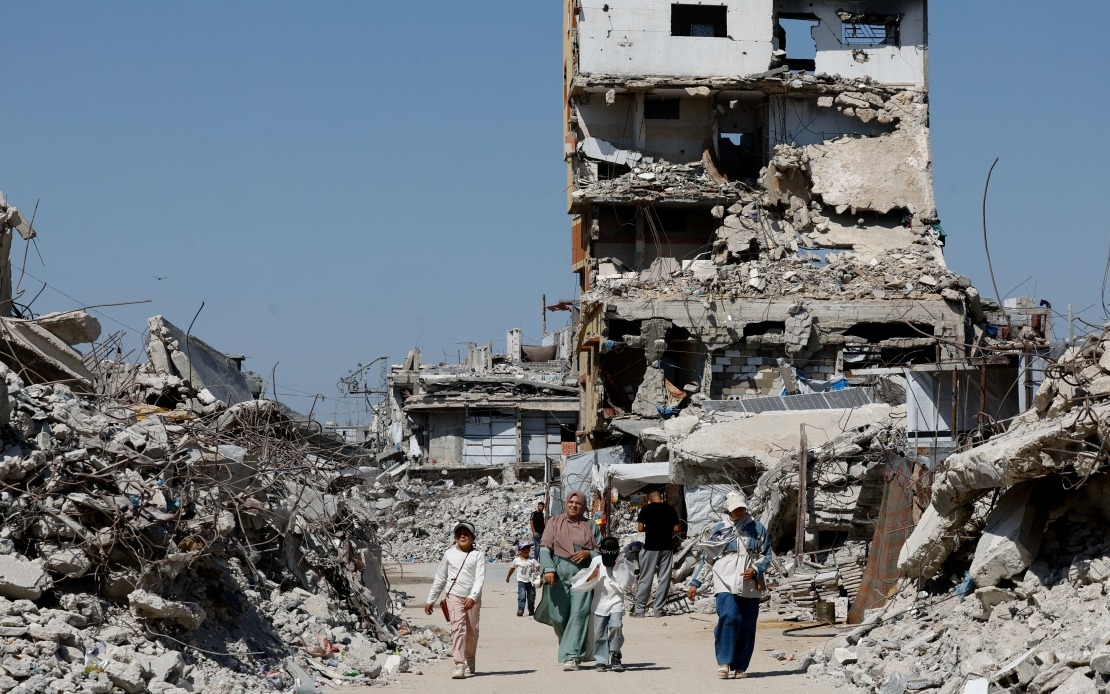
The humanitarian crisis in Gaza has intensified as the Palestinian Health Ministry documented another 10 deaths and 25 injuries over a 24-hour period, bringing the cumulative fatality count since the outbreak of conflict in October 2023 to 73,417. The latest figures underscore the continued instability within the blockaded territory, even as a formal ceasefire framework was supposed to have taken effect in October 2025.
According to the ministry's daily statistical report issued on Thursday, Gaza hospitals received 10 bodies and treated 25 wounded individuals during the reporting period. The ministry attributed these casualties to ongoing Israeli military operations, including shelling and gunfire across multiple locations throughout the territory. However, the ministry refrained from providing detailed information about the specific circumstances surrounding each death, citing the fluid and dangerous conditions preventing comprehensive documentation.
The persistence of violence despite the October 2025 ceasefire agreement highlights a critical breakdown in the implementation of the truce mechanisms. The Health Ministry reported that breaches of the ceasefire have themselves resulted in 1,283 deaths and 4,248 injuries—a staggering subset of the overall casualty figures that demonstrates how fragile the supposed peace arrangement has proven to be. These violations suggest that neither party has fully committed to upholding the terms of the agreement, or that the ceasefire framework lacks adequate enforcement mechanisms to prevent escalation.
A particularly troubling aspect of the current situation is the ministry's warning that numerous victims remain buried beneath collapsed structures and scattered across roads, inaccessible to rescue teams. Ambulance services and civil defence personnel have been unable to reach many casualties, meaning the official death count likely underestimates the true toll. This access crisis reflects the broader collapse of civil infrastructure and the dangerous security environment that continues to prevail in Gaza, making even basic humanitarian operations extraordinarily difficult.
The scale of destruction inflicted upon Gaza's infrastructure has reached catastrophic proportions. According to the ministry's assessment, approximately 90 percent of the territory's civilian infrastructure has been damaged or destroyed—a level of devastation that ranks among the most severe inflicted in recent conflicts. The United Nations has estimated that reconstruction would require approximately US$70 billion, a figure that underscores not merely the material losses but the long-term developmental and economic challenges facing Palestinian society.
For Malaysian readers and Southeast Asian observers, the ongoing situation in Gaza carries significant regional and global implications. The failure of international ceasefire mechanisms to produce lasting peace raises questions about the effectiveness of diplomatic interventions in resolving entrenched conflicts. Malaysia, which maintains strong advocacy for Palestinian rights and has consistently supported international humanitarian efforts, faces the challenge of channelling assistance to a region where even basic delivery of aid and medical services remains extremely difficult.
The cumulative casualty figures—73,417 killed and 174,360 wounded—represent a profound human tragedy with generational consequences for Palestinian society. The loss of life encompasses civilians of all ages, with children and women comprising a significant proportion of the deceased. This demographic profile of casualties indicates that the conflict has deeply impacted families and communities, creating psychological trauma and social fragmentation that will persist long after fighting ceases.
The inability of the health system to document and account for all victims raises broader questions about loss of life and accountability. When official counts prove incomplete due to access restrictions and ongoing violence, the true magnitude of human suffering becomes obscured. This documentation gap is not merely a statistical concern but has profound implications for international investigations into potential war crimes and for the grieving process of affected families who may never receive confirmation of their relatives' fates.
The October 2025 ceasefire's apparent failure to take hold suggests that the conditions for sustainable peace remain unmet. Underlying political disputes, security concerns, and fundamental disagreements about the path forward continue to fuel sporadic and systematic violence. The renewal of casualties despite theoretical ceasefire agreements indicates that establishing genuine peace requires addressing root causes rather than merely imposing temporary ceasefires without corresponding political settlements.
As the situation continues to deteriorate, the international community faces mounting pressure to intervene more decisively. For nations like Malaysia that have advocated strongly for Palestinian self-determination and statehood, the ongoing violence represents a failure of the international system to protect vulnerable populations and enforce its own agreements. The inability to stop the bloodshed despite widespread global attention highlights the limitations of diplomatic tools when underlying power imbalances and conflicting interests remain unresolved.
The reconstruction challenge ahead is as formidable as the immediate humanitarian crisis. Even if fighting were to cease entirely today, Gaza would face decades of rebuilding efforts to restore basic services, housing, hospitals, schools, and economic infrastructure. The psychological and social dimensions of recovery—addressing trauma, rebuilding social cohesion, and restoring hope—present challenges that physical reconstruction alone cannot solve.
Looking forward, the persistence of violence and the inadequacy of ceasefire mechanisms suggest that comprehensive political solutions addressing the underlying territorial, security, and sovereignty disputes remain essential. Without such fundamental agreements, temporary truces will continue to collapse, casualties will mount, and the humanitarian catastrophe will deepen, perpetuating a cycle of violence and suffering that claims innocent lives indiscriminately.

