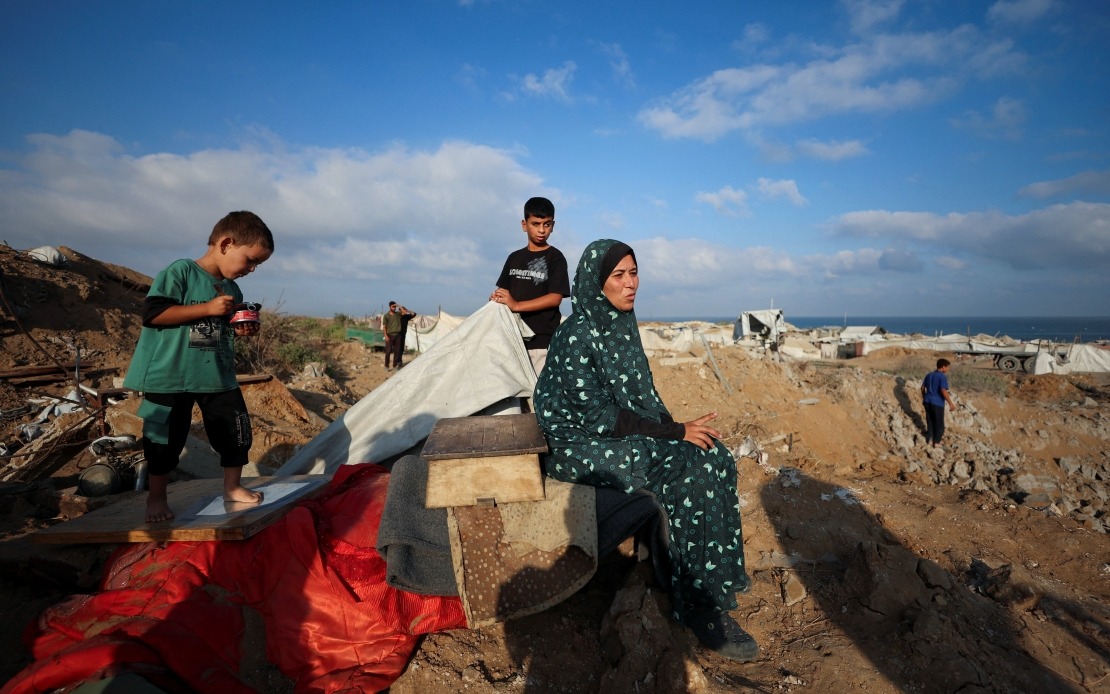
The humanitarian situation in Gaza is deteriorating rapidly, with a fresh assessment indicating that food insecurity will worsen considerably over the coming months despite temporary improvements from aid deliveries. According to the latest Integrated Food Security Phase Classification analysis released this week, approximately 1.4 million residents across Gaza's population of roughly 2.3 million face "high levels of acute food insecurity" extending through December 2026. This represents a troubling upward trajectory from the 1.2 million identified during the mid-April to June assessment period, signalling that initial gains from humanitarian intervention are proving unsustainable without substantial additional support.
The severity of the crisis is underscored by broader population statistics that paint a grim picture of widespread deprivation. The IPC projection indicates that two-thirds of Gaza's entire population—approximately 67 per cent—will experience either crisis-level conditions or worse circumstances. Within this broader cohort, roughly 212,000 individuals are anticipated to descend into emergency phase status, representing the most desperate tier of food insecurity classification. Critically, all five governorates across Gaza have already been designated as crisis zones, meaning the deterioration is geographically comprehensive rather than concentrated in particular regions.
The modest improvements observed earlier this year stemmed primarily from the October 2025 ceasefire agreement, which enabled expanded humanitarian access previously impossible during active conflict. In the months immediately following the ceasefire, international aid organisations managed to distribute food assistance to approximately 1.49 million people in May alone, providing temporary relief to a significant portion of the population. However, this temporary reprieve masks fundamental structural problems that continue to undermine long-term food security across the territory.
The underlying economic collapse remains the central challenge facing Gaza's population. According to the IPC assessment, 83 per cent of households report having absolutely no source of income whatsoever, reflecting the complete destruction of livelihoods and employment opportunities across the territory. This near-total dependence on external humanitarian assistance means that without sustained international aid flows, the population faces destitution. Food rations that do reach recipients remain inadequate in scale and nutritional content, failing to meet minimum dietary requirements for healthy survival. The combination of zero income and insufficient aid creates an untenable situation where families cannot purchase additional food or diversify their diets beyond what humanitarian organisations provide.
What makes the current trajectory particularly alarming is the documented decline in humanitarian assistance since February, driven by funding shortages and operational uncertainties surrounding international relief organisations. The IPC explicitly cautioned that the recent improvements in food security conditions remain "highly fragile," meaning they could reverse suddenly if aid flows diminish further. This fragility is not theoretical: the reduction already evident since early 2026 demonstrates that donor fatigue and budgetary constraints pose immediate threats to any progress achieved.
The counterfactual scenario presented by the IPC analysts is sobering. Without any humanitarian food assistance whatsoever, approximately 1.9 million people—representing roughly 90 per cent of Gaza's entire population—would face acute food insecurity through December. This figure underscores the absolute reliance of Gaza society on external humanitarian support and the near-impossibility of the population meeting its nutritional needs through local production or markets. The territory's capacity for self-sufficiency in food production has been systematically destroyed, leaving no viable alternative to continued international assistance.
The crisis extends beyond general food shortages into specific vulnerabilities affecting the most fragile population segments. The analysis projects that by April 2027, approximately 74,200 children under five years old will require treatment for acute malnutrition, including 11,432 children suffering from the most severe form of the condition. Malnutrition at this stage of development causes irreversible cognitive and physical damage, with long-term consequences for individual children and Gaza's future human capital. Additionally, 24,600 pregnant and breastfeeding women have been identified as requiring urgent nutritional intervention, as malnutrition during pregnancy and lactation damages both maternal health and infant development outcomes.
For Malaysian and Southeast Asian observers, the Gaza situation offers stark lessons about the fragility of ceasefire-dependent humanitarian systems and the dangers of underlying economic collapse in conflict-affected regions. The experience demonstrates that temporary ceasefires without comprehensive reconstruction and livelihood restoration cannot generate sustainable improvements in civilian welfare. The rapid decline in food security despite the October 2025 ceasefire agreement shows that conflict cessation alone does not address the fundamental destruction of economic infrastructure and employment systems.
The IPC's recommendations reflect recognition that incremental humanitarian responses remain insufficient. The organisation has called for sustained humanitarian access to reach all vulnerable populations, expanded nutrition-specific programmes targeting malnutrition, and critically, a permanent and comprehensive cessation of hostilities. Without permanent peace, efforts to rebuild livelihoods and restore local food production capacity will remain impossible. The current trajectory suggests that Gaza faces a prolonged humanitarian emergency requiring sustained international commitment far beyond current funding and political will.
The implications for the broader Middle East and global humanitarian system are significant. Gaza's experience demonstrates that even modest economic recovery requires not merely aid delivery but fundamental improvements in security conditions and economic reconstruction. For policymakers across Southeast Asia concerned with regional stability, the Gaza case illustrates how unresolved conflicts generate humanitarian catastrophes with impacts extending across decades and requiring resources that strain global humanitarian capacity. The question facing the international community is whether the political will exists to move beyond temporary ceasefires toward comprehensive reconstruction that could gradually restore self-sufficiency to devastated populations.

