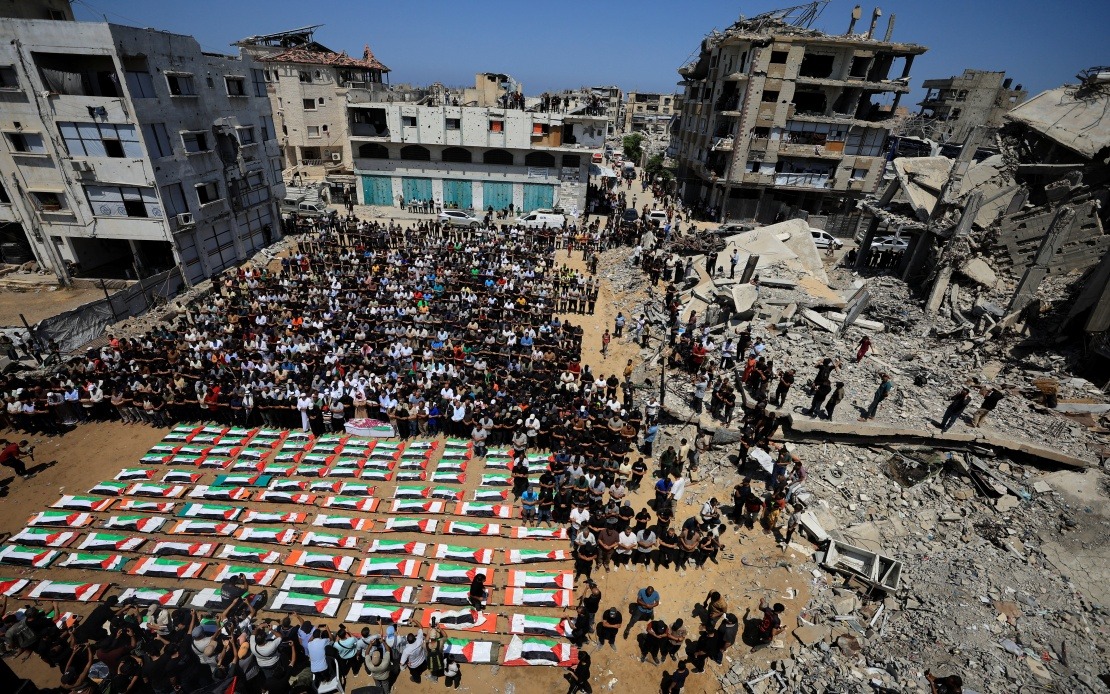
The fragile hopes of thousands in Gaza have once again been tested as negotiations over the second phase of a ceasefire agreement have become mired in fresh complications and conflicting statements. For families like that of Saeed Helles, a 55-year-old father of five, the stalled talks represent far more than political brinkmanship—they mean the difference between life and death for loved ones trapped in deteriorating conditions. His 13-year-old daughter Saja battles cancer while confined to a hospital in Gaza City, her recovery prospects fading with each passing day that border crossings remain sealed and evacuation for specialised treatment remains impossible.
When Hamas initially accepted the mediators' proposal for advancing to the second phase of negotiations, it sparked a cautious optimism among Palestinians desperate for any sign that the prolonged conflict might finally be drawing to a close. For Helles and countless others, the acceptance represented a tangible pathway toward reopening crucial border crossings that would enable medical patients, the internally displaced, and those seeking to rebuild shattered lives to move forward. The family began the arduous process of preparing travel documentation, envisioning a near-term opportunity for Saja to receive the advanced cancer treatment unavailable within Gaza's collapsed healthcare infrastructure. "Every day of delay reduces her chances of recovery," Helles explained, capturing the brutal mathematics of medical emergencies where time constraints transform hope into mounting dread.
Yet this optimism proved short-lived. Recent statements from Israel's negotiating position, articulated through meetings between Israeli Prime Minister Benjamin Netanyahu and international mediators, have introduced fresh obstacles that threaten to derail progress entirely. The insistence that Israeli military forces will only withdraw beyond the so-called Yellow Line after a comprehensive decommissioning process—encompassing the dismantling of weapons, heavy armaments, and tunnel infrastructure—has fundamentally altered the negotiating landscape. Hamas, by contrast, has maintained that advancing to the second phase, including discussions on weapons disarmament, remains contingent upon Israel fully implementing the first phase, halting military operations, and withdrawing entirely from Gaza. This fundamental disagreement over sequencing and preconditions has transformed the talks into a protracted standoff.
The ripple effects of this diplomatic stalemate extend far beyond individual families awaiting medical evacuations. According to Mohammed Abu Nada, the medical director of Gaza's Cancer Centre, approximately 11,000 cancer patients currently face severe shortages of essential medications, with roughly 4,000 patients holding valid medical referrals unable to depart Gaza due to persistent restrictions at border crossings. The statistics mask a humanitarian catastrophe unfolding in real time: Abu Nada reports that approximately three cancer patients die daily from inadequate treatment access, a mortality rate that will inevitably accelerate should border restrictions persist. The interconnected nature of Gaza's medical crisis—where treatment unavailability, medication shortages, and evacuation blockades compound one another—means that every negotiating delay translates directly into preventable deaths.
Beyond the medical emergency, the stalled negotiations have devastated those among Gaza's massive internally displaced population who harboured fragile dreams of returning home. Mariam Qudaih, 46, displaced from eastern Khan Younis in southern Gaza, represents hundreds of thousands who view the second phase as their only realistic pathway to eventual return and reconstruction. Despite her home reduced to rubble, Qudaih had begun to allow herself and her children to imagine standing once more on their family's land, perhaps rebuilding under canvas while undertaking reconstruction efforts. The prospect of return had offered psychological ballast to children traumatised by displacement, allowing them to envision continuity and recovery. Yet the recent negotiating setbacks have shattered that carefully constructed hope, returning the family to a state of profound uncertainty where return remains perpetually deferred.
The dynamics of the current impasse reveal structural asymmetries in the negotiation process that disproportionately advantage the Israeli negotiating position. By conditioning withdrawal on the completion of disarmament verification, Israel effectively retains control over the timeline for implementing subsequent phases, granting it substantial leverage over Gaza's reopening and the pace of humanitarian access restoration. Gaza-based political analyst Mustafa Ibrahim has characterised this linkage as fundamentally problematic, arguing that it raises serious questions about whether the mediators' proposed roadmap can be implemented as originally envisioned. The mechanism essentially allows Israel to retain indefinite influence over when Palestinians regain freedom of movement, access to medical care, and the opportunity to begin reconstruction—transforming what should be temporally defined phases into potentially open-ended conditions.
The continuation of military operations concurrent with diplomatic negotiations has further eroded Palestinian confidence in the process. When Palestinians witness ongoing armed activity whilst simultaneously being asked to trust in negotiated settlement mechanisms, the message becomes deeply contradictory and undermines faith in ceasefire agreements. The daily reality of living under threat whilst awaiting news from negotiating tables creates a psychological toll distinct from ordinary wartime stress—it is the particular anguish of believing peace is proximally achievable yet watching it repeatedly slip from reach. For families like Helles's, this emotional rollercoaster compounds the existing trauma of conflict, creating successive waves of hope and devastation that exact psychological costs alongside the physical dangers of ongoing hostilities.
The broader regional implications of the current stalemate extend beyond Gaza itself, with implications for how other conflicts in the Middle East might be resolved through mediated negotiations. The apparent inability of even well-resourced, internationally backed mediation efforts to overcome fundamental disagreements between parties suggests that structural obstacles and competing visions of acceptable outcomes may prove more intractable than diplomatic procedures alone can address. For Malaysia and other Southeast Asian nations engaged in regional stability discussions, the Gaza situation offers cautionary lessons about the limitations of mediation when underlying grievances and security calculations remain fundamentally misaligned.
The human dimension of the current impasse—embodied in the experiences of patients like Saja, displaced persons like Qudaih, and thousands of others navigating bureaucratic uncertainty whilst enduring medical and humanitarian crises—cannot be adequately captured in negotiating communiqués or diplomatic statements. Each day of delayed progress translates into medication shortages that worsen, medical conditions that deteriorate beyond recovery, and the psychological erosion of hope among populations already traumatised by prolonged conflict. Whilst negotiators debate the precise sequencing of disarmament and withdrawal, the lived reality in Gaza remains one of families trapped between competing political positions, unable to access treatment, unable to return home, unable to move forward with their lives.
As negotiations continue in an uncertain manner, Palestinians across Gaza inhabit a peculiar form of limbo—not quite at war but not at peace, not entirely trapped but not free, not hopeless but unable to maintain sustained optimism. The second phase of ceasefire talks, which should represent a concrete step toward normalisation and recovery, has instead become emblematic of a broader pattern in which political processes and human welfare have become dangerously decoupled. For Saeed Helles counting the days as his daughter's medical window narrows, for Mariam Qudaih explaining to her children why return remains perpetually postponed, and for thousands of cancer patients awaiting medications that may never arrive, the outcome of these negotiations carries an immediacy and consequence that transcends typical diplomatic calculations.

