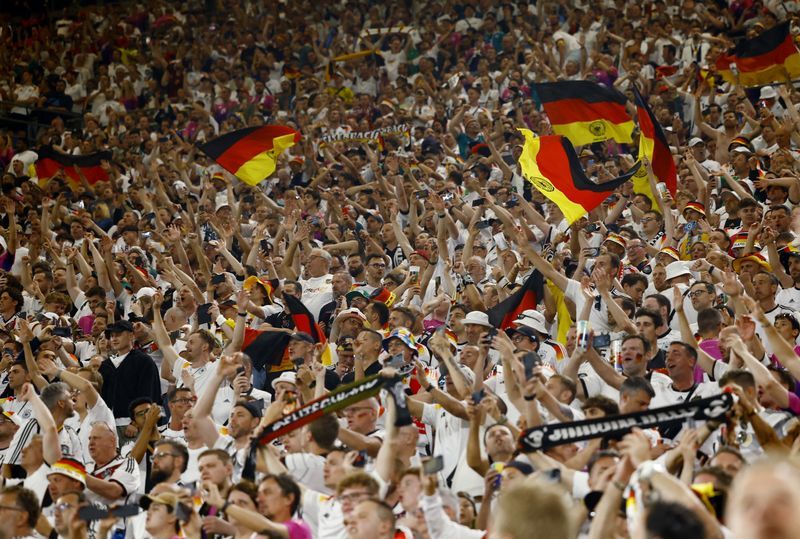
German prosecutors have expanded their investigation into potential misconduct at the 2024 European Championship by launching coordinated raids across the country on Wednesday, with authorities reportedly entering the offices of the DFB, the country's national soccer association. The action marks an escalation in a criminal investigation that focuses on the alleged diversion of match tickets and hospitality packages to politically connected individuals and government employees during what was meant to be a showcase tournament for the host nation.
Authorities in Bochum and the North Rhine-Westphalia criminal office confirmed they were conducting searches at multiple locations throughout Germany, though officials stopped short of publicly naming the DFB as a target. The distinction between public statements and reporting from Bild, one of Germany's largest newspapers, illustrates the delicate position surrounding the inquiry. The DFB, which oversees German football at all levels and is accountable to UEFA, has not commented on the allegations, and UEFA similarly declined to respond immediately to inquiries about the scope or implications of the investigation.
The investigation centers on a pattern of alleged irregularities involving thousands of tickets and hotel accommodation offers that prosecutors believe were improperly distributed to favored individuals before the tournament. Rather than tickets being allocated through normal public channels or standard hospitality frameworks, the evidence suggests a parallel system existed whereby preferred recipients—including government workers and politically connected figures—received complimentary or heavily subsidized access to matches. This represents a significant breach of the transparency and fairness principles that international sporting bodies claim to uphold.
One specific case illustrates the scale of the suspected abuses. A municipal employee from Gelsenkirchen, one of the ten German cities that hosted Euro 2024 matches, is under investigation for allegedly receiving benefits worth €2,400 in the form of tickets, travel arrangements, and hotel accommodation. While this individual amount may seem modest, it exemplifies how systematic such distributions appear to have been, suggesting that dozens or potentially hundreds of similar arrangements occurred across the tournament's various host cities and match venues.
The involvement of both German nationals and at least one French citizen in the investigation suggests the alleged misconduct extended beyond simple domestic favoritism. Prosecutors are examining whether the scheme involved coordinated action across multiple parties, or whether individuals from different countries independently exploited access to Euro 2024 tickets and hospitality packages. The international dimension adds complexity to the inquiry and raises questions about how deeply embedded any corrupt practices may have been within the tournament's organizational structure.
For Malaysian readers and Southeast Asian observers, this scandal carries implications beyond German football governance. Major international tournaments, including those held in Asia, rely heavily on trust in the integrity of ticketing and hospitality allocation systems. Accusations that a wealthy, professionally administered federation like the DFB struggled to prevent such abuses underscore systemic vulnerabilities that any host nation must address. Future tournament organizers in the region would do well to examine how oversight mechanisms failed in Germany and implement stronger controls to prevent similar situations.
The investigation also reflects broader concerns about corruption within sports governance that have plagued international football for years. UEFA itself has faced numerous scandals involving misallocation of resources, with previous investigations revealing improper financial dealings and questionable decision-making processes. That such issues apparently persisted during Euro 2024, a tournament designed to demonstrate modern standards of organizational excellence, suggests that reform efforts have not yet reached the grassroots level of tournament administration.
From a governance perspective, the DFB's apparent inability to prevent or immediately detect such irregularities raises uncomfortable questions about internal controls and accountability structures. As the organization responsible for stewarding German football and implementing UEFA directives, the association should theoretically maintain robust systems to ensure compliance with all regulations governing ticket distribution. The fact that external law enforcement had to launch investigations suggests these safeguards proved inadequate, a finding that will likely prompt UEFA to reassess how it monitors member federations' adherence to tournament protocols.
The geographic spread of the raids—targeting locations across North Rhine-Westphalia, the region hosting the most Euro 2024 matches—indicates prosecutors believe the misconduct was neither isolated nor limited to a single venue or administrative office. Instead, the pattern suggests multiple touchpoints in the distribution chain where irregularities occurred, possibly involving staff at various levels of the DFB hierarchy as well as local government representatives in host cities. Determining who authorized these arrangements and whether they constituted deliberate policy or unauthorized freelancing will be central to prosecutors' case.
The scope of the investigation remains unclear at this stage, with prosecutors offering limited detail and the DFB maintaining silence. However, the scale of alleged ticket diversion—described as involving several thousand passes—suggests this was not merely an occasional lapse but a substantial operation. If prosecutors can establish that senior DFB officials either sanctioned or deliberately ignored these practices, the reputational damage to German football could extend well beyond this single tournament.
Looking ahead, this investigation will likely influence how future major tournaments allocate tickets and manage hospitality packages, particularly in Europe where regulatory scrutiny of sporting governance has intensified. Organizations in Southeast Asia hosting major competitions should observe closely how German authorities and UEFA resolve this matter, as the remedies they impose will effectively establish a template for acceptable standards. The outcome may determine whether sports organizations invest significantly more in compliance infrastructure or face continued legal and reputational consequences from failures to prevent corruption.

