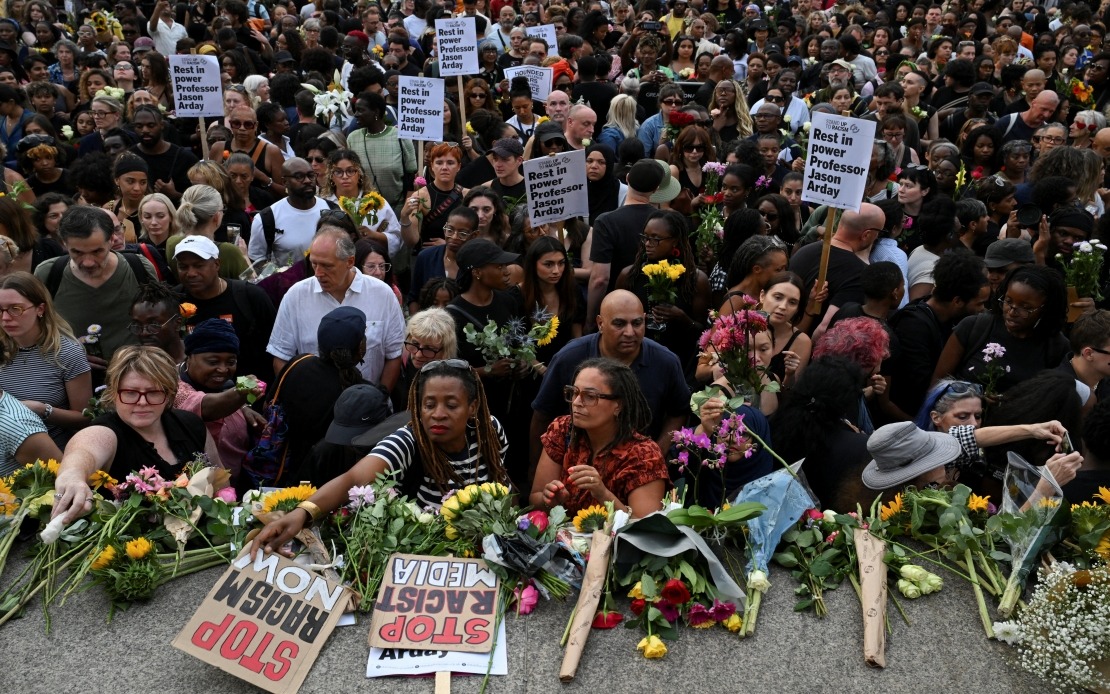
A Belgian university has suspended a postdoctoral researcher who levelled plagiarism allegations against a late Cambridge professor, reigniting debate over academic accountability, freedom of expression, and institutional responsibility in higher education. Nathan Cofnas, attached to Ghent University's department of philosophy and moral sciences, faces suspension following his public statements regarding Jason Arday, a prominent Cambridge academic who died unexpectedly in mid-August at age 41.
The sequence of events has created a complex institutional and ethical predicament. Arday, who made history in 2023 as Cambridge's youngest Black professor when appointed to the sociology of education department, came under intense scrutiny in July following allegations that portions of his published work lacked proper attribution. The accusations prompted his resignation from Cambridge on August 5, though he maintained his decision should not be construed as acceptance of the surrounding narratives. Days later, on August 14, Arday was found dead at his south London home, with police determining his death unexpected but non-suspicious.
Cofnas initially gained attention through his academic work but has become increasingly associated with controversial positions on intelligence and race. In 2024, he lost a research associate position at Emmanuel College, Cambridge, after publishing a blog post contending that Black individuals have lower average intelligence than white counterparts and that a pure meritocracy would yield minimal Black representation at elite institutions like Harvard. These views, which fall under what Cofnas terms "race realism," place him at the intersection of academic freedom debates and institutional responsibility for preventing discrimination.
The suspension by Ghent University represents institutional action against Cofnas, though the university has not yet specified additional measures. In a joint statement, rector Petra De Sutter and vice-rector Herwig Reynaert acknowledged the university's commitment to academic freedom and open debate, even on controversial subjects. However, they emphasised that such freedom operates within bounds and cannot override protecting the rights of others from discrimination and harm. The university characterised Cofnas's recent public statements as requiring serious attention and appropriate institutional response.
For Malaysian and Southeast Asian readers, this case illustrates broader tensions within global academia regarding how universities should handle allegations of misconduct, discriminatory speech, and the boundaries of intellectual freedom. Universities across the region increasingly grapple with similar questions about balancing researcher autonomy with institutional values promoting inclusion and respect. The situation also highlights how academic careers can intersect with personal narratives and institutional reputation, as Arday's journey from working-class south London beginnings to Cambridge prominence carried particular symbolic weight.
Arday's background added dimension to his scholarly prominence. Born to Ghanaian immigrant parents, he had spoken openly about autism and learning difficulties, disclosing that he was nonverbal until age 11 and did not acquire reading and writing skills until 18. His academic achievements, particularly his appointment as Cambridge's youngest Black professor, constituted a significant institutional milestone. Yet the plagiarism allegations that emerged in July created profound complications, suggesting potential discrepancies in academic record and personal narrative elements that had defined his public profile.
The timing and circumstances surrounding Arday's death have cast a shadow over the entire episode. While authorities found no evidence of foul play, the proximity between his resignation, institutional investigations beginning, and his sudden death within days has prompted reflection on institutional pressures and their potential human consequences. Ghent University's statement that Arday's death "should prompt reflection" suggests institutional awareness that the broader context extends beyond straightforward academic misconduct proceedings.
Cofnas's suspension represents institutional action against the accuser rather than the accused, a reversal that underscores the complexity. While universities have legitimate interests in preventing discrimination and inflammatory speech, the suspension of someone who raised allegations of academic impropriety raises questions about whether institutions might suppress legitimate scrutiny to protect reputational interests or protect deceased individuals from further examination. The distinction between protecting individuals from discrimination and enabling accountability becomes crucial.
Ghent University's position reflects a broader institutional dilemma. Universities must simultaneously protect academic freedom enabling researchers to pursue controversial questions and findings, maintain cultures of respect preventing discrimination, and uphold integrity in scholarly attribution and representation. The university's statement acknowledged this tension, noting that freedom comes with responsibility and limitations necessary to protect others' rights. However, determining where these boundaries lie remains contested and context-dependent.
The incident raises particular significance for academic systems in Asia-Pacific nations, where questions of meritocracy, representation in elite institutions, and acceptable academic discourse increasingly shape institutional policies. Malaysian universities, alongside counterparts across the region, continue developing frameworks addressing diversity, inclusion, and research integrity. Cases like this demonstrate how global academic controversies establish precedents influencing institutional expectations and practices.
As investigations proceed, including Cambridge's promised examination of Arday's appointment circumstances, the broader implications will extend beyond individual institutional decisions. The case illuminates how allegations of plagiarism intersect with broader social dimensions of academic identity, representation, and discrimination. It demonstrates that academic accountability mechanisms must operate with particular sensitivity when involving individuals whose prominence carries symbolic significance for historically underrepresented groups in higher education.
Ultimately, the suspension and anticipated termination of Cofnas reflects institutional determination that his public statements constituted unacceptable discrimination, notwithstanding legitimate academic questions about attribution and integrity. Whether this approach appropriately balances academic freedom with preventing harm, and whether it establishes precedent influencing future institutional responses to controversial allegations, will likely extend this case's significance well beyond the individuals immediately involved.

