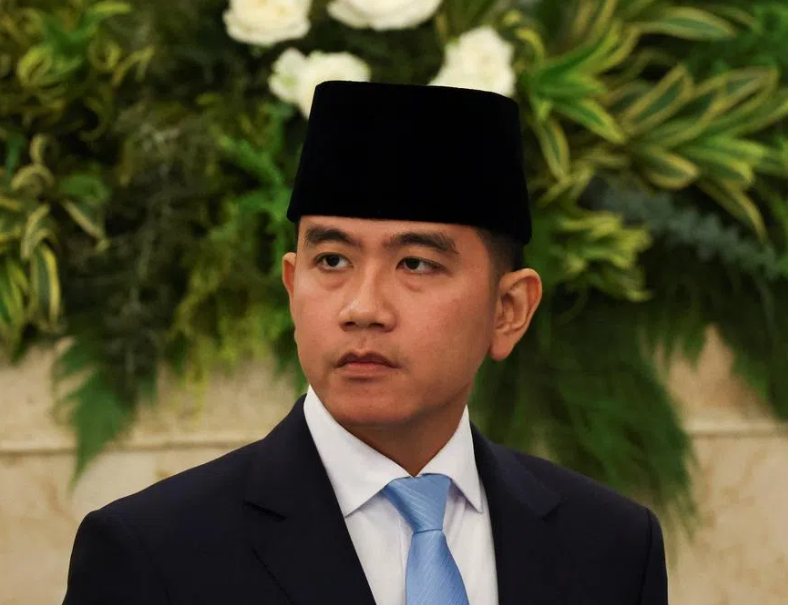
Vice-President Gibran Rakabuming Raka's recent engagement with student protesters highlights a vice-presidency struggling to define its relevance within President Prabowo Subianto's administration. Just three days after university students took to Jakarta's streets to challenge the government's free meals and Red and White Cooperative initiatives, Gibran met with five student representatives at the presidential palace. The encounter led to an unusual invitation: the students boarded a plane with the vice-president on June 18 for a working visit to eastern Indonesia, signalling an apparent willingness to hear criticism directly.
The closed-door meeting emerged as a calculated response to mounting public discontent with two of the administration's most ambitious programmes. Student activists had mobilised around concerns regarding the free meals scheme's implementation and governance, as well as the Red and White Cooperative plan to establish village-run businesses nationwide. According to the statement released by Gibran's office, the vice-president pledged to audit the students' research findings and bring their concerns to President Prabowo's attention. Muhammad Abdi Maludin, a Bung Karno University student leader present at the meeting, characterised Gibran as open and receptive to the youth's substantive concerns.
Yet the apparent cordiality masked deeper scepticism about the engagement's authenticity. Social media reactions to Gibran's Instagram post about the meeting were decidedly mixed, with critics questioning why the vice-president had invited representatives from less prominent universities rather than student leaders from Indonesia's largest campuses. Commenters suggested the selection appeared strategically curated rather than organically representative of the broader student movement, undermining the appearance of genuine dialogue with the protest community.
The timing of Gibran's outreach positioned him squarely in the spotlight as student-led demonstrations rippled across the archipelago and scrutiny of flagship government programmes intensified. Analysts at the Centre for Strategic and International Studies in Jakarta observed that Gibran was carefully cultivating an image as a communicative, accessible vice-president willing to engage with ordinary citizens and youth movements. The persona being constructed serves a clear political calculation: building name recognition and public sympathy ahead of the 2029 presidential election cycle, despite Gibran having made no public declaration of electoral intentions.
The substance of Gibran's authority over these contested programmes remains minimal, however. The free meals initiative has fallen under the direct purview of the National Nutrition Agency, which reports to the president rather than the vice-presidency. Similarly, the Red and White Cooperative programme operates as a presidential priority overseen by multiple ministries and agencies coordinating at the highest level. Experts familiar with Indonesia's executive structure agree that Gibran's leverage to reshape either initiative is severely constrained by the administrative architecture surrounding them. His involvement appears largely peripheral to decision-making processes controlled by departments accountable directly to Prabowo.
The June corruption scandal affecting the free meals programme provided Gibran with an opportunity to position himself as an advocate for reform without threatening core government policy. National Nutrition Agency chief Dadan Hindayana was arrested alongside two former deputies following allegations of procurement irregularities that had generated public anger. When Gibran visited an East Nusa Tenggara primary school during his four-day regional trip, he acknowledged the programme's governance shortcomings and called for improvements, while instructing officials to accelerate implementation in areas with ready infrastructure. Such moves offered symbolic acknowledgment of public concerns while avoiding wholesale programme revision.
Since assuming office alongside Prabowo in October 2024, Gibran has struggled to carve out a substantive policy domain. Though his office maintains nominal connections to Papua's development and the new capital Nusantara project, he remains largely sidelined from major decision-making. Unlike certain predecessors who received commanding policy portfolios, the former Jakarta governor operates without a clear administrative mandate. This structural limitation may explain his pivot toward visibility-seeking around the student protests: with limited opportunity to influence flagship programmes directly, cultivating public support becomes an alternative avenue for political relevance.
Researchers point to Gibran's manoeuvres as a deliberate strategy aimed at appeasing public anger while demonstrating his responsiveness to youth concerns. Yet even sympathetic observers acknowledge that his engagement is unlikely to generate meaningful policy corrections. The vice-president's capacity to audit programmes or consolidate research findings carries weight primarily as a conduit to the president, not as an independent force within the administration. His authority derives entirely from proximity to Prabowo, making his independent influence over contested initiatives marginal at best.
Questions surrounding the authenticity of the outreach intensified when reporting emerged that student participants had received payments following the palace meeting. Kompas reported on June 23 that a Bung Karno University leader acknowledged receiving 20 million rupiah, while Tribunnews separately noted that other attendees had received between 2 million and 2.5 million rupiah. The presidential palace announced an investigation into the claims without clarifying the funds' source or purpose. The revelation suggested that Gibran's engagement with student critics operated as a carefully orchestrated performance rather than organic dialogue, with participant selection and compensation indicating deliberate stage management of a seemingly spontaneous conversation.
University researchers from Padjadjaran and other institutions characterise Gibran's recent visibility around the contested programmes as evidence of his effort to demonstrate relevance rather than substantive policy involvement. All indicators suggest he remained peripheral to both the free meals and cooperative initiatives, which appear controlled more directly by military and police leadership than by the vice-presidency. His pivot toward student engagement represents an attempt to leverage public attention-generating moments—the student protests—to construct a political profile that extends beyond formal administrative responsibilities.
The vice-president's strategy appears designed to maintain public attention through relatively low-cost interventions rather than attempting structural reform. By positioning himself as receptive to criticism and willing to engage youth activists, Gibran generates positive media coverage and builds associations with responsiveness without requiring fundamental changes to presidential priorities. This performative approach enables him to stay visible to potential voters ahead of 2029 while avoiding confrontation with Prabowo over programmes the president has positioned as central to his administration's legacy.
For Malaysian observers, Gibran's predicament illuminates broader questions about vice-presidential utility in Southeast Asia's presidential systems. Indonesia's experience suggests that the office's actual influence depends heavily on presidential delegation rather than constitutional mandate. Gibran's struggle to define his role reflects a structural reality facing many regional vice-presidents: the position offers visibility and symbolic importance but limited substantive power absent explicit presidential authority. His recent student engagement demonstrates how ambitious second-in-command figures navigate this constraint by pursuing parallel strategies of public relationship-building and political profile cultivation, preparing ground for future electoral contests rather than expecting to reshape current policy frameworks.