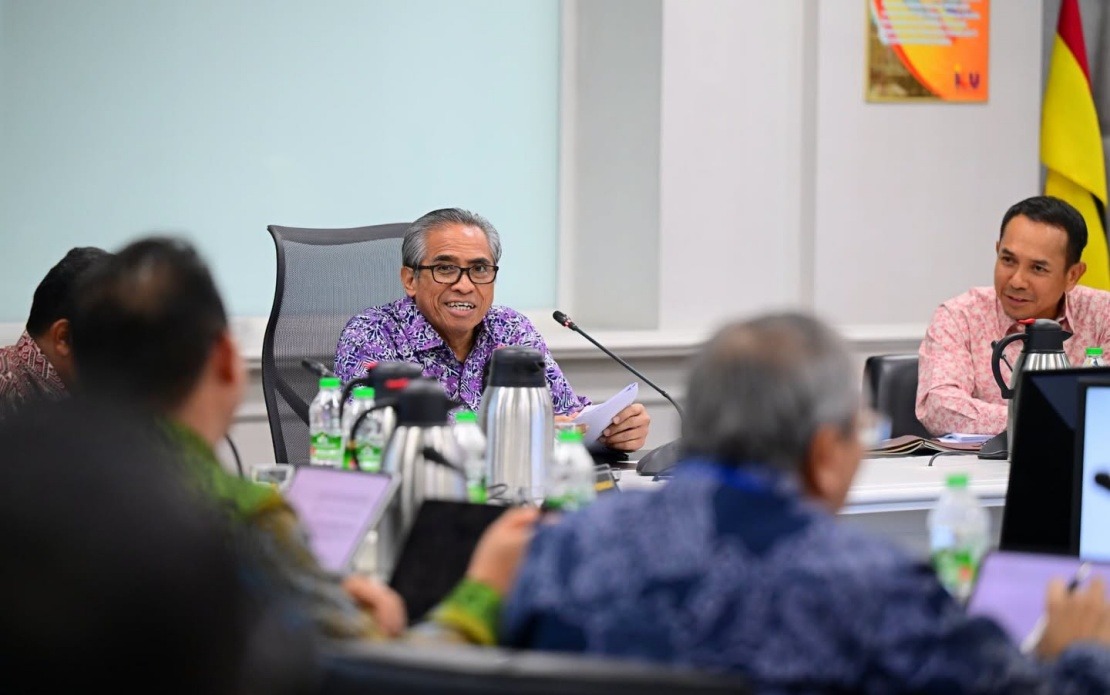
Malaysia's Chief Secretary to the Government, Tan Sri Shamsul Azri Abu Bakar, has issued a directive requiring all ministry secretaries-general to accelerate work on a sprawling portfolio of more than 40,000 small-scale development initiatives spread across the country. The instruction came following decisions made at a National Development Action Committee meeting chaired by Shamsul Azri, signalling a significant shift in government focus towards quick-win infrastructure and public service improvements that can deliver tangible results to citizens in the near term.
The government's strategy appears designed to prioritise what officials describe as "low-hanging fruit"—projects that require relatively straightforward implementation yet carry substantial impact on daily life. Rather than pursuing large-scale, capital-intensive developments that demand years of planning and execution, the administration is betting on a high-volume approach comprising smaller interventions that resonate with ordinary Malaysians. This tactical pivot reflects growing recognition that visible, incremental improvements to public amenities may prove more politically and socially effective than delayed flagship projects.
According to Shamsul Azri's announcement made through social media, the initiative encompasses diverse categories of public works. Road repair and maintenance constitute a significant portion, addressing deteriorating street conditions that plague many Malaysian neighbourhoods. Drain and flood management upgrades feature prominently, a matter of particular concern given increasing rainfall intensity and urban flooding episodes. The portfolio also includes refurbishment of government residential quarters, reflecting attention to civil service living standards, and restoration work on school infrastructure—specifically classroom repairs and upgrades.
Healthcare facility improvements represent another substantial component of the initiative. These enhancements to government clinics and hospitals could address long-standing complaints about outdated equipment, cramped facilities, and general maintenance backlogs that have constrained service delivery across the public health system. Additionally, the projects encompass upgrades to public market infrastructure and improvements to informal trading stalls, acknowledging the economic importance of petty traders and traditional commerce sectors that remain vital to many Malaysian communities despite economic modernisation.
A critical operational directive requires all secretaries-general to undertake regular site visits to monitor implementation progress personally. This supervisory requirement suggests the government recognises that bureaucratic inertia and coordination failures have previously hindered project execution. By mandating senior officials to maintain ground-level oversight rather than relying purely on administrative reporting channels, the administration aims to identify bottlenecks immediately and maintain momentum. The directive also empowers these officials to resolve implementation challenges directly, potentially circumventing red tape that typically delays public sector projects.
The timeframe for project completion carries significant implications. Shamsul Azri indicated that most initiatives can be finalised within three to six months, a remarkably compressed schedule for government work in Malaysia's typical operating environment. This accelerated timeline suggests either that many projects involve straightforward maintenance and repair rather than complex construction, or that the government intends to allocate additional resources and prioritise these activities ahead of competing demands. The relatively short horizon also means citizens could observe tangible improvements to their local environments during the current administration's term, generating immediate political dividends.
For Malaysian voters accustomed to lengthy delays and unfulfilled infrastructure promises, this emphasis on rapid completion of smaller, distributed projects represents a departure from conventional government practice. Historically, development focus has concentrated on prestigious, large-scale undertakings that dominate announcements but remain under construction for years. The current strategy suggests learning from this pattern—that consistent delivery of modest improvements across numerous locations may build greater public confidence than perpetually delayed megaprojects. The 40,000-project portfolio essentially distributes benefit widely rather than concentrating resources on flagship developments that benefit limited constituencies.
The initiative carries particular relevance for rural and smaller urban areas that historically receive disproportionately less infrastructure investment than major metropolitan regions. When development budgets emphasise large projects, secondary towns and rural communities frequently miss out entirely. A program comprising tens of thousands of smaller interventions, by contrast, can systematically address maintenance and upgrade needs throughout the country's full geographic extent. This distributional approach potentially addresses longstanding grievances about unequal regional development that fuel political discontent.
The focus on projects immediately benefiting ordinary citizens—functioning roads, reliable drainage, improved schools and clinics—also signals a recalibration of government priorities toward basic service delivery rather than economically ambitious but remote megastructures. For many Malaysians, especially in lower-income households, functional infrastructure matters infinitely more than high-profile prestige projects. Schools with leaking roofs and degraded classrooms impede learning regardless of whether the nation possesses advanced metros or new urban zones elsewhere.
Implementation success will ultimately determine whether this initiative becomes a genuine improvement programme or remains merely an announced intention. Malaysian government offices and agencies possess considerable experience with directive processes that generate announcements but limited execution. The requirement for secretaries-general to visit sites and report progress introduces accountability measures, yet enforcement mechanisms remain unclear. Whether ministries will genuinely reprioritise competing demands to accommodate this portfolio, or whether projects will nonetheless experience familiar delays and cost overruns, depends substantially on administrative commitment and resource allocation decisions.
The initiative also raises questions about project selection criteria and equity. With 40,000 projects across all states and municipalities, determining which specific interventions receive funding and timeline priority requires transparent allocation mechanisms. Without clear principles governing project ranking, political considerations might influence which communities benefit, potentially replicating existing regional disparities under different guise. Successful implementation demands explicit fairness frameworks ensuring equitable geographic distribution.
Looking forward, the government's capacity to execute this portfolio swiftly will demonstrate whether Malaysia's bureaucratic apparatus can transition from announcing aspirations to delivering consistent improvements. The focus on small-scale projects, achievable completion timeframes, and distributed national coverage suggests pragmatic recognition of administrative constraints while maintaining an ambitious development agenda. For Malaysian communities awaiting basic infrastructure repairs and public service improvements, the coming months will reveal whether ministerial directives translate into tangible neighbourhood transformations.

