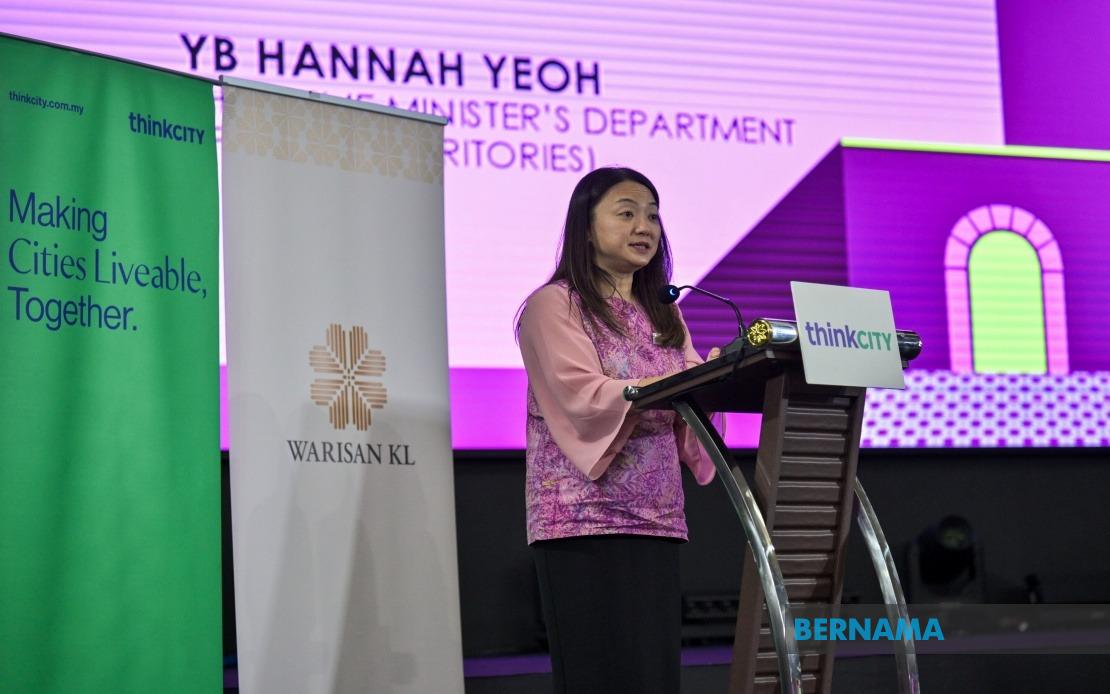
The Malaysian federal government has committed RM1 million towards a comprehensive downtown revitalization effort aimed at breathing new economic and cultural vitality into Kuala Lumpur's city centre through the Downtown Kuala Lumpur Grants Programme 2026. Hannah Yeoh, the Minister in the Prime Minister's Department overseeing Federal Territories, unveiled the initiative with the dual objective of preserving the capital's rich heritage while catalysing modern urban renewal that serves both residents and entrepreneurs.
The programme extends financial support through grants ranging between RM30,000 and RM100,000 per approved project, targeting initiatives that meaningfully engage local communities, business owners, and practitioners working across the creative industries. This tiered funding structure is designed to accommodate projects of varying scope and ambition, from grassroots community initiatives to more substantial creative enterprises that can generate sustainable economic activity within the downtown corridor.
Yeoh articulated a philosophical framework underpinning the initiative, framing Kuala Lumpur as a city with layered narratives—simultaneously a repository of historical significance and an evolving urban centre being shaped by contemporary choices and investments. Her remarks emphasised that the city's future success should not be measured solely through new construction or infrastructure development, but rather through its capacity to retain and attract residents, professionals, investors, and returning expatriates. This emphasis on human-centred urban planning reflects growing international recognition that cities thrive when they offer liveable, culturally rich environments beyond purely commercial appeal.
The funding allocation underscores the Ministry of Finance's strategic positioning of arts, culture, and heritage as substantive economic drivers rather than peripheral cultural amenities. By channelling resources towards cultural preservation and creative endeavours, the government is effectively leveraging Kuala Lumpur's designation as a UNESCO Creative City—a distinction that carries both prestige and economic implications for attracting talent, tourism revenue, and international cultural partnerships.
Yeoh highlighted a critical shift in institutional approach regarding the Kuala Lumpur City Hall (DBKL), characterising her priority as transforming it from an entity perceived as bureaucratically obstructive into a genuinely facilitative governance body that actively enables rather than impedes urban economic flourishing. This reframing of municipal administration resonates with broader governance reform trends across Southeast Asia, where local authorities increasingly recognise that enabling business environments and streamlined permitting processes drive local economic dynamism more effectively than restrictive regulatory approaches.
The UNESCO Creative City designation carries particular significance for Malaysia's capital. This international recognition validates Kuala Lumpur's cultural infrastructure and creative ecosystem while opening pathways for enhanced cultural tourism, international collaboration, and talent attraction. The grants programme effectively operationalises this designation, converting symbolic status into tangible economic support mechanisms that can generate employment, attract visitors seeking authentic cultural experiences, and strengthen the local creative economy that increasingly characterises vibrant metropolitan centres globally.
Think City has been appointed as the strategic partner responsible for programme coordination and administration. This organisation will oversee the development and communication of detailed eligibility criteria, application processes, and project evaluation frameworks. Yeoh's appeal to potential applicants—particularly those bringing innovative ideas—signals an openness to experimental approaches and entrepreneurial creativity rather than conventional or heritage-focused projects alone, suggesting the programme aims for dynamism alongside preservation.
The initiative arrives at a significant juncture for Malaysian urban development. Southeast Asian cities increasingly face competitive pressure to develop distinctive identities and retain talent and investment amid regional mobility. Kuala Lumpur's downtown corridor, encompassing historic commercial districts, cultural landmarks, and established communities, represents considerable latent potential. Strategic revitalisation that honours heritage while fostering contemporary creative activity can differentiate the capital within regional urban hierarchies and strengthen its appeal as a destination for knowledge workers, entrepreneurs, and international professionals.
For Malaysian entrepreneurs and creative practitioners, this programme presents concrete funding opportunities to develop projects that might otherwise struggle to secure financing. The RM30,000 to RM100,000 grant range represents meaningful capital for establishing creative enterprises, renovating heritage spaces for adaptive reuse, launching community-based initiatives, or launching arts and cultural programmes. The relatively accessible grant levels make participation feasible for smaller operators and community organisations that constitute the grassroots economy.
The programme's emphasis on community benefit alongside economic development suggests attention to ensuring revitalisation benefits extend beyond property values and investor returns to tangibly improve residents' experiences and opportunities. This inclusive approach aligns with international urban renewal best practices emphasising that sustainable revitalisation requires community investment and cultural authenticity rather than corporate-driven gentrification that displaces existing populations and erases distinctive local character.
For regional observers, the initiative demonstrates Malaysia's continued commitment to positioning Kuala Lumpur as a Southeast Asian cultural and creative hub despite competition from other major cities. Bangkok, Singapore, and emerging centres increasingly emphasise cultural differentiation and creative economy development. By strategically investing in downtown heritage and cultural programming, Kuala Lumpur signals serious intent to compete for regional cultural prominence and the associated tourism, talent, and investment flows.
The programme's success will depend substantially on implementation quality, ranging from accessibility of application processes through project evaluation fairness to effective disbursement timelines and monitoring mechanisms. International experience suggests that well-designed cultural and heritage grant programmes generate disproportionate economic returns through leveraged private investment, increased tourism spending, and employment generation in creative sectors, making this RM1 million seed investment potentially catalytic for broader downtown revitalisation.
Think City's formal announcement of application criteria will mark the programme's operational commencement. The coming months will reveal whether the initiative generates anticipated participation levels, project quality, and tangible downtown transformation. For Malaysian stakeholders—from heritage preservation advocates to creative entrepreneurs to downtown residents and businesses—the programme represents a significant policy signal that cultural vitality and economic development are increasingly recognised as mutually reinforcing objectives for national urban centres.

