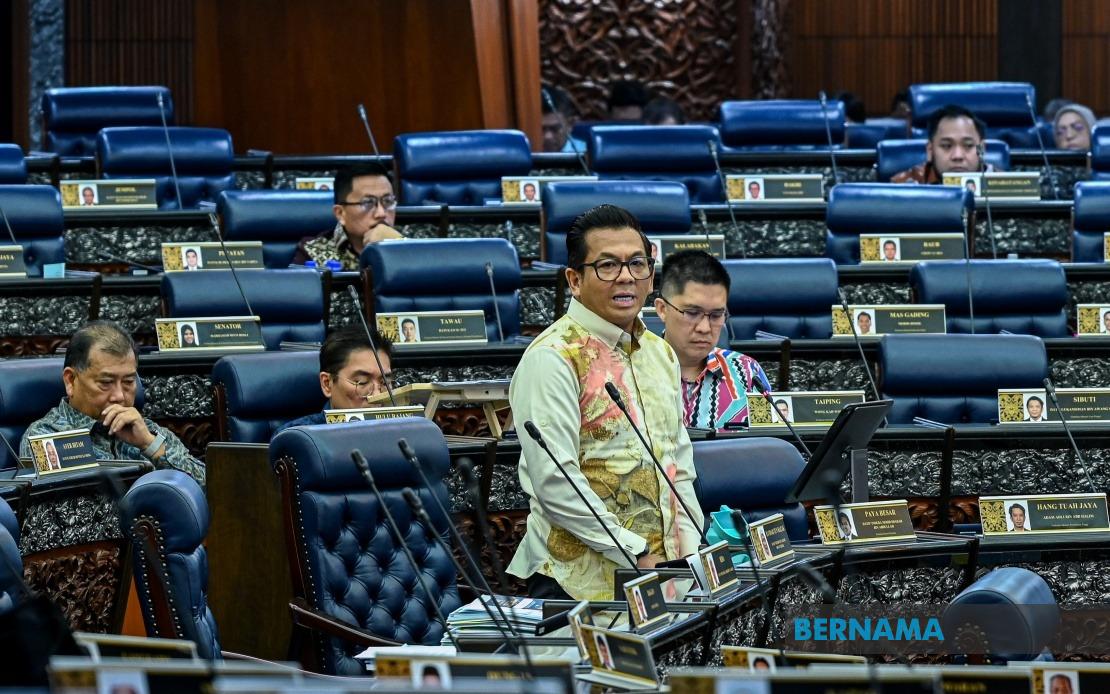
The Malaysian government is mobilising comprehensive spending data to formulate more effective solutions to the cost-of-living crisis, moving beyond one-size-fits-all policies by acknowledging that urban households face fundamentally different financial pressures than their rural counterparts. During parliamentary proceedings on July 16, Deputy Economy Minister Datuk Mohd Shahar Abdullah revealed that policymakers are harnessing the Basic Living Expenditure framework, commonly known as PAKW, to understand these regional variations and design interventions accordingly. The PAKW, developed by the Department of Statistics Malaysia, represents a methodological shift in how the government approaches economic policy—one that recognises Malaysia's diverse demographic and geographic realities rather than applying blanket measures across the country.
The PAKW framework provides a granular understanding of household spending patterns by isolating the variables that drive consumption decisions in different regions. Rather than merely tracking aggregate inflation rates, the system accounts for how affordability, household needs, and discretionary spending vary significantly across Malaysia's urban and rural landscape. Datuk Mohd Shahar explained that these variations necessitate differentiated policy responses, as the economic challenges facing a Kuala Lumpur family differ markedly from those confronting households in more remote states. The government has made the analysis accessible to ordinary Malaysians through an online calculator at myPAKW.dosm.gov.my, enabling individuals to benchmark their own spending against established standards and understand where their household expenditure sits relative to regional norms.
The stark numerical differences across states underscore why this regional approach matters for policymaking. Kuala Lumpur residents face a basic living expenditure requirement of RM5,639 monthly, whereas comparable households in Kelantan require only RM4,254—a difference of approximately RM1,385 or roughly 33 percent. Sabah presents a middle position at RM4,511, suggesting that while cost pressures exist statewide, they manifest with varying intensity depending on location, infrastructure availability, and market conditions. These disparities reflect not merely price differences in identical goods, but fundamental variations in what constitutes essential spending across regions. Urban areas typically demand higher expenditure for transport, housing, and services, while rural communities may experience different pressures around agricultural inputs, healthcare access, or connectivity costs.
The government's response strategy extends beyond simply acknowledging these gaps. Datuk Mohd Shahar outlined a two-pronged approach that combines targeted income support with capability-building initiatives. Training programmes designed to enhance earning potential form a central pillar, aiming to raise both the floor—ensuring minimum incomes reach adequate levels—and the ceiling, enabling Malaysians to access higher-paying opportunities. This reflects a longer-term vision that sustainability requires improving earning capacity rather than relying solely on subsidies or direct transfers. These initiatives are formally embedded within each Five-Year Malaysia Plan, with progress reviews conducted twice per planning cycle to ensure responsiveness to changing economic conditions.
The evolution of the Poverty Line Income provides concrete evidence of how these efforts have translated into measurable improvements over the past decade. The national PLI has surged from RM980 in 2016 to RM2,705 in 2024, representing an increase of approximately 176 percent over eight years. This substantial upward revision reflects both genuine wage growth in the economy and a recognition that living standards and basic needs have expanded considerably. However, the rapid pace of increase also signals that cost pressures have substantially outpaced previous assumptions, requiring continuous recalibration of what constitutes an adequate income. For Malaysian readers, this shifting baseline underscores why many households continue experiencing financial strain despite overall economic growth—the goalposts themselves are moving as the costs of essentials rise.
The PAKW framework's implementation comes against a backdrop of sustained parliamentary scrutiny regarding cost-of-living pressures. When Wan Hassan Mohd Ramli of Perikatan Nasional, representing the Dungun constituency, raised questions about a 2023-2025 economist field study specifically targeting inflation solutions and urban-rural disparities, the government was prepared with evidence-based responses rather than generalised assurances. This signals a more sophisticated engagement between Parliament and the executive on economic policy, where discussions are grounded in actual household-level data rather than abstract statistics. For constituencies like Dungun, where rural economies dominate, such targeted attention may translate into policies addressing specific cost pressures unique to those communities.
The regional variation in PAKW values carries implications for broader Southeast Asian economic policy discussions. As other nations in the region grapple with rising living costs and rural-urban migration pressures, Malaysia's approach of measuring and responding to regional disparities offers a potential model. Thailand, Indonesia, and Philippines policymakers facing similar urban-rural divides might find value in Malaysia's emphasis on data-driven regional differentiation. Furthermore, as ASEAN economies increasingly pursue inclusive growth agendas, the PAKW framework demonstrates how statistical infrastructure can support more equitable policy design.
For ordinary Malaysians, the availability of the myPAKW calculator represents a shift toward transparency and individual agency in understanding economic challenges. Rather than passively receiving government relief measures, households can now analyse their own spending patterns, identify inefficiencies, and understand how their circumstances compare to regional benchmarks. This democratisation of economic data empowers citizens to engage more meaningfully with policy discussions and make informed decisions about household finances. The calculator's accessibility also signals confidence that transparent data strengthens rather than undermines public trust in government economic management.
The challenge ahead lies in translating PAKW insights into concrete policy changes that reach vulnerable households quickly. While the framework's sophistication is commendable, its value depends on timely implementation of targeted interventions. The government's emphasis on training and income-building initiatives is promising, yet execution matters critically. Programmes designed in Kuala Lumpur must translate effectively to rural constituencies where infrastructure, access to training facilities, and market opportunities remain constrained. Success will ultimately be measured not by the elegance of the PAKW analysis, but by whether Kelantan and Sabah households experience tangible improvements in purchasing power and economic opportunity relative to their urban counterparts.

