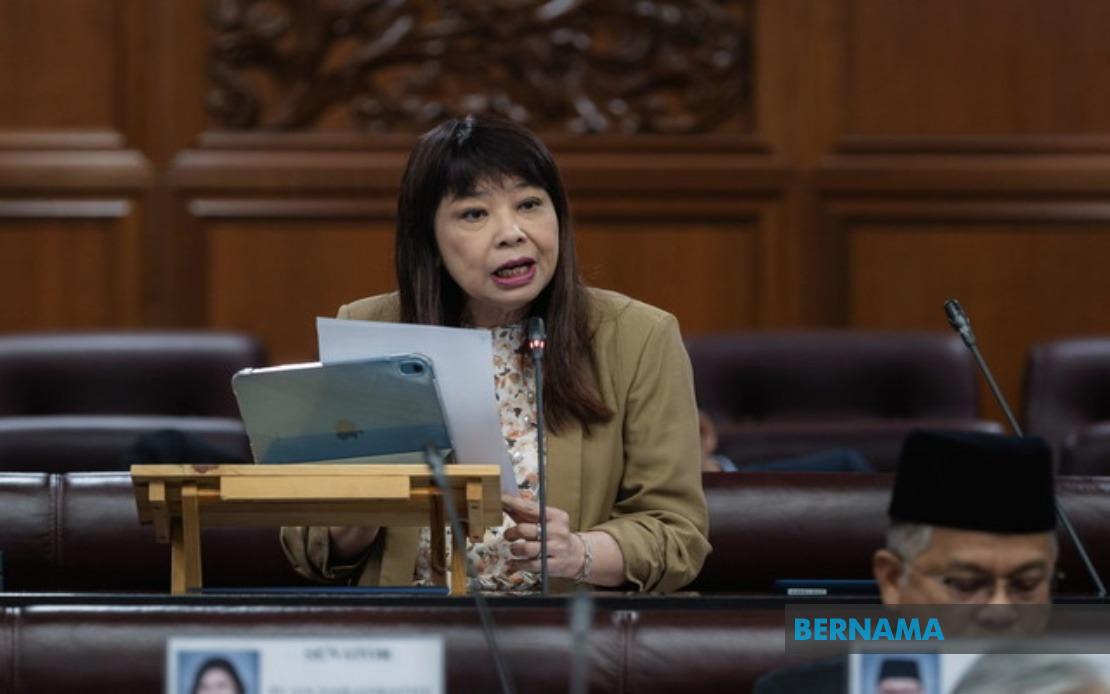
The Malaysian government is taking steps to establish a centralised system for tracking domestic violence offenders who repeatedly harm their victims, according to Deputy Women, Family and Community Development Minister Lim Hui Ying. The proposed Domestic Violence Offenders Registry represents a significant policy shift toward preventative measures and victim protection, addressing longstanding concerns about the absence of comprehensive data on repeat perpetrators.
Lim disclosed during parliamentary Question Time in the Dewan Negara that three key government bodies are collaborating on the initiative: the Women, Family and Community Development Ministry (KPWKM), the Royal Malaysia Police (PDRM), and the judiciary. This inter-agency cooperation reflects recognition that tackling domestic violence requires coordinated action across law enforcement, judicial processes, and social welfare systems. The registry would function as a monitoring mechanism to flag individuals with established patterns of abuse, potentially enabling intervention before further violence occurs.
Currently, Malaysia lacks systematic data collection on offenders who commit multiple domestic violence incidents, a gap the government acknowledges hampers prevention efforts. By creating a centralised registry linked to criminal records, authorities aim to fill this information void and provide law enforcement with real-time access to offender histories. Such a system could prove instrumental in recognising escalation patterns, assessing risk levels, and coordinating protective measures for victims who may face renewed threats from known abusers.
The government has reinforced its commitment to domestic violence prevention through substantial resource allocation. The Women's Ministry has earmarked RM2.1 million during the current financial year to renovate and upgrade more than 20 state-run shelters nationwide that provide refuge for abuse survivors. These facilities represent critical infrastructure in Malaysia's domestic violence response framework, offering temporary sanctuary and a safe environment where victims can access counselling, legal guidance, and transition support while rebuilding their lives.
According to records maintained by the Social Welfare Department (JKM) as of July 2026, Malaysia's shelter network comprises 43 approved facilities operating under the Domestic Violence Act 1994. This infrastructure consists of 39 government-operated shelters and four independent facilities run by non-governmental organisations. The shelter expansion programme underscores the government's recognition that physical safety remains paramount for victims attempting to escape violent relationships, and that adequate facility capacity and maintenance directly impact the quality of refuge and rehabilitation services.
Beyond shelter provision, the government offers multiple legal protection mechanisms designed to provide immediate safeguards. Emergency Protection Orders (EPOs) can be issued within just two hours when victims require urgent intervention, representing a critical fast-track avenue for those facing imminent danger. This rapid-response capability acknowledges that domestic violence often escalates suddenly and that delays in obtaining protective orders can have fatal consequences.
The Social Welfare Department additionally guides victims through the court system to obtain Interim Protection Orders (IPOs) and Protection Orders (POs), which provide longer-term legal barriers against abusers. These court-issued orders carry the weight of law and can include provisions such as restraining orders, property protection, and child custody arrangements. By combining administrative measures like EPOs with formal court orders, the system attempts to create multiple layers of legal protection suited to different risk profiles and timelines.
The proposed registry system aligns with international best practices adopted by countries seeking to reduce recidivism in domestic violence cases. Such registries, when properly implemented, enable police to respond more effectively to calls from known victims, allow courts to apply enhanced sentencing for repeat offenders, and provide victim advocates with critical information for safety planning. For Malaysian policymakers, the registry represents an evolution beyond reactive case-by-case management toward proactive risk assessment and prevention.
Implementing an effective registry requires careful attention to data protection, inter-agency information sharing protocols, and privacy safeguards. Malaysia must ensure that the system serves its intended purpose of victim protection without becoming an instrument of misuse or creating unintended consequences for individuals. The involvement of the judiciary in the design process suggests awareness of these sensitivities and recognition that legal oversight of the registry mechanism is essential.
The initiative responds to persistent concerns about domestic violence prevalence in Malaysia, where intimate partner abuse remains a significant social problem often underreported due to cultural stigma and victim isolation. By improving offender tracking and victim support infrastructure simultaneously, the government is attempting to address both the supply-side challenge of offender accountability and the demand-side challenge of victim resilience and protection.
For Malaysian civil society and advocacy organisations working in this space, the registry proposal opens opportunities for collaborative input on implementation standards, victim privacy protections, and integration with existing support services. The success of this initiative will ultimately depend on effective inter-agency coordination, adequate funding for both the registry infrastructure and supporting services, and political will to enforce consistent protocols across all law enforcement jurisdictions.

