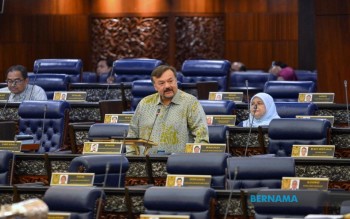
The Malaysian government has channelled more than RM500 million into micro-financing initiatives over a seven-week period, providing crucial support to more than 30,000 small business owners grappling with rising operational costs and economic uncertainty. Finance Minister II Datuk Seri Amir Hamzah Azizan disclosed the figures during parliamentary proceedings, outlining a comprehensive set of interventions designed to stabilise the country's crucial small and medium enterprise sector at a time when global economic headwinds pose significant threats to businesses operating on thin margins.
The financing disbursement represents a portion of the government's broader RM5 billion Micro Financing Facility Programme, a strategic initiative intended to buttress micro enterprises across diverse sectors facing persistent cost pressures. This allocation underscores official recognition that small traders, hawkers, and micro-entrepreneurs constitute a vital economic backbone requiring targeted assistance to maintain operational viability. The funds flowed through a network of established financial institutions including Amanah Ikhtiar Malaysia, Agrobank, Bank Simpanan Nasional, Bank Rakyat, MARA, and TEKUN Nasional, leveraging existing distribution infrastructure to reach recipients efficiently across the nation.
Complementing the direct micro-financing scheme, the government has simultaneously activated the RM5 billion MADANI Government Assistance Guarantee Scheme, administered through Syarikat Jaminan Pembiayaan Perniagaan Bhd. This guarantee mechanism operates through a different methodology, essentially reducing lending risk for financial institutions by providing government-backed security on loans extended to small and medium enterprises. Between mid-May and June 20, 2026, the scheme had already approved RM219 million in financing guarantees benefiting more than 300 MSMEs, particularly those engaged in agriculture, construction, logistics, and tourism sectors—industries that have demonstrated particular vulnerability to recent global economic disruptions.
The SJPP has extended its role beyond simple loan guarantee provision, actively collaborating with participating banks to facilitate restructuring and rescheduling of existing debt obligations for struggling businesses. This approach recognises that many established entrepreneurs require not fresh capital but rather relief from current payment obligations that have become unsustainable. Targeted repayment assistance programmes further enhance this safety net, providing temporary breathing room for businesses to stabilise operations before resuming normal service schedules. This multifaceted approach addresses the reality that financial distress often reflects temporary cash flow disruptions rather than fundamental business model failure.
Bank Negara Malaysia's contribution to the broader stimulus framework came through the RM5 billion SME Stabilisation Relief Facility, launched in mid-May 2026. Early results prove encouraging, with nearly RM1 billion already approved for more than 1,500 MSMEs seeking to stabilise operations amid challenging conditions. The three-pronged approach—direct micro-financing, guarantee schemes, and stabilisation relief—demonstrates coordinated action across government agencies and the central bank to address entrepreneurial vulnerability from multiple angles simultaneously.
The parliamentary response by Amir Hamzah directly addressed concerns raised by Datuk Andi Muhammad Suryady Bandy regarding concrete measures protecting small traders, hawkers, and MSMEs during periods of global economic challenge. This exchange reflects heightened legislative scrutiny of government performance in cushioning vulnerable business segments against external shocks, a politically sensitive issue given the electoral significance of small entrepreneur constituencies throughout Malaysia.
Capacity analysis suggests the government's financing machinery retains substantial headroom for future applications. Approximately RM4 billion in funds remain available under the RM5 billion micro-financing allocation, indicating that demand has not yet exhausted supply. This remaining capacity provides reassurance to potential applicants that access to credit remains available rather than constrained by resource limitations. However, the relatively modest absorption rate—with only RM1 billion committed against the RM5 billion SME SRF allocation—suggests either limited awareness among eligible entrepreneurs or structural barriers preventing successful application.
For Malaysian small business operators, these initiatives carry significant practical implications. The multi-institutional approach ensures that entrepreneurs can approach various lenders rather than depending on single gatekeepers, theoretically increasing competitive pressure to approve viable applications. The restructuring and rescheduling options prove particularly valuable for established businesses facing temporary disruption rather than permanent decline. Hawkers and street traders, traditionally marginalised from formal banking relationships, gain access through institutions like MARA and TEKUN specifically designed to serve informal sector participants.
Regionally, Malaysia's coordinated approach to MSME support demonstrates a model that other Southeast Asian economies might observe. The integration of direct financing, guarantee schemes, and stabilisation relief through multiple institutions reflects sophisticated recognition that different entrepreneurs require different support mechanisms. Unlike blanket subsidy approaches, these targeted programmes attempt to distinguish between temporary cash flow stress and fundamental business model problems, allocating resources accordingly.
The sectoral focus on agriculture, construction, logistics, and tourism reflects strategic choices about which segments warrant priority support. These sectors employ substantial portions of Malaysia's workforce and generate significant economic activity, making their resilience a matter of broader national concern beyond individual entrepreneurial survival. Agricultural support particularly resonates given rural constituency political significance, while tourism sector assistance addresses employment impacts from international travel patterns.
Looking forward, the government's financing capacity and stated commitment suggest this represents an opening phase rather than a final intervention. As global economic conditions continue evolving, policymakers will likely adjust programme parameters, increase allocations, or introduce additional support mechanisms based on uptake patterns and effectiveness metrics. The parliamentary forum provides regular opportunity for further questioning and escalation should these initial measures prove insufficient.

