Two hundred motorcyclists in Renggam, Kluang, received RM5 fuel vouchers on June 25 as part of a targeted relief initiative, marking the government's commitment to addressing the financial pressures facing ordinary Malaysians in smaller towns and rural areas. The programme, orchestrated by the National Security Council (MKN), extended beyond simple voucher distribution to encompass a comprehensive community engagement effort that reflected broader policy objectives around grassroots connectivity and transparent governance.
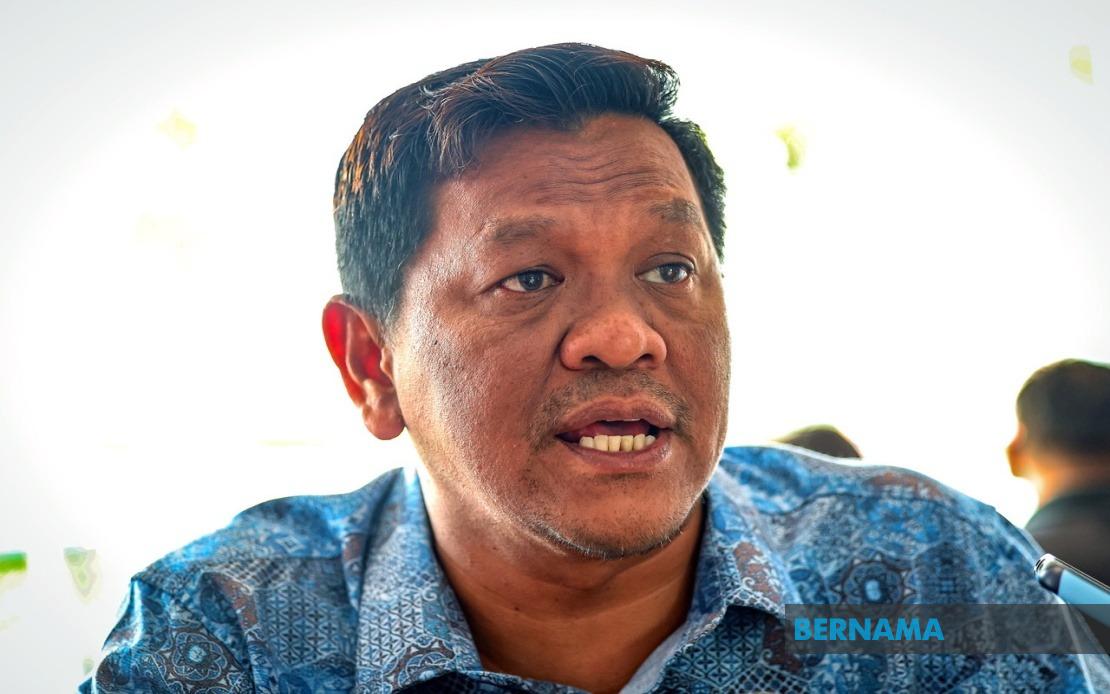
Abdullah Izhar Mohamed Yusof, political secretary to the Communications Minister, articulated the underlying philosophy driving the initiative, emphasizing that such efforts represent far more than token gestures of goodwill. He positioned the voucher distribution within a larger strategic framework aimed at fostering national cohesion and demonstrating tangible government responsiveness to citizen needs. The messaging underscored how financial assistance programmes, particularly those targeting working-class motorcyclists who often operate on tight budgets, serve as practical demonstrations of inclusive governance.
The event, branded as Jiwa@Komuniti MADANI Sembang Santai World Cup Edition, deliberately fused relief distribution with structured dialogue, a format increasingly common in Malaysian government outreach. Rather than treating the voucher handover as a standalone transaction, organisers integrated it into a broader platform featuring information sessions and community consultations. This approach reflects a recognition among policymakers that sustained public trust requires opportunities for two-way communication rather than unidirectional benefit delivery.
Participating agencies—the National Security Council, the Information Department (JaPen), and the Department of Community Communications (J-KOM)—collaborated to ensure citizens gained accurate understanding of current policies whilst simultaneously channelling grassroots feedback upward through the bureaucratic structure. For residents of smaller urban centres like Kluang, such direct engagement opportunities with multiple government bodies remain comparatively rare, making these programmes valuable conduits for both information dissemination and citizen voice.
Abdullah Izhar characterised the initiative as a precursor to recurring activities, signalling that voucher distributions would constitute part of the government's permanent community engagement calendar rather than ad-hoc responses to specific pressures. This commitment to regularity potentially addresses a chronic challenge in Malaysian governance: the perception that assistance programmes operate sporadically and unpredictably, leaving beneficiaries uncertain about future support. By framing these activities as scheduled initiatives, administrators attempted to build predictability into the social safety net.
The emphasis on grassroots engagement carries particular significance for motorcycle-dependent communities in smaller Malaysian towns. Motorcyclists represent a substantial demographic across Johor and surrounding states, often comprising blue-collar workers, delivery personnel, and small traders operating with minimal financial buffers. Rising fuel costs directly impact their operational expenses and household budgets, making RM5 vouchers genuinely consequential despite modest nominal value. The targeting of this specific group demonstrates how relief programmes can be calibrated to address the particular economic vulnerabilities of defined communities.
Recipient testimonies provided ground-truth perspectives on how such interventions landed with intended audiences. M. Raja, a 56-year-old father of five from Taman Sri Jaya, expressed gratitude whilst simultaneously articulating what many working-class Malaysians might privately consider—that monthly repetition would substantially improve household finances. His measured response reflected both genuine appreciation for immediate assistance and implicit commentary on the adequacy of singular, time-limited interventions. The fact that a RM5 voucher merited public gratitude from a man in his late working years underscored how constrained household budgets have become for significant population segments.
Elderly beneficiary Hee Eeck Kwe's response emphasised the symbolic importance of inclusive governance, particularly his appreciation that rural and smaller-town communities received equal consideration alongside urban centres. In Malaysian political discourse, assertions that development benefits concentrate in Kuala Lumpur and major cities carry substantial resonance. Programmes explicitly extending to Renggam and Kampung Baru therefore signal recognition of peripheral communities' existence and needs, a dimension of governance that transcends the financial value of vouchers themselves.
The integration of information dissemination with material assistance reflects contemporary Malaysian government strategy around countering misinformation and building institutional legitimacy. By pairing fuel vouchers with structured briefings on policy initiatives, authorities framed support provision as flowing from coherent governmental vision rather than arbitrary patronage. This presentation mattered, particularly in an environment where competing narratives about government competence and intent circulate widely through digital channels.
For Johor specifically, community-level initiatives in smaller towns like Kluang assume importance given the state's economic diversity and the concentration of manufacturing and logistics operations that depend on motorcycle-using workers. Supporting motorcyclists' mobility and operational capacity indirectly sustains economic activity across supply chains often invisible to urban policymakers. The programme thus possessed downstream implications extending beyond immediate participant welfare to encompass local economic stability.
Looking forward, the commitment to recurring, nationwide expansion of such programmes carries significant budgetary and logistical implications that Malaysian policymakers will need to calibrate carefully. Scaling the model from 200 Renggam motorcyclists to encompass similar communities across peninsular Malaysia and East Malaysia would require substantial resource commitments and coordination across multiple agencies. The political benefits of sustained grassroots engagement must ultimately be weighed against implementation costs and alternative uses of equivalent government expenditure.
The Renggam initiative ultimately exemplifies how contemporary Malaysian governance balances material assistance provision with communication strategy and political symbolism. By coupling relief distribution with dialogue platforms, officials attempted to address citizen material needs whilst simultaneously constructing narratives about responsive, inclusive government. Whether such periodic interventions substantively alter citizens' economic circumstances or primarily serve political signalling purposes remains an open question that future programme evaluation might illuminate.

