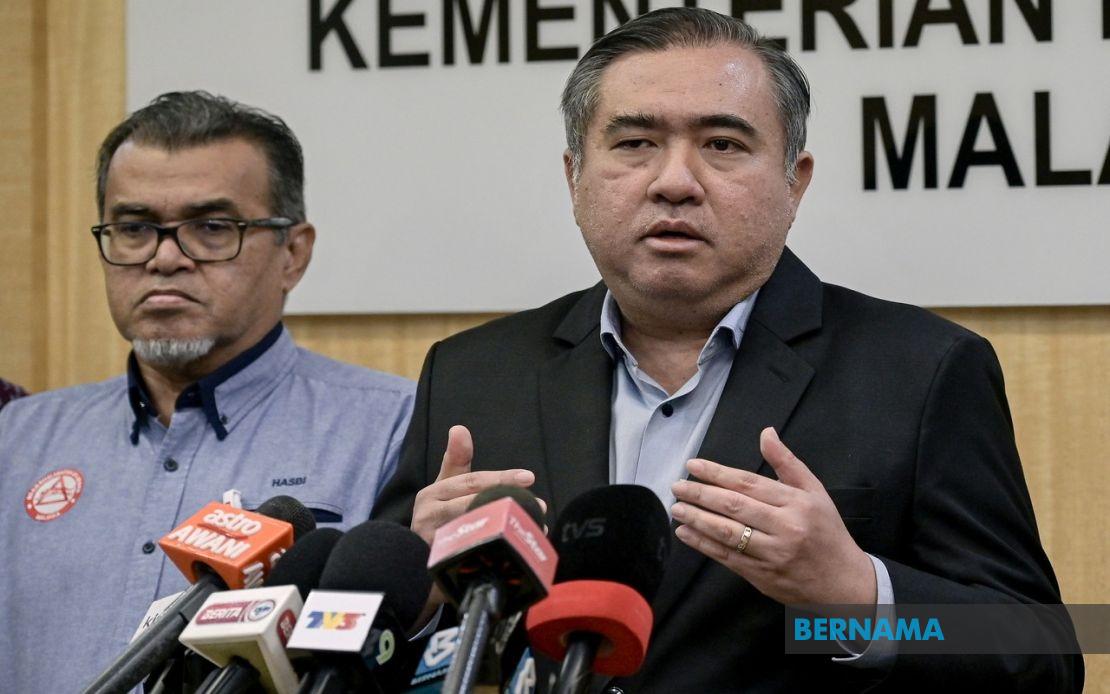
Transport Minister Anthony Loke has moved to clarify the government's position on corporate leadership appointments within Malaysia's port sector, stating that authorities do not intervene in such decisions provided the Malaysian majority ownership threshold is maintained. Speaking at a press conference in Putrajaya on July 17, Loke addressed mounting international media interest in the recent leadership changes at MMC Ports Holdings Bhd, where Sultan Ahmed Sulayem, former chairman and chief executive of DP World, has assumed the role of executive chairman following the departure of group chief executive officer Azman Shah Mohd Yusof.
The minister underscored that the government's regulatory framework for port operators centres exclusively on shareholding structures rather than the day-to-day governance or personnel decisions of port companies. Under current policy, any enterprise holding concessions or operating strategic national assets such as ports must maintain at least 51 per cent Malaysian ownership. This threshold has become a cornerstone of Malaysia's approach to protecting national interests in critical infrastructure whilst permitting foreign investment and expertise. The emphasis on majority ownership, rather than management composition, represents a pragmatic balancing act between preserving local control and attracting international capital and operational experience.
Loke's remarks carry particular weight given the sensitivity surrounding foreign involvement in ports, assets widely regarded as vital to national economic security and logistics resilience. By explicitly stating that management appointments are treated as internal corporate matters falling outside government purview, the minister has sought to depoliticise the appointment process and reassure international investors that Malaysia operates within relatively open governance frameworks for port companies. This position aligns with Malaysia's competitive positioning in a region where ports are increasingly contested spaces for foreign strategic investment, particularly given the presence of multiple global port operators vying for concessions and operational roles.
The minister's clarification appears designed to address concerns that may have arisen from recent media coverage of Sulayem's appointment to the MMC Ports group. International media scrutiny of leadership transitions at major Malaysian port operators reflects broader global interest in who controls critical trade infrastructure, particularly in Southeast Asia's strategically vital shipping lanes. By distinguishing between ownership structures and management authority, Loke has signalled that Malaysia's regulatory apparatus is sufficiently sophisticated to separate concerns about foreign ownership concentration from concerns about day-to-day operational control.
Interestingly, Loke pointed to existing precedent within Malaysia's port sector to reinforce his position. The Port of Tanjung Pelepas, a major deepwater facility in Johor, operates under leadership that includes foreign national chief executives, yet this arrangement has not triggered government intervention. This example demonstrates that Malaysia has already embraced the principle that foreign expertise in port management can coexist with Malaysian majority ownership. The distinction matters because it suggests the government views ports primarily through an ownership lens rather than through operational or personnel criteria.
However, Loke's statement also contained an important caveat that underlines the boundaries of government non-interference. Any material changes in shareholding patterns must be formally notified to relevant authorities, including the Public-Private Partnership Unit (UKAS). This requirement ensures that the government maintains visibility over ownership transitions whilst respecting management autonomy. Regarding MMC Ports Holdings specifically, Loke noted that the Transport Ministry had not received any official notification of shareholding changes from either the company or its concessionaire, suggesting that the leadership transition may not involve alterations to the capital structure.
The distinction between management appointments and ownership changes reflects a broader pattern in how Malaysian authorities approach infrastructure regulation. Rather than imposing rigid controls over corporate governance structures, policymakers have opted for a lighter regulatory touch focused on preserving Malaysian control through ownership requirements. This approach mirrors practices in other countries seeking to balance foreign investment attraction with national asset protection. For port operators and their international partners, the clarity provided by Loke reduces uncertainty about the regulatory environment and suggests that operational excellence and professional qualifications matter more than nationality in determining fitness for senior positions.
The timing of Loke's statement is significant given the current trajectory of Malaysia's port sector. As regional competition for transshipment cargo intensifies and port operators seek to upgrade their competitive positioning through international talent recruitment and management practices, Malaysia's willingness to embrace foreign expertise in operational roles provides a potential advantage. Ports in neighbouring jurisdictions that impose stricter nationality requirements for senior management may find themselves at a disadvantage in recruiting globally competitive leadership talent. Conversely, Malaysia's apparent openness could attract ambitious international port executives seeking opportunities in the region.
The comments also carry implications for investor confidence in Malaysian ports. Foreign and international investors considering involvement in port operations or concessions may take some reassurance from the minister's statement that their participation will not be constrained by arbitrary management restrictions. This messaging could be particularly relevant for sovereign wealth funds, major pension schemes, and international port operators evaluating opportunities in Malaysian maritime infrastructure. The government's emphasis on regulatory stability and predictability, rather than discretionary intervention, addresses a common investor concern about unpredictable policy shifts in strategic sectors.
Nevertheless, Loke's clarification does not entirely dispel potential political sensitivities surrounding foreign leadership in nationally significant infrastructure. Port operations touch multiple constituencies including shipping companies, terminal workers, transport operators, and regional development interests, each of which may harbour distinct concerns about foreign control. The minister's framing appears designed to compartmentalise such concerns by emphasizing that Malaysian ownership protections remain in force whilst allowing professional management autonomy. Whether this nuanced position satisfies all stakeholder perspectives may depend on broader political and economic conditions.

