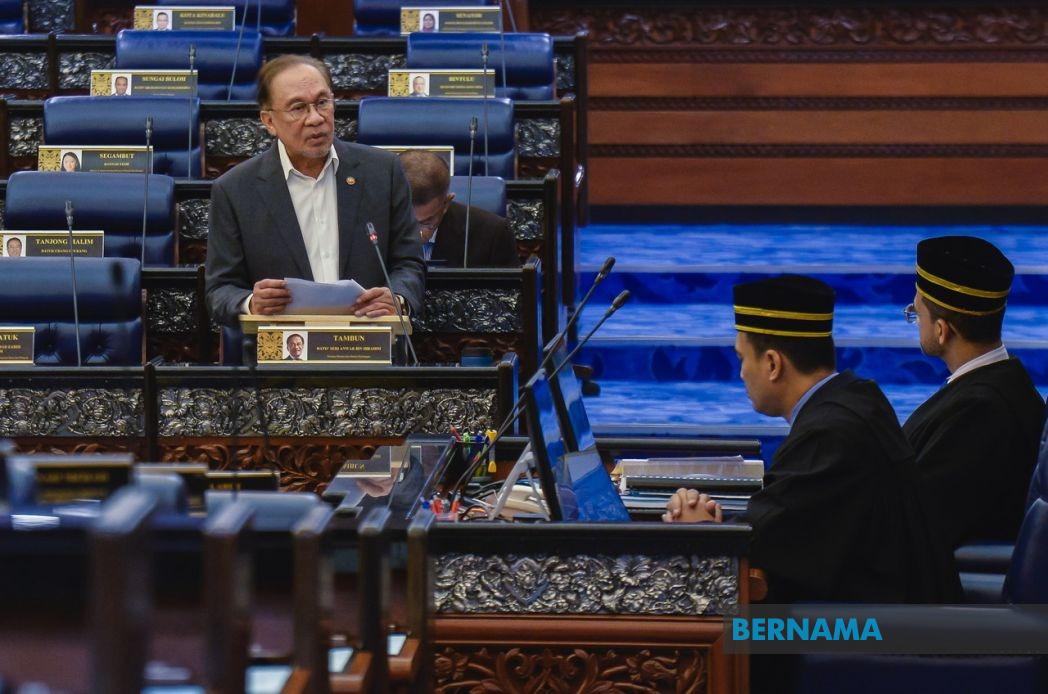
Prime Minister Datuk Seri Anwar Ibrahim moved to dispel misconceptions about government restrictions on activities within FELDA settlements, asserting during parliamentary proceedings on June 30 that no blanket ban has been imposed on programmes in these communities. His comments came amid suggestions that the administration was preventing state governments and other organisations from holding events in Federal Land Development Authority areas, a sensitive issue given FELDA's historically important role in rural Malaysian society.
The critical distinction the Prime Minister drew centres on the manner in which programmes may be conducted rather than whether they can occur at all. While state governments and other entities retain full freedom to organise their own initiatives within FELDA settlements, including issuing land titles and undertaking development projects, the operative constraint involves the deployment of government machinery and resources specifically for electoral purposes. This nuance underscores a fundamental principle in Malaysian electoral law: the separation between legitimate state administration and campaign activities that benefit particular political interests.
Anwar elaborated on this framework during Minister's Question Time in the Dewan Rakyat, responding to concerns raised by Datuk Seri Hamzah Zainudin of Perikatan Nasional representing Larut. The Prime Minister emphasised that menteri besar and state administrations face no impediment to entering FELDA areas and hosting their own events, provided these activities do not commandeer federal government machinery or FELDA-specific resources to serve campaign objectives. The prohibition, he stressed, targets the misuse of institutional apparatus rather than the substantive activities themselves.
One particular incident had sparked debate within political circles: the scheduled FELDA Settlers' Day programme planned for Kluang in Johor on June 20 and 21. Anwar categorically denied that his administration had issued directives to cancel this event, addressing what appeared to be either a misunderstanding or political insinuation that the federal government was suppressing FELDA community activities. The clarification was important given that such events typically draw large attendances and command significant political and social attention within rural constituencies.
Beyond procedural clarifications, the Prime Minister outlined the MADANI Government's substantive commitment to reversing what he characterised as historical neglect of FELDA communities. According to Anwar, numerous FELDA settlements had fallen behind in rural development initiatives and failed to receive adequate governmental attention during previous administrations. This assessment reflects broader concerns about rural-urban disparities in Malaysia, where agricultural communities and settlement areas have sometimes been marginalised in infrastructure and service provision planning.
The government's revitalisation strategy encompasses concrete welfare improvements targeted at FELDA residents. Among the initiatives announced are the establishment of dialysis centres within FELDA settlements, addressing healthcare accessibility in rural areas where medical facilities may be geographically dispersed. Additionally, the administration has prioritised expanding development infrastructure through various federal government agencies, moving beyond symbolic gestures toward tangible service enhancement.
Anwar highlighted a collaborative approach between himself and Deputy Prime Minister Datuk Seri Dr Ahmad Zahid Hamidi in driving these improvements, suggesting a coordinated federal strategy to address FELDA communities' longstanding grievances. This partnership narrative underscores the administration's positioning of FELDA development as a priority issue, particularly significant given FELDA settlers' historical importance as a political constituency and their geographic spread across multiple states and parliamentary constituencies.
The Prime Minister's parliamentary intervention also implicitly addressed concerns about government interference in legitimate state-level activities. By explicitly affirming state governments' prerogatives to organise programmes and undertake development projects within FELDA areas, Anwar sought to reassure state administrations of all political persuasions that routine governance functions would not face federal obstruction. This distinction between preventing abuse of government resources and prohibiting programmes reflects evolving standards regarding election conduct in Malaysia.
The election law framework referenced by the Prime Minister distinguishes between permissible state administration and impermissible electoral campaigning, a distinction that has occasionally proven contentious in Malaysian political practice. The restriction on using FELDA machinery and federal resources for campaign purposes aligns with broader principles intended to ensure that government institutions serve all citizens rather than benefiting particular political movements. However, implementation and interpretation of these restrictions sometimes generate legitimate dispute between political actors with different perspectives.
For FELDA communities themselves, the clarification carries practical significance. Many settlers depend on community gatherings and government-organised events for social cohesion, information dissemination, and dialogue with authorities. Removing confusion about programme restrictions should facilitate smoother organisation of community activities while maintaining electoral integrity standards. The government's simultaneous commitment to infrastructure investment suggests a two-pronged approach: preserving space for community engagement while enhancing material conditions affecting settler livelihoods.
The exchange in parliament reflects broader questions about FELDA's contemporary role and challenges. Originally conceived as an institution for agricultural development and land settlement, FELDA has faced mounting pressures from declining commodity prices, generational changes in settler demographics, and competition from other rural development models. Political interest in FELDA communities remains substantial given their demographic presence and electoral significance, making questions about resource allocation and administrative fairness particularly consequential.
For Southeast Asian observers, Malaysia's approach to managing government resources during electoral periods offers instructive parallels with similar challenges facing other democracies in the region. Balancing state capacity to deliver services with electoral integrity remains an ongoing tension, particularly in societies where government presence pervades rural areas. The Malaysian framework exemplified by Anwar's clarification represents one regional approach to this universal democratic governance challenge.

