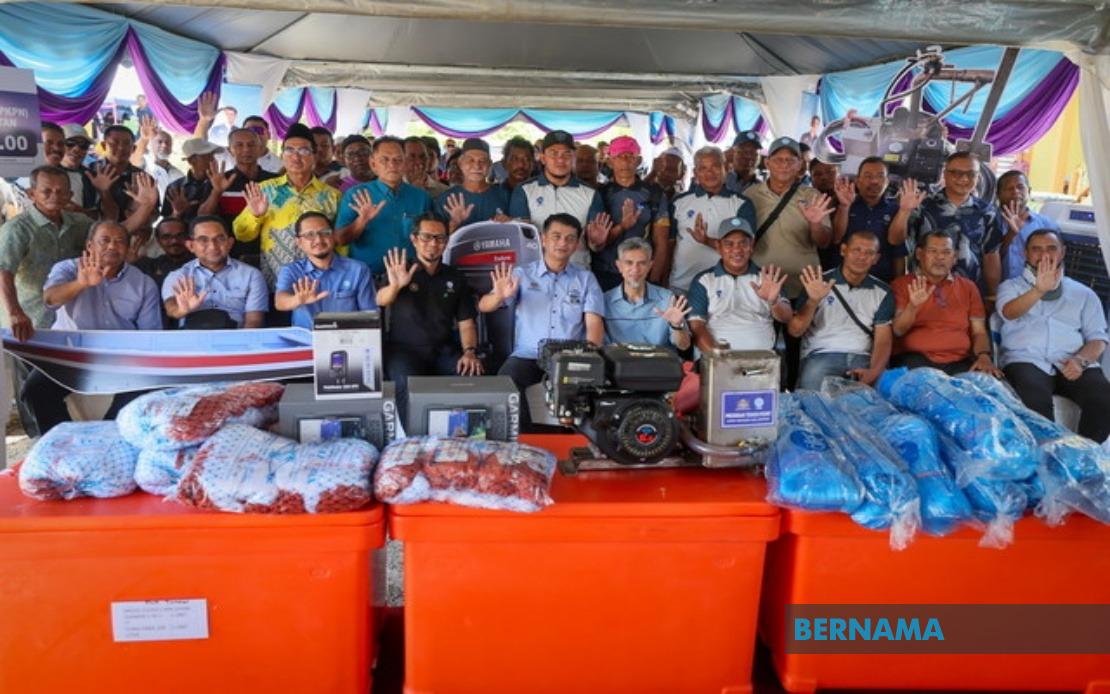
The Malaysian government is directing RM10 million toward improving housing conditions for fishing communities nationwide, signalling a broader commitment to addressing socio-economic challenges within the sector. According to Muhammad Faiz Fadzil, chairman of the Fisheries Development Authority of Malaysia (LKIM), the Special Fishermen Housing Project (PKPN) represents a dual-pronged strategy combining immediate relief through home repairs with longer-term infrastructure development. The initiative was unveiled at a gathering in Tumpat, Kelantan, where LKIM officials met with local fishermen to discuss implementation progress and sector transformation.
The allocation splits substantially between two distinct components tailored to different needs within the fishing community. More than RM6.8 million is dedicated to repairing existing homes belonging to qualified fishermen across the country, targeting 344 properties. The remaining RM3.1 million focuses on constructing 36 new residential units for eligible applicants. This bifurcated approach reflects policymakers' understanding that many fishing families struggle with both inadequate housing stock and deteriorating living conditions in existing dwellings. The repair initiative has already progressed to 80 per cent completion, with officials estimating final delivery by August or September, whereas the new construction phase faces more complex timelines due to land acquisition complications.
The funding framework accounts for regional economic differences, establishing RM84,000 per housing unit as the standard allocation in Peninsular Malaysia, while Sabah and Sarawak receive higher per-unit allocations of RM95,000 to reflect construction cost variations in these states. Repair projects receive up to RM20,000 per dwelling, providing meaningful support for rehabilitating substandard structures without requiring complete replacement. Within Kelantan specifically, RM388,000 has been earmarked for the housing initiative this year, demonstrating targeted resource distribution based on regional fishing community needs. These figures underscore the government's recognition that coastal states like Kelantan, with substantial maritime populations, require proportionate investment.
Beyond housing, LKIM is simultaneously championing a strategic pivot toward aquaculture as a fundamental response to mounting pressures on conventional fishing. Muhammad Faiz articulated that depleting marine fish stocks and escalating operational expenses, particularly fuel costs, have created an unsustainable situation for fishermen despite ongoing government fuel subsidies. This structural vulnerability has prompted authorities to encourage sector diversification, positioning aquaculture as both an alternative revenue stream and a mechanism for reducing pressure on wild fish populations. The shift represents tacit acknowledgement that traditional fishing alone cannot sustain livelihoods long-term, necessitating proactive transformation.
The government has established an ambitious aquaculture production target, aiming for 40 per cent of the nation's fish output to derive from controlled farming by 2030. This represents a substantial reorientation from the current marine-dependent model and signals serious investment in changing how fisheries contribute to domestic food security and export revenue. Officials frame this transition as both an economic imperative and an opportunity for fishing communities to capture higher-value production segments. The rhetoric emphasises that fishermen who engage with aquaculture ventures position themselves advantageously for future prosperity, contrasting with those who maintain exclusive reliance on conventional fishing in an increasingly constrained environment.
To operationalise this strategy, LKIM has allocated RM400,000 specifically to the Kelantan State Fishermen's Association (PENEKA) for an aquaculture initiative centred on tank-based prawn farming. This pilot project represents a concrete manifestation of the broader policy direction, moving beyond aspirational statements toward tangible infrastructure development. Tank-based farming systems offer controlled production conditions, reduced environmental impact compared to some wild-capture methods, and potentially superior profitability through premium market positioning. By establishing demonstration projects in key fishing states, authorities hope to build community familiarity, develop local expertise, and create replicable models that subsequent regions can adapt.
The aquaculture expansion strategy extends beyond Kelantan, with officials committing to roll out comparable initiatives across other states. This systematic approach suggests a multi-year implementation pathway rather than isolated pilot experimentation. The intention to strengthen income sources for fishing communities indicates that policy architects view aquaculture not as a replacement that displaces traditional fishermen, but as a complementary economic activity that diversifies household revenue and reduces vulnerability to market volatility. For Southeast Asia broadly, this Malaysian initiative reflects a regional trend of restructuring fisheries toward more sustainable and economically resilient models.
The timing of this dual initiative—simultaneous investment in immediate living standards through housing and long-term sectoral restructuring through aquaculture—reflects sophisticated policy sequencing. Policymakers appear cognisant that asking communities to undertake radical economic transition requires foundational stability. By improving housing conditions concurrently with promoting income diversification, authorities signal comprehensive commitment to fishermen's welfare rather than imposing structural adjustment without corresponding support. This integrated approach differs from policies that emphasise transition without addressing underlying livelihood precarity.
For Malaysian fishermen, particularly those in Kelantan and comparable coastal states, these initiatives present both opportunities and implicit challenges. Housing improvements deliver immediate tangible benefits, addressing decades of inadequate residential conditions in many fishing villages. Simultaneously, aquaculture transition opportunities require capital investment, technical knowledge acquisition, and risk tolerance regarding unfamiliar production methods. Successful implementation depends substantially on complementary support mechanisms including extension services, credit access, and market linkages that enable fishermen to transition beyond subsistence-level farming toward commercial aquaculture operations.
The broader economic context matters significantly for evaluating these initiatives' likely success. Malaysia's fishing sector traditionally operated within protected markets featuring fuel subsidies and price support mechanisms. Aquaculture transition assumes fishermen can achieve competitive production efficiency and market positioning without these crutches. The RM400,000 allocation to PENEKA for prawn farming suggests modest initial capitalization, potentially necessitating supplementary financing mechanisms beyond government grants. Officials' framing emphasises opportunity capture and forward-thinking adaptation rather than structural crisis, potentially underestimating transition resistance or financial barriers facing established fishing families.
Regional implications extend beyond Malaysia's borders. Several Southeast Asian nations confront analogous fisheries sustainability challenges, with Thailand, Vietnam, and Indonesia similarly grappling with declining wild stocks and rising operational costs. Malaysia's policy combination—housing security provision paired with aquaculture diversification promotion—offers a replicable template for regional peers. If the PKPN and aquaculture initiatives successfully improve fishing community conditions while achieving production targets, neighbouring countries may adopt comparable approaches. Conversely, implementation difficulties could illuminate obstacles that other governments must navigate when pursuing equivalent transitions.
The success of these initiatives ultimately depends on sustained political commitment and technical implementation capacity. Housing projects face the perennial challenge of construction delays, land complications, and ensuring funds reach intended beneficiaries rather than dispersing through bureaucratic channels. Aquaculture promotion requires not merely capital allocation but robust extension support, quality hatchery access, disease management expertise, and market development. Fishermen accustomed to ocean-based livelihoods may require substantial persuasion and training before embracing tank-farming technologies. LKIM's capacity to manage these multifaceted implementation challenges will largely determine whether RM10 million translates into substantive living standard improvements or becomes another marginally impactful government programme.

