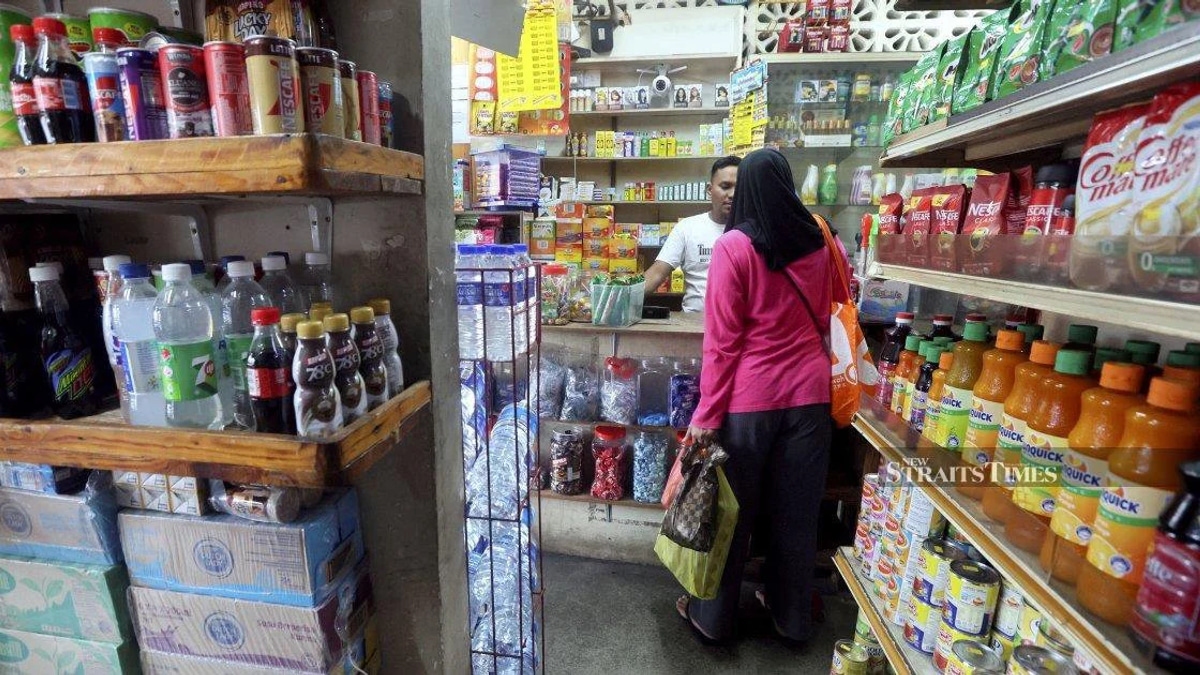
Deputy Finance Minister Liew Chin Tong has announced a substantial RM9.8 billion microfinancing initiative designed to strengthen the capital foundation of Malaysia's hawker and small trader communities. Speaking at the Dataran Puchong Permai Farmers' Market during the "Mikro Kredit Turun Padang" programme on June 21, Liew underscored the government's commitment to preventing small business operators from falling through the gaps of the formal financial system. The initiative represents a strategic effort to democratise access to credit and ensure that grassroots entrepreneurs can obtain the necessary working capital to sustain and expand their operations across the nation.
The financing architecture mobilises six major institutions to deliver microfinancing services directly to traders. Bank Simpanan Nasional (BSN), Agrobank, Bank Rakyat, TEKUN Nasional, Majlis Amanah Rakyat, and the Companies Commission of Malaysia form the backbone of this coordinated push. This multi-agency approach signals recognition that fragmented delivery systems often leave small traders confused about where to seek assistance. By concentrating advisory services and application processes through these key organisations, the government aims to eliminate bureaucratic friction and reduce the time required for approval cycles. The coordination reflects lessons learned from previous microfinance programmes, where administrative complexity frequently discouraged potential borrowers.
Liew characterised the initiative as essential insurance against economic inequality within Malaysia's business ecosystem. His comments emphasise that sustainable development cannot occur when a significant segment of entrepreneurs lacks reliable access to growth capital. The allocation targets hawkers operating in temporary markets, street food vendors, and family-run retail enterprises that often operate without formal collateral or extensive credit histories. These traders traditionally face rejection from conventional banks due to perceived higher default risk, creating a financing vacuum that government-backed microfinance schemes exist to bridge. Without such intervention, the income and employment gap between informal and formal sector operators tends to widen over time.
The "Mikro Kredit Turun Padang" programme exemplifies a deliberate shift in financial inclusion strategy, moving lending officers and approval authorities directly into farmer markets and hawker communities rather than requiring traders to navigate unfamiliar banking environments. The initiative has already conducted roadshows at Taman Melawati Farmers' Market, Kelana Jaya Farmers' Market, and Bandar Tasik Permaisuri Farmers' Market prior to the Puchong event. This peripatetic model removes geographical and psychological barriers while simultaneously allowing government representatives to observe trader conditions firsthand and identify structural obstacles to participation.
Early results from the Puchong activation demonstrate tractable take-up. Twelve traders at the Dataran Puchong Permai location secured financing approval, with Amanah Ikhtiar Malaysia (AIM) providing seven approvals, BSN offering three, and Agrobank extending two facilities. These figures suggest that once accessibility improves, demand for microfinance among hawkers proves substantial. The diversity of approved lenders indicates that competition between institutions to capture borrowers may drive improved service standards and faster processing, potentially benefiting future applicants. This outcome validates the logic of bringing multiple agencies to a single venue rather than forcing traders to approach institutions separately.
Liew revealed that the Ministry of Finance maintains an active listening mechanism to gather feedback from grassroots traders operating in these markets. This intelligence-gathering exercise aims to inform policy refinements and budget allocations in future fiscal cycles. Direct testimony from practitioners proves invaluable because they can identify specific bottlenecks—such as excessive documentation requirements, inflexible repayment schedules, or inadequate loan sizes—that purely desk-based policy analysis might overlook. By channelling this feedback through to the Prime Minister's office during budget deliberation, the government signals intention to implement data-driven adjustments rather than implementing one-size-fits-all approaches.
The RM9.8 billion allocation must be contextualised within Malaysia's broader microfinance landscape. While the figure appears substantial in nominal terms, it requires evaluation against the total financing needs of approximately two million informal traders estimated to operate throughout the country. The actual distribution across six institutions suggests per-organisation allocations averaging RM1.6 billion, a sum that accommodates modest average loan sizes ranging from RM5,000 to RM30,000 depending on borrower profile and collateral availability. This volumetric reality indicates that the programme cannot address all microfinance demand simultaneously, necessitating careful targeting toward traders demonstrating strongest growth potential and repayment capacity.
The initiative carries particular resonance for Southeast Asian economies grappling with informal sector integration. Malaysia's approach of combining institutional outreach with policy feedback mechanisms offers a model that neighbouring countries—many of which host larger informal trading populations—could potentially adapt to local contexts. The emphasis on simplifying application processes and reducing information asymmetry between lenders and borrowers represents a sophisticated understanding that financial exclusion often stems from administrative friction rather than fundamental trader un-creditworthiness. Countries including Indonesia, Thailand, and the Philippines have experimented with similar mobile financing schemes, generally reporting improved outcomes when government commitment includes sustained policy feedback loops.
The programme's success will ultimately depend on execution quality across participating institutions and follow-through on feedback received from traders. Microfinance schemes frequently suffer from implementation gaps where initial excitement fades as staff turnover, competing priorities, or institutional inertia undermine commitment to grassroots outreach. The key performance indicator should track not merely approval numbers but subsequent loan utilisation, repayment performance, and borrower satisfaction with service quality. Early evidence from Puchong appears encouraging, but sustained effort across multiple market locations and over extended timeframes will determine whether this initiative achieves its ambitious aim of creating genuinely accessible microfinance for Malaysia's trader population.