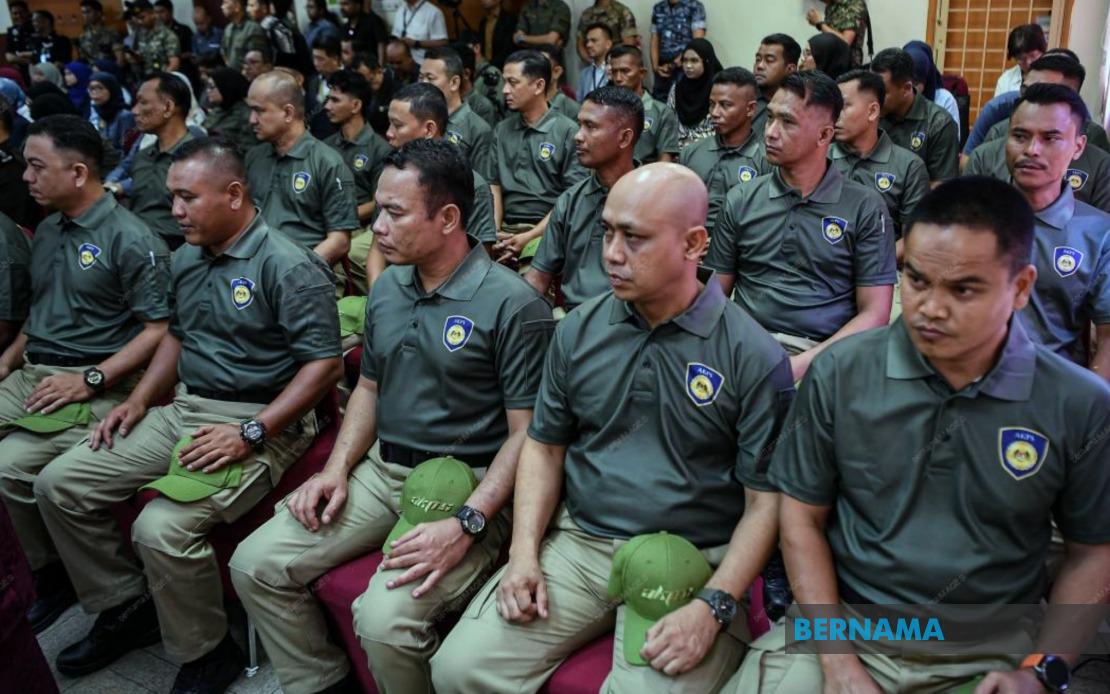
Malaysia's government has moved to reassure personnel at the Border Control and Protection Agency that their employment rights and benefits will be safeguarded as the organization undergoes a significant structural realignment under the Public Service Department effective from July 1. The assurance, delivered during parliamentary proceedings, addresses widespread concerns among the estimated 8,403 officers positioned across the country's frontier defences following the agency's establishment through the consolidation of multiple enforcement bodies.
Deputy Home Minister Datuk Seri Dr Shamsul Anuar Nasarah emphasized that officers electing to continue within their original service classification will experience no disadvantage regarding career progression, length of service recognition, pension entitlements or broader welfare provisions. This guarantee proves significant given the complexity inherent in merging disparate enforcement cadres with potentially different terms and conditions of service. The minister's statement reflects government sensitivity to the anxieties that typically accompany institutional reorganization, particularly where thousands of public sector employees face uncertain futures.
The Border Control and Protection Agency represents an ambitious consolidation exercise designed to streamline border management operations across Malaysia's 122 official entry points, encompassing both terrestrial crossings and maritime gateways. The merger brought together personnel from various enforcement backgrounds into a unified command structure intended to enhance operational coordination and eliminate jurisdictional overlaps. However, such amalgamations inherently create administrative complications regarding how individual officers' existing service terms translate into the new organizational framework.
For officers declining the transfer option to the new service scheme, interim arrangements will keep them within AKPS pending further placement decisions by the Public Service Department. Importantly, the government indicated that personnel may subsequently be reassigned to their original parent agencies should positions become available, with such placements determined by their former departmental leadership according to organizational vacancies and operational requirements. This graduated approach provides a safety net for those uncomfortable with immediate integration into the new scheme.
Staffing data revealed that as of mid-June, the agency had successfully recruited 6,824 personnel across its allocated 8,403 positions, leaving 1,579 vacancies awaiting fulfillment. These shortfalls are being addressed through coordinated efforts involving AKPS management, the Home Ministry, the Public Service Department and the contributing agencies themselves. The relatively high occupancy rate indicates substantial progress in the consolidation effort, though the remaining gaps underscore the ongoing challenges in harmonizing personnel from multiple source organizations.
To enhance the attractiveness of positions within the reorganized agency, the government has introduced supplementary compensation mechanisms. These include an additional annual salary increment mechanism and a RM200 service incentive specifically designed to retain quality personnel and ensure operational excellence at border crossing points. Such financial inducements reflect recognition that frontier control operations demand continuous staffing excellence and that competitive remuneration helps secure and maintain the requisite talent pool.
The restructuring carries significant implications for Malaysia's border security posture, as the efficiency of personnel deployment directly influences the facilitation of legitimate travel and commerce while simultaneously maintaining rigorous screening against threats. Operational continuity at entry points becomes paramount during organizational transitions, particularly given the high volume of daily cross-border movement involving both Malaysian citizens and international travelers. Any disruption to staffing stability could potentially compromise processing efficiency or security effectiveness.
For the broader Malaysian civil service, this transition serves as a case study in how large-scale institutional consolidation can be managed while preserving employee protections and service continuity. The government's explicit commitment to safeguarding existing entitlements suggests an attempt to balance organizational efficiency gains against the legitimate interests of affected personnel. This approach differs markedly from more disruptive restructuring models that might have simply substituted new terms across the board.
Regional observers monitoring Malaysian border management will note the significance of this consolidation within the context of Southeast Asia's evolving security architecture. Enhanced coordination at entry points contributes to the broader regional counter-terrorism and transnational crime prevention efforts that ASEAN governments prioritize collectively. By ensuring smooth transitions and maintaining operational capacity during reorganization, Malaysia reinforces its commitment to regional security cooperation.
The parliamentary response to the Deputy Home Minister's assurances, particularly from representatives of affected constituencies, will likely reflect constituent concerns about employment stability and the long-term career prospects of border control personnel. Elected officials representing constituencies with significant numbers of AKPS employees maintain particular interest in ensuring that federal reorganization efforts do not disadvantage their constituents unfairly. The government's detailed explanation suggests a proactive approach to addressing potential political fallout.
Moving forward, the successful integration of disparate enforcement cadres into a unified Border Control and Protection Agency will depend substantially on effective human resources management throughout the transition period. The availability of placement options, the gradual filling of remaining vacancies, and the maintenance of competitive incentives all contribute to minimizing disruption. Implementation of these assurances over coming months will demonstrate the government's genuine commitment to protecting affected personnel while advancing the broader institutional modernization agenda that the consolidation represents.

