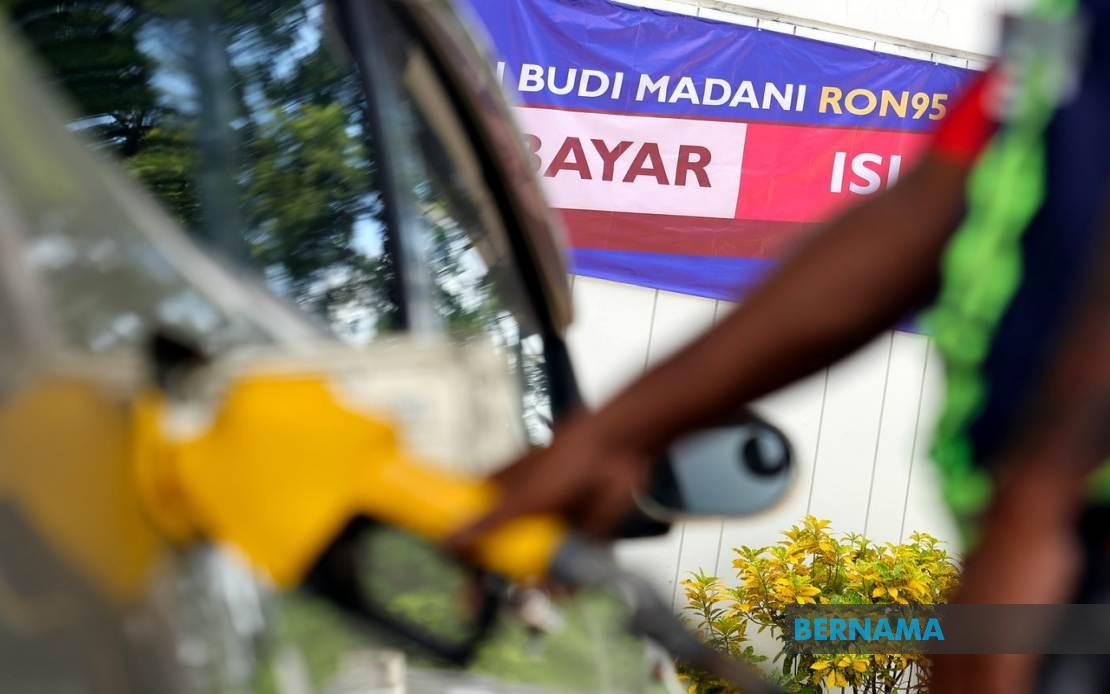
The Malaysian government has reversed course on fuel subsidy cuts, announcing the restoration of the BUDI95 subsidised RON95 petrol quota to its previous level of 300 litres per month. Prime Minister Datuk Seri Anwar Ibrahim made the declaration during his National Day address at the Putrajaya International Convention Centre on August 30, signalling a significant policy reversal that will have immediate implications for millions of motorists and the nation's fiscal position.
This decision affects more than 16 million registered users of the BUDI MADANI RON95 programme, reversing an earlier government announcement made in March that had planned to reduce the monthly allocation from 300 litres to 200 litres starting April 1, 2026. That previous reduction had been framed as a necessary adjustment following geopolitical tensions in West Asia, which had disrupted global energy markets and pressured Malaysia's fuel subsidy expenditure. The restoration therefore represents a significant policy reversal within a five-month window, reflecting shifting calculations about the government's capacity and political will to absorb fuel subsidy costs.
Compounding the support for petrol users, the government simultaneously committed to extending enhanced diesel benefits to a constituency of vehicle owners who have historically received separate treatment under fuel subsidy schemes. More than half a million eligible owners of diesel-powered pick-up trucks and jeeps will now receive up to 400 litres of Budi Diesel monthly, indicating a comprehensive approach to maintaining energy affordability across different vehicle categories. This dual-track approach acknowledges that commercial and agricultural users, who predominantly operate diesel vehicles, face distinct economic pressures from retail consumers relying on petrol-powered vehicles.
The timing of this announcement during the National Day address carries symbolic weight in Malaysian politics, positioning fuel affordability as a core national priority rather than a technical adjustment. By delivering the message in this ceremonial context, the Prime Minister elevated what might otherwise be viewed as routine subsidy management into a statement of government commitment to citizen welfare. This framing is particularly significant given that fuel subsidies remain one of the largest budget items in Malaysia's fiscal framework, and decisions about their scope inevitably compete with allocations for healthcare, education, and infrastructure development.
The decision to restore the quota reflects broader economic and political considerations beyond the technical mechanics of fuel pricing. Malaysians across diverse income levels have come to view access to cheap petrol as a fundamental entitlement, with any reduction triggering broader inflationary pressures that cascade through transportation, food, and service sectors. A 100-litre monthly reduction for 16 million users would have eliminated roughly 1.6 billion litres annually from the subsidised pool, representing substantial cost savings but also triggering ripple effects throughout the economy that could undermine purchasing power and consumer confidence.
The underlying fiscal sustainability of this commitment warrants scrutiny among Malaysian policymakers and analysts. Global crude oil prices remain subject to supply disruptions, geopolitical volatility, and demand fluctuations that sit beyond governmental control. The government's ability to indefinitely absorb the gap between subsidised prices and market rates depends on either securing adequate budget allocations from other revenue streams, achieving greater downstream efficiency in fuel distribution, or managing broader fiscal consolidation. The fact that the subsidy was maintained at RM1.99 per litre even during the March announcement suggests that price increases have been definitively ruled out as a policy tool, placing the entire burden of adjustment on either quota reduction or budget reallocation.
Regionally, Malaysia's approach to fuel subsidies stands in contrast to neighbouring countries that have undertaken more aggressive liberalisation. Indonesia, Thailand, and the Philippines have each navigated politically contentious transitions toward gradually reduced or more targeted subsidy regimes, often accepting short-term political costs for longer-term fiscal stability. Malaysia's choice to maintain broad-based, high-volume subsidies positions the nation differently in terms of fiscal discipline and budgetary flexibility, raising questions about whether this approach remains sustainable as the country faces competing demands for development investment and social expenditure.
The restoration also carries implications for Malaysia's energy transition goals and carbon accounting. Subsidising petrol consumption below market rates effectively encourages vehicle usage and energy consumption patterns that may complicate the country's commitments toward reducing greenhouse gas emissions. Policymakers navigating climate obligations may face tension between immediate affordability objectives and medium-term environmental targets, particularly as global pressure for decarbonisation intensifies.
For Malaysian consumers and businesses, the restoration provides near-term relief from the anticipated squeeze on transportation budgets and supply chain costs. Delivery services, taxi operators, ride-hailing drivers, and others whose livelihoods depend directly on fuel costs will benefit from maintaining the larger quota. For ordinary commuters, the restoration eliminates uncertainty about upcoming price pressures that would have rippled through public transport fares and consumer goods pricing had the reduction proceeded as announced.
Looking forward, the government faces recurring pressure to address the structural question of fuel subsidy sustainability without compromising the electoral appeal of affordable energy. The restoration to 300 litres represents a policy holding pattern rather than a solution to underlying fiscal challenges. Future governments will likely confront the same choice between maintaining expansive subsidies, implementing more targeted approaches that exclude higher-income users, or accepting gradual price increases that align Malaysian fuel pricing with regional and global realities.
The announcement ultimately reflects the government's assessment that maintaining fuel affordability serves broader political and economic stability objectives that justify continued fiscal commitment. Whether this approach proves sustainable through Malaysia's next economic cycle depends on commodity prices, budget management, and the government's ability to generate offsetting savings or revenue enhancements elsewhere in the fiscal framework. For now, 16 million BUDI95 users can plan their fuel budgets without the constraint that loomed on the March announcement.

