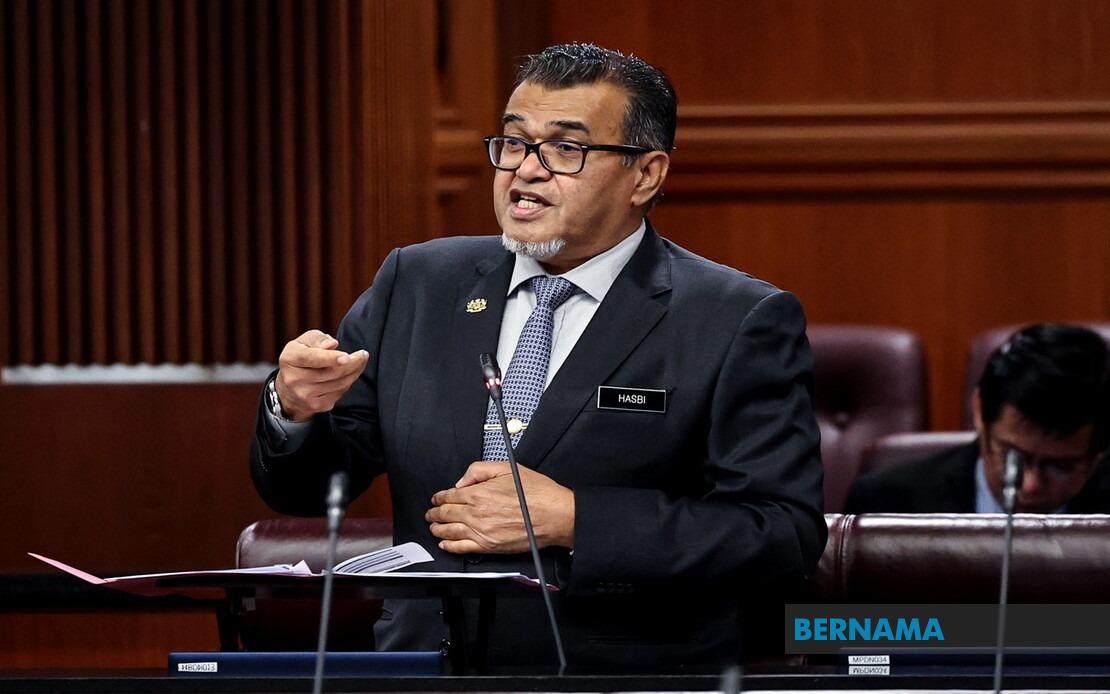
The Malaysian government is moving to strengthen the legal framework protecting railway infrastructure, with Deputy Transport Minister Datuk Hasbi Habibollah announcing that comprehensive amendments to relevant legislation are in their final stages and will be presented to Parliament before year-end. The initiative represents a decisive response to escalating security challenges within the nation's rail network, where theft and vandalism have inflicted substantial financial damage and operational disruptions over recent years.
During parliamentary proceedings, Hasbi articulated the core weakness in existing regulatory provisions, noting that current penalties are inadequate as deterrents. Trespassing onto railway property currently carries only minor fines ranging from RM500 to RM1,000, a sum insufficient to discourage would-be offenders. The revised legislation will introduce substantially heavier criminal sanctions, particularly targeting those engaged in cable theft operations that carry security implications. This recalibration reflects official recognition that mild punitive measures have proven ineffective in curbing a persistent crime pattern affecting both operational continuity and national infrastructure integrity.
The scale of the problem became apparent when Hasbi disclosed figures spanning the preceding three years. Railway cable theft incidents totalled 393 separate occurrences, encompassing the removal of 19,756 metres of cable infrastructure and resulting in quantifiable losses reaching RM16.3 million. Such figures underscore why the government has prioritized this issue, as cumulative damage extends beyond mere financial loss to encompass disruption to commuter services and potential safety hazards. The incidents concentrated in specific high-risk zones have become focal points for enhanced security interventions.
Beyond legislative measures, the authorities are implementing a multi-layered enforcement strategy that addresses both supply and demand dimensions of cable theft. Strengthened coordination with the Royal Malaysian Police represents one pillar, while systematic engagement with the scrap metal industry constitutes another. By working closely with scrap metal operators and dealers, authorities aim to disrupt the commercial ecosystem enabling theft by preventing stolen materials from entering legitimate recycling channels. This market-focused approach recognizes that thieves require buyers willing to purchase their stolen goods; eliminating that buyer base substantially reduces criminal incentive.
The technological dimension of the security upgrade is substantial. The Railway Assets Corporation is deploying 1,146 units of advanced closed-circuit television systems incorporating artificial intelligence capabilities across identified vulnerability zones throughout the network. This investment, valued at RM14 million, transcends conventional passive surveillance by enabling intelligent detection of suspicious activities and automated alerting mechanisms. Such systems provide continuous monitoring without requiring constant human observation, addressing the practical limitations of traditional patrol-based security in rail corridors that span considerable geographic distances.
Drone technology has emerged as a complementary surveillance tool, particularly effective for monitoring remote or topographically challenging areas where conventional foot patrols prove inefficient or dangerous. The aerial perspective afforded by drones enables rapid assessment of theft-prone sections and provides evidence documentation capabilities. By extending monitoring reach into previously difficult-to-access locations, this innovation expands the effective surveillance footprint across the entire rail network without proportional increases in personnel requirements.
Ground-level enforcement capacity has also received attention. Keretapi Tanah Melayu Berhad received authorization to acquire 20 scrambler motorcycles for deployment by the Auxiliary Police unit. These rapid-response vehicles enhance patrol frequency in high-risk rail areas while enabling swift incident response when theft or vandalism occurs. The mobility advantage offered by motorcycles, particularly in navigating dense urban rail corridors and accessing informal pathways around rail infrastructure, addresses response time limitations inherent in conventional vehicle-based patrols.
The coordinated nature of this security enhancement represents a shift toward comprehensive infrastructure protection that integrates legislative deterrence, technological detection, market disruption, and operational responsiveness. Rather than relying on any single mechanism, the government is pursuing a strategy acknowledging that effective crime prevention requires simultaneous pressure across multiple intervention points. The legislative amendments establish consequences; the CCTV and drone systems provide detection; the scrap metal engagement removes market incentives; and the auxiliary police deployment ensures physical presence and rapid intervention.
For Malaysia's transportation sector and broader public interest, these developments carry significance extending beyond rail operations alone. The railway network supports substantial passenger volumes and freight movement, with theft-induced disruptions creating ripple effects across economic activity. Vandalism and cable theft incidents have historically caused service cancellations and safety concerns, affecting hundreds of thousands of commuters. By elevating security standards, the government signals commitment to protecting critical transport infrastructure from criminal degradation. The investments in surveillance and enforcement also establish precedents that may inform security approaches across other national infrastructure assets facing similar vulnerabilities, from telecommunications networks to electrical transmission systems.

