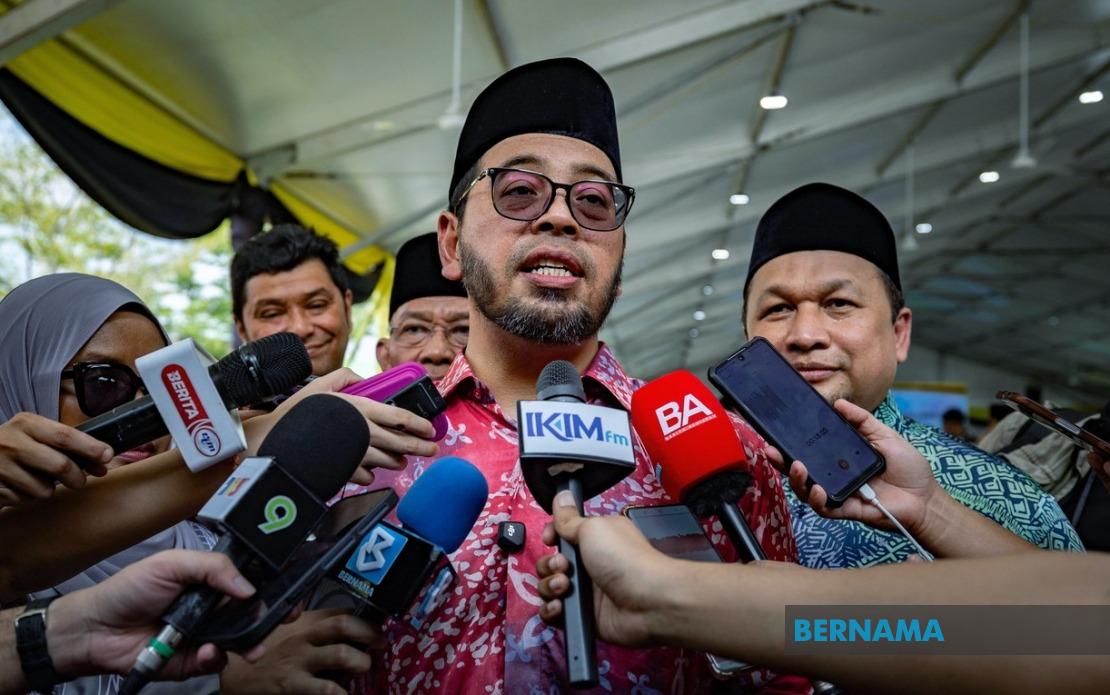
The Malaysian federal government has moved to strengthen its partnership with Islamic educational institutions across the country, positioning pondok establishments and religious schools as critical pillars in the national development agenda. Speaking at the 2026 Perak Pondok and Religious Schools Gathering in Chemor, Prime Minister Datuk Seri Anwar Ibrahim underscored the government's recognition that societal advancement extends far beyond economic metrics and physical infrastructure.
Minister Dr Zulkifli Hasan, speaking through the Prime Minister's Department (Religious Affairs), articulated a philosophical shift in how the government measures national progress. Rather than relying solely on gross domestic product growth or infrastructure projects, the administration now emphasises the calibre of its citizens and the moral foundations underpinning their development. This approach reflects a growing understanding that sustainable progress requires citizens grounded in ethical and spiritual values, particularly in an era marked by rapid technological change and social fragmentation.
The government's commitment manifests through structured collaboration with state authorities and Islamic religious bodies. Dr Zulkifli highlighted ongoing coordination with state governments, State Islamic Religious Departments, State Islamic Religious Councils, and religious authorities nationwide to ensure religious education evolves in a coherent, quality-assured manner responsive to contemporary needs. This multi-layered engagement suggests recognition that Islamic education cannot function in isolation from broader policy frameworks and must align with national standards.
The HIPSA 2026 gathering drew approximately 3,000 participants representing a cross-section of Malaysia's Islamic educational landscape. The assembly included pondok members, madrasah and religious school representatives, KAFA teachers, non-governmental organisation officials, and community residents. This broad attendance indicates the substantial infrastructure and human resources invested in religious education at the grassroots level, an often-underestimated component of Malaysia's educational ecosystem.
The event featured substantive intellectual engagement through a forum addressing the role of religious scholars and community leaders in nation-building. Distinguished speakers including Kelantan scholar Sheikh Wazir Che Awang Al-Makki, former Perak mufti Datuk Seri Wan Zahidi Wan Teh, and preacher Ustaz Mohamad Saifuddin Abdul Latiff contributed perspectives on how Islamic education institutions can contribute to broader national objectives. Such forums serve not merely ceremonial functions but create spaces for theological and educational leaders to articulate visions connecting religious instruction to civic responsibility.
Beyond symbolic gestures, the government channelled material support through multiple mechanisms. Distribution of MADANI Aid Baskets to 12 recipients, representing 250 community beneficiaries, provided immediate relief to vulnerable populations. The programme extended assistance through food distribution, financial sponsorships, and support for academic pathways including the Fast Track Sijil Pelajaran Malaysia programme. These interventions address the precarious financial situations many pondok communities and KAFA educators face, challenges often invisible in mainstream educational discourse.
The event carried explicit branding as part of Malaysia MADANI, the government's aspiration framework prioritising people's welfare and human capital development. This alignment suggests deliberate messaging linking religious education with the broader national development philosophy. By situating pondok and religious schools within Malaysia MADANI rhetoric, the government signals that these institutions represent not marginal or alternative educational pathways but integral components of the nation's developmental strategy.
The recognition of pondok institutions carries particular significance for Malaysia's educational pluralism. These institutions have historically operated with substantial autonomy, relying on community support and charitable contributions rather than full government funding. The explicit acknowledgment of their strategic importance potentially opens pathways for enhanced resource allocation, regulatory clarity, and integration with broader quality assurance mechanisms, though questions about maintaining institutional autonomy versus standardisation remain unresolved.
For Malaysian policymakers and educators, this positioning reflects calculations about Islamic education's role in social stability and national cohesion. Religious schools and pondok institutions serve not only doctrinal functions but also provide welfare services, community organising capabilities, and alternative educational pathways for populations sometimes marginalised by mainstream systems. By formalising partnerships with these institutions, the government attempts to harness their social capital and reach while maintaining policy influence.
The involvement of Perak Menteri Besar Datuk Seri Saarani Mohamad and Chief Secretary to the Government Tan Sri Shamsul Azri Abu Bakar signalled inter-agency coordination and senior bureaucratic commitment. Such high-level presence elevates the event beyond sectoral concern, suggesting Islamic education integration into comprehensive governance frameworks rather than treatment as a peripheral religious matter. This institutional positioning may facilitate resource flows and policy coherence across federal and state levels.
The emphasis on teacher support through recognition of KAFA educators addresses long-standing challenges in Malaysia's religious education sector. Many individuals leading Quranic teaching circles and supplementary religious classes operate with minimal financial recognition or professional development support. Dedicated attention to their welfare and capacity-building acknowledges their contribution to the transmission of Islamic knowledge and values among younger generations.
Looking forward, the formalisation of government-pondok partnerships raises questions about standardisation pressures, curriculum alignment, and the balance between institutional autonomy and accountability. While material support addresses immediate needs, ensuring these institutions retain their distinctive pedagogical approaches and community embeddedness while meeting national quality benchmarks remains a significant implementation challenge.

