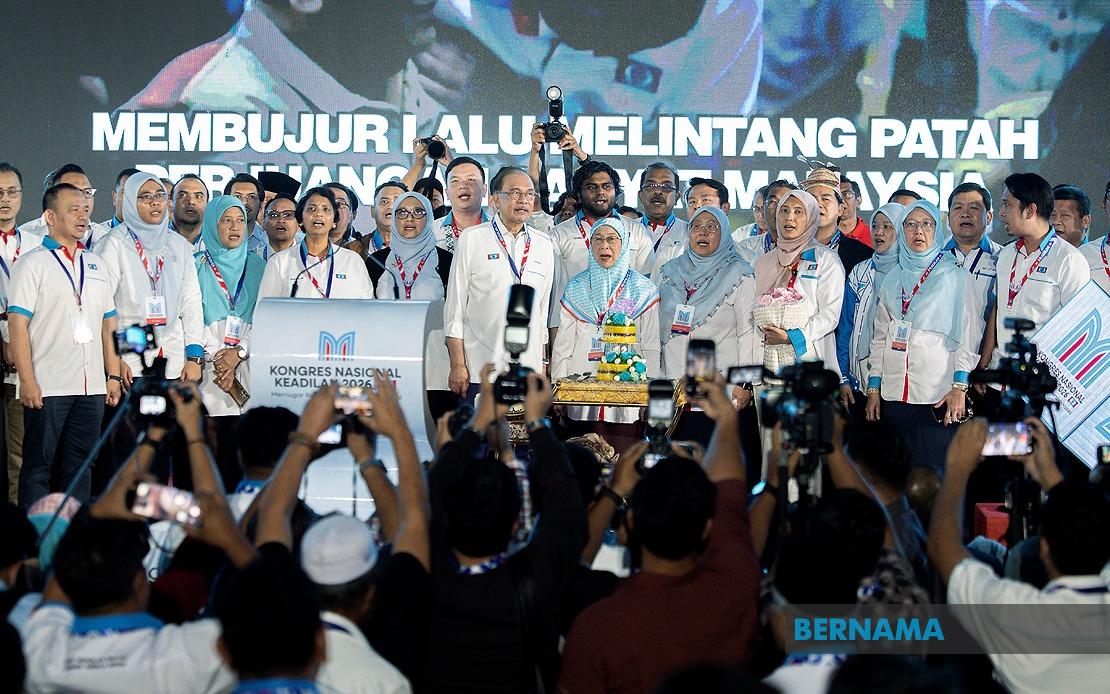
Prime Minister Datuk Seri Anwar Ibrahim has announced that the government intends to amend the Tabung Haji Act 1995 to protect the confidence of Muslims in the institution, signalling a fresh commitment to institutional oversight and governance standards. Speaking as both premier and Finance Minister, Anwar framed the legislative reform as part of a comprehensive effort by the MADANI Government to eliminate structural deficiencies and reinforce administrative accountability across public institutions.
The decision to revisit the Tabung Haji Act reflects growing recognition within government circles that Malaysia's longstanding pilgrimage savings scheme requires legislative modernisation to address governance concerns. Tabung Haji, which manages savings and financing for Muslims undertaking the Hajj pilgrimage, has historically played a significant role in Malaysian Islamic finance and remains a culturally important institution for millions of depositors. The amendment signals official acknowledgment that strengthening the legal framework governing the fund is essential to maintaining public confidence.
Beyond the Tabung Haji reform, Anwar articulated a broader vision for institutional cleansing and accountability. He stressed that governance improvements must penetrate all layers of administration, with particular emphasis on dismantling weaknesses that compromise public trust or institutional integrity. This approach reflects a philosophy that durable institutional strength cannot emerge through piecemeal interventions but requires sustained, systematic efforts to address endemic vulnerabilities.
The Prime Minister also announced plans to completely repeal the Universities and University Colleges Act 1971, without replacement by legislation that would perpetuate existing restrictions on student expression and activism. This proposal carries significant implications for Malaysian higher education, signalling a potential shift toward greater autonomy for university students in political and social discourse. The repeal without substitution differs markedly from previous reform discussions that contemplated replacement legislation, suggesting the government favours a deregulatory approach rather than recalibrated constraints.
Making these announcements during the concluding sessions of the 2026 PKR National Congress, Anwar leveraged the party platform to articulate governance values that extend beyond partisan boundaries. He emphasised that the MADANI Government's economic and institutional policies must deliver tangible improvements in living standards for all Malaysians, transcending political affiliation and geographic location. This framing carries particular resonance given Malaysia's context of competitive federalism, where opposition-controlled states have historically experienced differential resource allocation.
Anwar articulated an explicit commitment that citizens in opposition-led states deserve equivalent government attention and resource flows as supporters of the ruling coalition. This principle, while ostensibly straightforward, remains contentious in Malaysian politics, where federal allocation mechanisms have frequently advantaged ruling-coalition constituencies. By publicly reaffirming this commitment at a party congress, Anwar positioned equitable service delivery as a MADANI Government principle rather than mere rhetorical flourish, though implementation mechanisms remain undefined.
As PKR president, Anwar deployed the congress platform to articulate party identity around reform principles and ideological consistency rather than mere power consolidation. He argued that the party's strength derives from ethical leadership, organisational coherence, and genuine commitment to justice and dignity rather than from the accumulation of power for enrichment or factional advantage. This messaging appears designed to distinguish PKR's positioning within Malaysia's competitive political landscape, particularly given historical perceptions regarding political opportunism and power-seeking behaviour among Malaysian parties.
The Prime Minister stressed that PKR must function as an inclusive platform transcending racial, religious, and regional boundaries, grounding this multi-communal vision in principles of justice expressed through concrete policies and tangible actions. This articulation of inclusive governance distinguishes between rhetorical commitment to unity and substantive institutional mechanisms that operationalise cross-communal fairness. Anwar's emphasis on translating principles into actions suggests awareness that merely declarative statements regarding inclusivity lack legitimacy without corresponding policy implementation.
The institutional reforms Anwar outlined—Tabung Haji Act amendment, AUKU repeal, and related governance improvements—carry implications extending beyond immediate institutional contexts. These measures reflect a conception of government legitimacy grounded in institutional integrity, transparent administration, and responsive governance rather than solely in electoral mandate or factional dominance. For Malaysian readers and Southeast Asian observers, these commitments test whether the MADANI Government can sustain reform momentum or whether institutional pressures and political calculations ultimately constrain ambitions.
The timing of these announcements during a party congress also reflects political communication strategy, leveraging an internally focused platform to signal broader governance intentions to external audiences. Whether the government successfully translates these commitments into legislative action and institutional outcomes remains contingent upon multiple factors including parliamentary dynamics, bureaucratic capacity, and competing fiscal priorities. The amendments proposed require legislative passage and operational implementation, thresholds that have historically proven challenging for governance reform initiatives in Malaysian contexts.
For Malaysia's Muslim majority, the Tabung Haji amendment carries particular significance given the institution's cultural importance and historical role as a trusted financial intermediary for pilgrimage savings. Public confidence in Tabung Haji depends upon demonstrable governance improvements and transparent management practices reflected in legislative provisions. The amendment thus represents not merely technical legislative adjustment but a statement regarding government commitment to protecting the interests of Muslim depositors and maintaining institutional trustworthiness.
The broader institutional reform agenda Anwar sketched during the PKR congress reflects a conception of MADANI governance centred on accountability, inclusivity, and institutional modernisation. These principles, while currently articulated as commitment statements, will ultimately be evaluated through administrative performance, legislative outcomes, and tangible policy implementation across diverse institutional domains. The government's capacity to deliver on these governance commitments will significantly influence public assessment of MADANI Government performance and shape Malaysian institutional trajectories extending well beyond the immediate political cycle.

