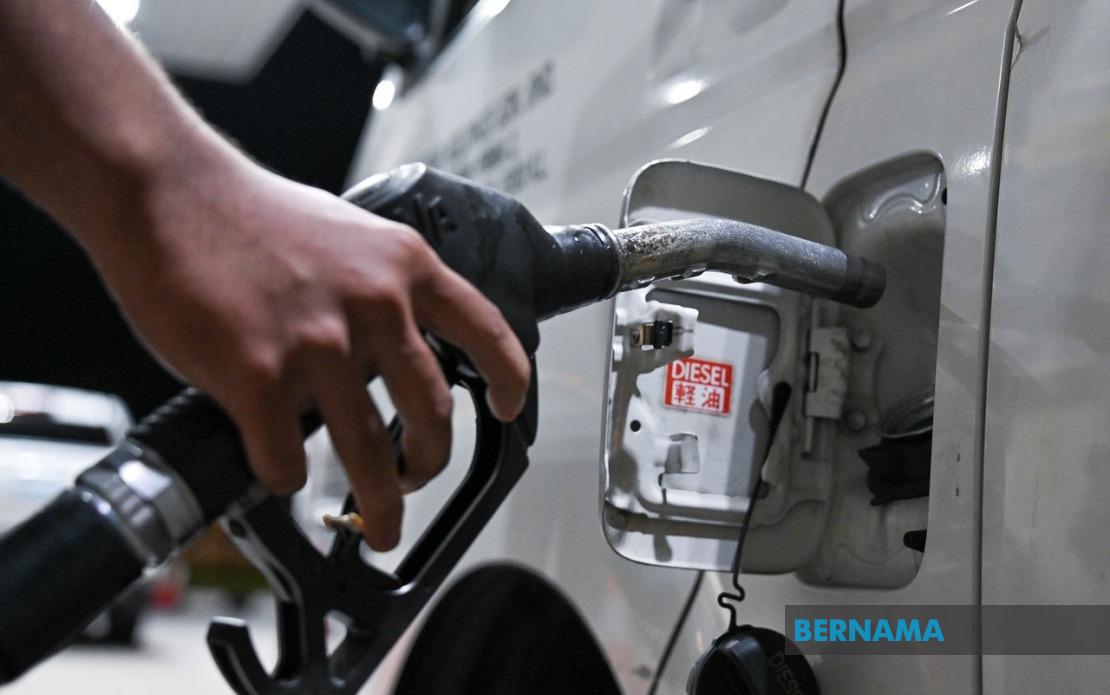
Finance Minister II Datuk Seri Amir Hamzah Azizan has committed to an ongoing review of the BUDI Diesel initiative, emphasising that policy refinements will be determined by actual consumer behaviour rather than predetermined timelines. Speaking in Kota Kinabalu on July 5, he explained that the government's approach prioritises flexibility and evidence-based decision-making, allowing authorities to respond to market realities as they emerge from the implementation phase.
The BUDI Diesel programme, which began its rollout on July 1 across Sabah and Sarawak, has completed only five days of operation at the time of the minister's remarks. Despite this short window, Amir Hamzah indicated that the government is already collecting granular information on usage patterns and quota effectiveness. His comments suggest that policymakers view the initial phase as an extended testing period rather than a fixed implementation, with quota structures remaining subject to adjustment as data accumulates.
To illustrate how data-driven policy adjustment works in practice, Amir Hamzah drew parallels with the BUDI95 petrol subsidy mechanism. The original allocation of 300 litres per user was subsequently reduced to 200 litres based on empirical evidence showing that between 94 and 95 per cent of users remained below the 300-litre threshold. Notably, users consistently exceeding 200 litres represented less than one per cent of the programme's participants. This adjustment was framed not as a restrictive measure but as a recalibration aligned with actual consumption behaviour, demonstrating the government's willingness to modify quotas when evidence justifies change.
For Malaysian consumers and observers of subsidy policy, this narrative carries significant implications. The government's stated commitment to data-driven refinement suggests that the BUDI Diesel quotas announced at launch should not be treated as permanent features. Households and small businesses relying on the subsidy should anticipate potential adjustments as the monitoring period progresses. However, the ministerial emphasis on evidence-based rather than arbitrary changes offers some assurance that quota reductions, if they occur, will reflect actual supply-demand dynamics rather than fiscal austerity measures alone.
Operational stability has been maintained throughout the initial rollout, according to Amir Hamzah. All petrol stations in Sabah and Sarawak have successfully implemented the system without disruption, and eligible users have faced no barriers to making purchases as intended. This technical success is noteworthy given the complexity of deploying a new subsidy mechanism across dispersed locations, particularly in East Malaysian states where infrastructure challenges often complicate implementation of national programmes. The seamless integration across petrol station networks suggests that the government's technical preparation for this initiative has been thorough.
Beyond aggregate monitoring, the government is actively addressing specific grievances raised by stakeholders through feedback channels. Vehicle ownership concerns—likely relating to disputes over which individuals qualify for subsidies based on vehicle registration records—are being investigated by ground teams deployed specifically to engage with communities. This ground-level engagement approach reflects recognition that blanket policies often encounter friction when applied to complex real-world circumstances, and that local context matters in subsidy administration.
Flexibility in implementation mechanisms is another key element of the government's strategy. While MyKad identification serves as the standard verification method for individual users, the minister signalled openness to alternative arrangements such as fleet cards for service providers. This consideration is particularly relevant for rural and remote areas where institutional actors—such as agricultural cooperatives, healthcare facilities, or emergency services—require reliable fuel access and may struggle with individual-based verification systems. By contemplating fleet-card arrangements, the government acknowledges that one-size-fits-all subsidy mechanisms can inadvertently disadvantage those operating outside standard market channels.
Public understanding and administrative clarity remain works in progress. The initiative to establish BUDI Diesel enquiry counters at petrol stations represents an attempt to bridge the gap between policy intent and consumer awareness. Through collaboration with oil companies and station operators, the government aims to improve the accessibility of eligibility information via QR codes and online application systems. For Malaysian consumers unfamiliar with digital tools or those in areas with limited internet connectivity, such physical touchpoints become critical to meaningful access to the subsidy programme.
The minister's insistence that any comprehensive reassessment of quota structures would require extended monitoring periods reflects the reality that five days of data provides minimal statistical foundation for major policy shifts. Meaningful patterns in consumption behaviour typically emerge over weeks or months as initial surge demand settles and routine usage establishes itself. By explicitly stating that wholesale quota reviews will take time, Amir Hamzah may be attempting to manage expectations and prevent public anxiety about imminent quota cuts based on preliminary data.
From a regional perspective, Malaysia's incremental approach to subsidy administration contrasts with more rigid neighbouring systems. The emphasis on continuous monitoring and evidence-based adjustment suggests a learning-oriented policy framework, though it also carries risks of implementation opacity if citizens cannot readily access information about how data is being collected and interpreted. The success of BUDI Diesel—and by extension, the credibility of similar fuel subsidy programmes—will partly depend on whether the government can maintain this balance between flexibility and transparency in future adjustments.
Stakeholders including rural fuel retailers, transport operators, and household consumers will be watching closely as the monitoring period progresses. For many, the key question is not whether quotas will change but whether changes, when they occur, will reflect genuine usage patterns or will serve as cover for disguised subsidy reductions. The minister's repeated emphasis on data-driven decision-making serves partly as reassurance on this point, though only actual implementation outcomes will determine whether the pledge translates into practice. The next crucial milestone will come when sufficient data has accumulated to warrant a formal policy review—a moment that will either vindicate the government's evidence-based approach or expose it as rhetorical cover for predetermined cuts.

